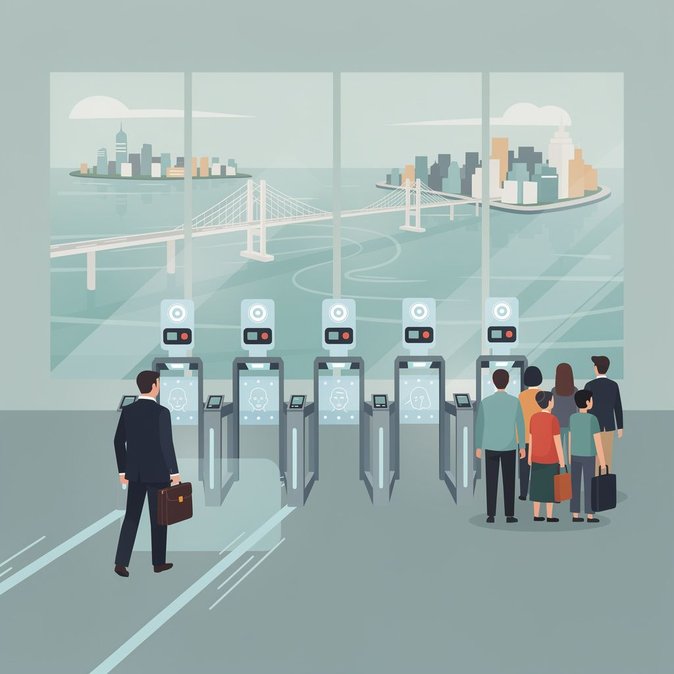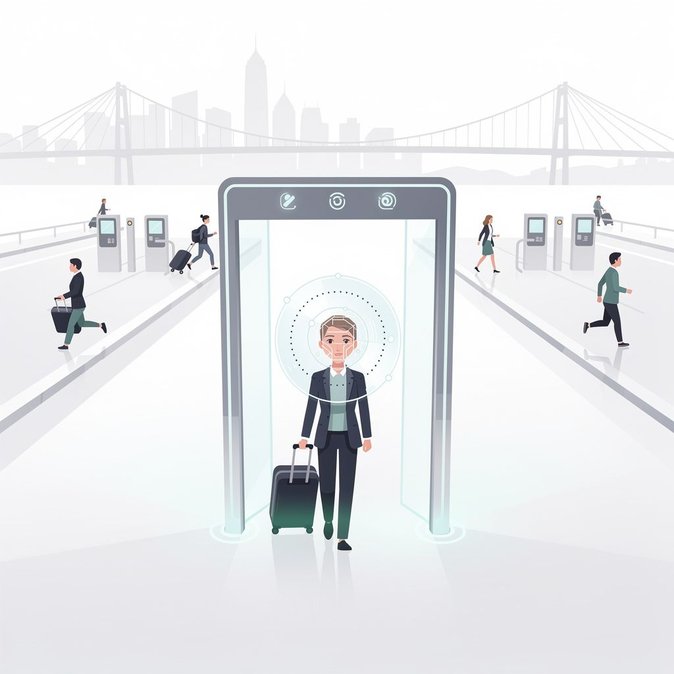
Hong Kong’s long-promised “seamless e-Channel” officially opened for use at the Hong Kong-Zhuhai-Macao Bridge (HZMB) boundary-crossing on 25 June, marking the city’s first walk-through, document-free immigration lane. Eligible Hong Kong permanent residents who pre-enrolled on the Immigration Department’s Contactless e-Channel app can now clear outbound immigration simply by walking past five AI-enabled cameras that verify their identity in real time. The process, which takes about five seconds, eliminates the need to stop, insert an ID card or scan a QR code.
For travelers whose journeys extend beyond this new fast lane, VisaHQ offers a one-stop online service to handle any lingering visa or travel-authorisation paperwork. Through its Hong Kong portal (https://www.visahq.com/hong-kong/), the company lets users instantly check entry rules for more than 200 destinations, submit applications and receive expert support—making sure your documents are as seamless as the city’s latest biometric channel.
The new channel is part of a HK$6 million pilot announced in last year’s Policy Address to modernise border management and reduce congestion at the growth-hotspot bridge port, which handled more than 17,000 vehicles a day in April. Users must be at least 11 years old, possess a smart Hong Kong identity card and have crossed the bridge 10 times in the previous 90 days—criteria that target frequent cross-border commuters and Guangdong-Hong Kong integrated-market professionals. Immigration officials said the system logged more than 99 per cent accuracy during testing. If no anomalies are detected, gates remain open and travellers keep walking; if inconsistencies arise the gates shut automatically and an officer intervenes. The department will analyse usage data over the summer holiday rush to decide whether to retrofit other control points—such as Lo Wu, West Kowloon high-speed-rail station and the airport—with the walk-through technology. For businesses, the upgrade promises faster truck-driver turnaround times and smoother passenger flows on one of the region’s most important logistics corridors. Travel-management companies say predictable five-second clearance could shave 15–20 minutes off peak-hour coach journeys, allowing tighter scheduling of cross-border factory visits and client meetings. Human-resources teams relocating staff between Hong Kong and the Greater Bay Area are also watching closely, as friction-free daily commuting supports talent-mobility policies. Authorities emphasise that enrolled residents must still carry their physical smart ID card and cannot use the seamless lane for inbound clearance yet. Nevertheless, the on-the-move trial positions Hong Kong at the forefront of biometric borders in Asia and aligns with global moves towards touchless travel.
For travelers whose journeys extend beyond this new fast lane, VisaHQ offers a one-stop online service to handle any lingering visa or travel-authorisation paperwork. Through its Hong Kong portal (https://www.visahq.com/hong-kong/), the company lets users instantly check entry rules for more than 200 destinations, submit applications and receive expert support—making sure your documents are as seamless as the city’s latest biometric channel.
The new channel is part of a HK$6 million pilot announced in last year’s Policy Address to modernise border management and reduce congestion at the growth-hotspot bridge port, which handled more than 17,000 vehicles a day in April. Users must be at least 11 years old, possess a smart Hong Kong identity card and have crossed the bridge 10 times in the previous 90 days—criteria that target frequent cross-border commuters and Guangdong-Hong Kong integrated-market professionals. Immigration officials said the system logged more than 99 per cent accuracy during testing. If no anomalies are detected, gates remain open and travellers keep walking; if inconsistencies arise the gates shut automatically and an officer intervenes. The department will analyse usage data over the summer holiday rush to decide whether to retrofit other control points—such as Lo Wu, West Kowloon high-speed-rail station and the airport—with the walk-through technology. For businesses, the upgrade promises faster truck-driver turnaround times and smoother passenger flows on one of the region’s most important logistics corridors. Travel-management companies say predictable five-second clearance could shave 15–20 minutes off peak-hour coach journeys, allowing tighter scheduling of cross-border factory visits and client meetings. Human-resources teams relocating staff between Hong Kong and the Greater Bay Area are also watching closely, as friction-free daily commuting supports talent-mobility policies. Authorities emphasise that enrolled residents must still carry their physical smart ID card and cannot use the seamless lane for inbound clearance yet. Nevertheless, the on-the-move trial positions Hong Kong at the forefront of biometric borders in Asia and aligns with global moves towards touchless travel.