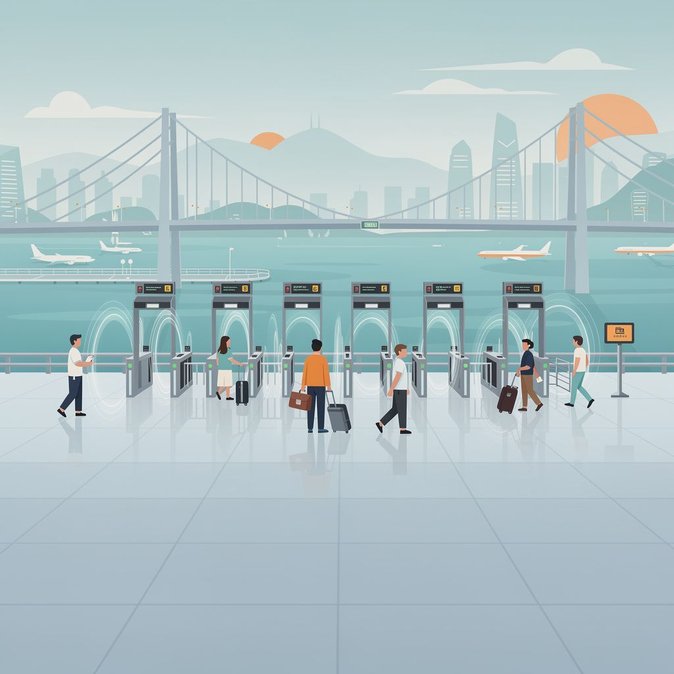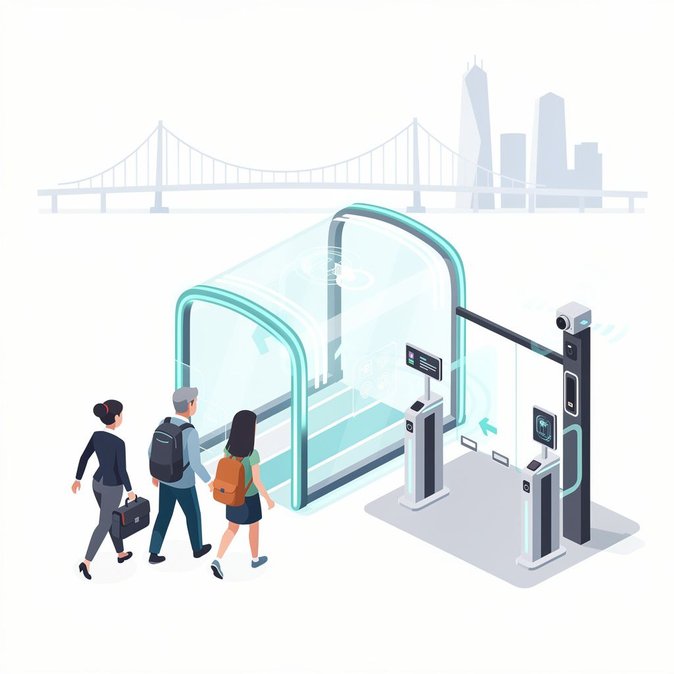
Hong Kong’s Immigration Department has quietly flipped the switch on the city’s first fully contact-free “seamless e-channel” at the Hong Kong-Zhuhai-Macao Bridge (HZMB) control point. The lane—dubbed the “無感 e-道” (“no-sense e-channel”)—uses long-range facial recognition cameras and gait sensors to identify travellers while they continue walking. No Hong Kong identity card, QR code or fingerprint scan is required; once the system matches a traveller’s face to Immigration records, the glass gates open and the traveller is already cleared in about five seconds. Initially, the service is open only to Hong Kong residents who have used the bridge at least ten times in the past 90 days—about 50,000 frequent cross-boundary commuters. Lawmakers who toured the site on 23 June said the technology shows how Hong Kong can transform traditional border control “bottlenecks” into smart-city infrastructure. They urged officials to relax the eligibility threshold so that seniors and occasional travellers can also benefit, and to replicate the lanes at Lo Wu, Shenzhen Bay and the airport once reliability and security data are collected. For businesses shuttling executives between Hong Kong and mainland cities in the Greater Bay Area, the pilot means measurably shorter door-to-door journey times. Cross-border coach operators estimate a time saving of 15–20 minutes per passenger at peak periods; logistics firms expect faster driver turn-around. Human-resources teams will need to update travel policies because enrolled staff will no longer need to remove masks or present documents at the gate. The new lane is also a test bed for Hong Kong’s planned “One-stop Travel ID”, which promises a unified biometric token for air, land and sea checkpoints by 2028. Privacy experts note that data captured at the HZMB remain onshore in a dedicated Immigration Department data-centre; no third-party cloud services are involved. Travellers can opt out at any time by reverting to the traditional e-channel. If the pilot succeeds, the government aims to clear more than 90 percent of bridge passengers through seamless channels within three years—part of a wider push to make cross-boundary mobility as effortless as riding the MTR. For multinational companies moving talent around the Pearl River Delta, that could translate into sizeable productivity gains and a smoother employee experience.
Source: Wen Wei Po
How VisaHQ can help
VisaHQ simplifies the visa application process for individuals and businesses. Check current travel requirements, prepare the required documents and manage your application online through the VisaHQ Hong Kong portal.More From Hong Kong
View all
HK retirees in Guangdong & Fujian can receive social-security allowance directly in mainland bank accounts from July
Hong Kong unveils HK$34 million incentive package to speed up green-fuel bunkering and attract low-carbon vessels