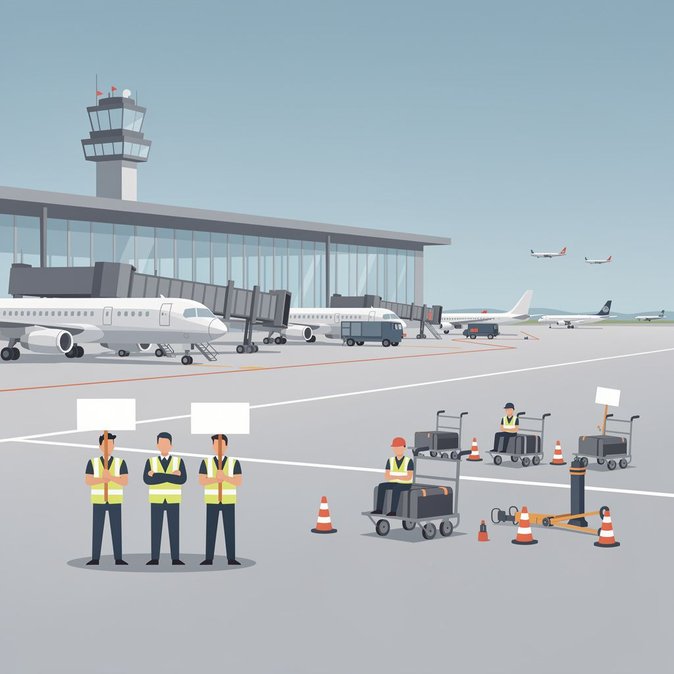
The summer strike season moves to Italian airports on Friday, 26 June, when ground-handling staff walk out for 24 hours. Airlines are pre-emptively cancelling flights at Rome-Fiumicino, Milan-Malpensa and a dozen regional gateways, and ENAC – Italy’s civil-aviation regulator – expects the heaviest disruption outside the legally protected bands of 07:00-10:00 and 18:00-21:00. Low-cost carrier easyJet alone scrubbed more than 210 services during a similar action earlier this month. Travellers often assume any strike automatically unlocks the headline €250-€600 cash compensation under EU Regulation 261/2004. That is wrong. As a detailed explainer published on 25 June points out, the European Court of Justice has ruled that walkouts by third-party providers – baggage-handlers, air-traffic controllers or airport security staff – are “extraordinary circumstances”. Airlines must still offer meals, hotel rooms when necessary, and a choice of refund or re-routing, but they do not owe monetary compensation. The distinction matters for corporate travel budgets: human-resources departments cannot automatically reclaim cash for employee delays unless the strike is by an airline’s own crew. Mobility managers are therefore advising staff to keep receipts for duty-of-care expenses but not to expect the extra payout. For flights inside the protected windows, most carriers intend to operate normally; passengers booked midday or early-afternoon, however, face a high risk of cancellation. ENAC will publish a list of “voli garantiti” (guaranteed flights) 24 hours in advance. Companies with critical same-day meetings are booking seats departing during the 07:00-10:00 fascia di garanzia or shifting to rail. Where flying is unavoidable, experts recommend documenting the reason for any cancellation – a screenshot of the airline’s notice or the airport board – to streamline reimbursement claims. Ryanair cabin-crew strikes happening in parallel in other EU countries do trigger cash compensation; the key is proving which disruption caused which cancellation. Looking ahead, unions have pencilled further ground-handling actions for late July unless a pay-indexation deal is reached. Large corporates may wish to add buffer nights to Italian itineraries through the summer or consider secondary airports such as Bologna or Verona, which handle lower volumes and may experience milder impacts.
Source: Travelers Today