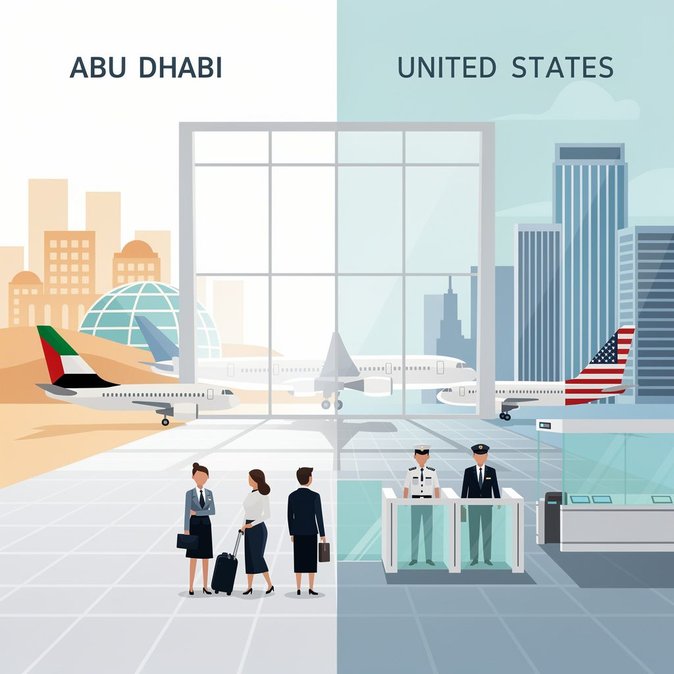
Abu Dhabi Airports has completed the migration of the United States Customs and Border Protection (US CBP) facility from the old terminal to Zayed International Airport, bringing all Etihad Airways departures to the US under one roof. The new hall, inaugurated on 26 June 2026 after a joint vetting process with CBP, allows passengers to clear US immigration, customs and agriculture inspections before boarding – the only such facility in the Middle East. The pre-clearance zone features facial-comparison gates, mobile declaration kiosks and an upgraded “trusted‐traveller” lane that recognises US Global Entry, NEXUS and UAE Smart Travel members. Processing capacity has risen by roughly 40 per cent, cutting average queuing time during peak morning banks from 45 minutes to under 20, according to airport data. For multinationals, the upgrade translates into shorter door-to-desk times for staff heading to Houston, Chicago, New York and Washington, with seamless domestic connections upon arrival. Etihad CEO Antonoaldo Neves called the facility “a unique selling point” for routing corporate traffic through Abu Dhabi, particularly from India and Southeast Asia where US visa-appointment backlogs remain lengthy. Travel-risk teams should note that Electronic System for Travel Authorization (ESTA) rules are unchanged; passengers denied ESTA must still secure a B-visa before departure. CBP officers in Abu Dhabi retain full authority to refuse boarding, and denied passengers are handed back to the airline for re-routing. The project also cements Zayed International’s strategy to position itself as a premium transfer hub distinct from Dubai International. With AUH now operating at 79 per cent of its 65-million-passenger design capacity, officials hinted at further bilateral talks to replicate the model with Canada and Australia – negotiations that mobility managers will watch closely.
Source: The Gulf Time