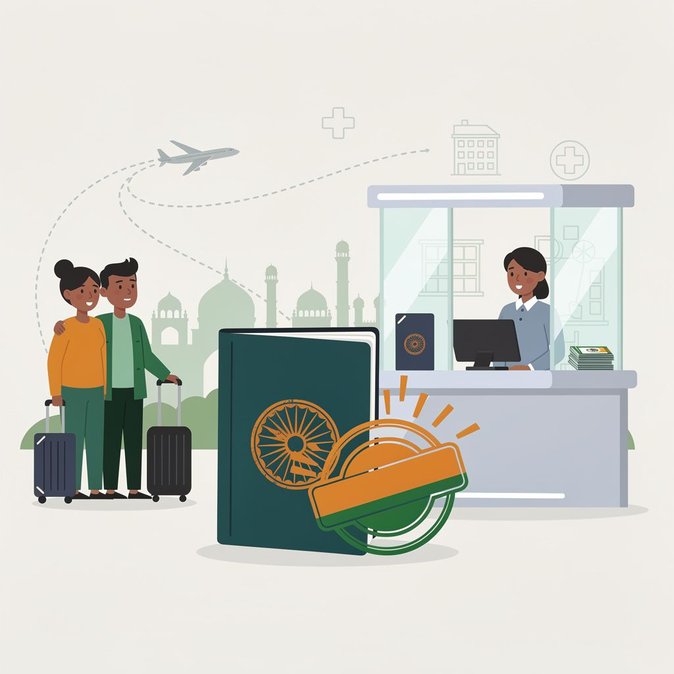
The Ministry of External Affairs has confirmed that all regional Passport Offices are now technically equipped to issue chip-enabled ePassports, marking the national rollout of a project first piloted in 2022. The new booklet embeds an RFID chip storing personal and biometric data, protected by Public Key Infrastructure encryption.
Travellers who need clarity on how the ePassport dovetails with individual visa requirements can turn to VisaHQ’s India portal (https://www.visahq.com/india/). The platform consolidates the latest consular rules, offers real-time application tracking and provides courier submission services, making it a convenient one-stop shop for securing visas and travel documents for more than 200 destinations.
At immigration counters—and increasingly at automated e-gates—travellers simply place the booklet on a reader, which authenticates the chip within seconds, slashing queue times. The chip also makes data tampering virtually impossible, aligning India with ICAO standards already adopted by more than 150 countries. Existing passports remain valid until expiry; applicants will automatically receive an ePassport when applying for a fresh document or reissue. No additional fee has been levied beyond the recently announced across-the-board passport-fee hike. For global mobility teams, the upgrade may translate into smoother entry at partner airports that recognise ePassports and into eligibility for trusted-traveller programmes in future bilateral agreements. Indian airports plan to triple automated-gate capacity by 2027, and the Bureau of Immigration is testing a ‘Trusted Traveller’ lane for chip-passport holders at Delhi T3 by year-end.
Travellers who need clarity on how the ePassport dovetails with individual visa requirements can turn to VisaHQ’s India portal (https://www.visahq.com/india/). The platform consolidates the latest consular rules, offers real-time application tracking and provides courier submission services, making it a convenient one-stop shop for securing visas and travel documents for more than 200 destinations.
At immigration counters—and increasingly at automated e-gates—travellers simply place the booklet on a reader, which authenticates the chip within seconds, slashing queue times. The chip also makes data tampering virtually impossible, aligning India with ICAO standards already adopted by more than 150 countries. Existing passports remain valid until expiry; applicants will automatically receive an ePassport when applying for a fresh document or reissue. No additional fee has been levied beyond the recently announced across-the-board passport-fee hike. For global mobility teams, the upgrade may translate into smoother entry at partner airports that recognise ePassports and into eligibility for trusted-traveller programmes in future bilateral agreements. Indian airports plan to triple automated-gate capacity by 2027, and the Bureau of Immigration is testing a ‘Trusted Traveller’ lane for chip-passport holders at Delhi T3 by year-end.