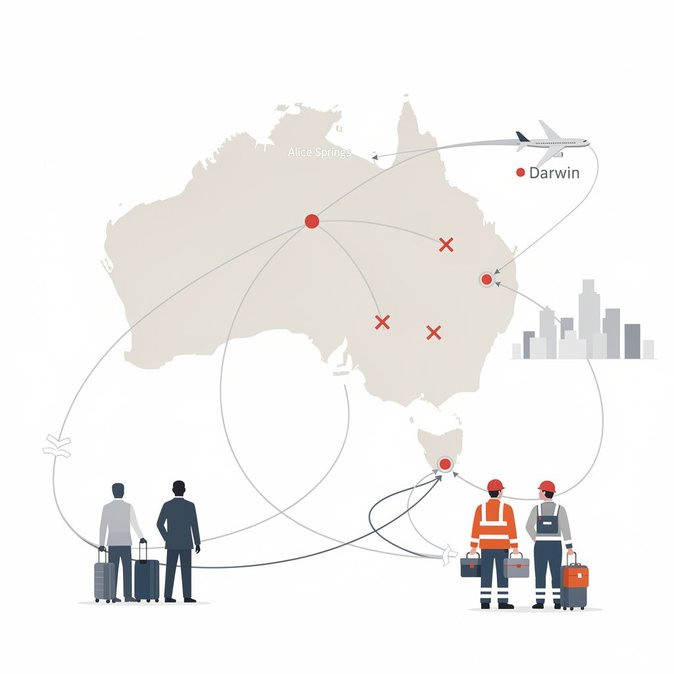
Qantas has confirmed that it will indefinitely suspend its non-stop Alice Springs–Melbourne route from late October 2026 and scale back its Darwin–Singapore flights to the peak November-March tourist season. The carrier blamed a toxic mix of weak demand, high fuel prices and intense regional competition for the decision. According to Qantas Domestic CEO Markus Svensson, even deploying a brand-new Airbus A220 and discounting one-way fares to A$199 failed to lift load factors to commercially sustainable levels. The announcement is a blow to Central Australian businesses that rely on direct links to the east-coast capital for fly-in-fly-out (FIFO) personnel, corporate meetings and inbound incentive groups. Tourism Central Australia chief executive Danial Rochford warned that “livability and visitor access will both suffer”, while Northern Territory analysts estimate that replacing a direct service with one-stop itineraries can add three hours and more than A$350 per round-trip for business travelers. Corporates with operations in Darwin have also been put on notice: from late October to June, Qantas will pause its daily Darwin–Singapore service, leaving only Singapore Airlines’ thrice-weekly operation as a year-round option. Companies that hub talent or freight through Singapore will need to re-book via Sydney, Brisbane or Perth, adding transit time and complexity to mobility programs. Qantas says affected customers can re-route without fees or request refunds, but relocation managers will need to recalibrate travel policies and budgets for FY 2026-27. Government and industry groups are urging the airline to revisit the decision, flagging possible route subsidies or marketing partnerships. In the meantime, mobility managers should brief relocating staff on alternative connections, adjust per-diem models to reflect longer travel days, and monitor whether Qantas’ promised Saturday Alice Springs–Sydney frequency adequately fills the gap. The episode underscores the vulnerability of thin domestic-international “tag” routes and the importance of building redundancy into corporate travel plans.
Source: ABC News