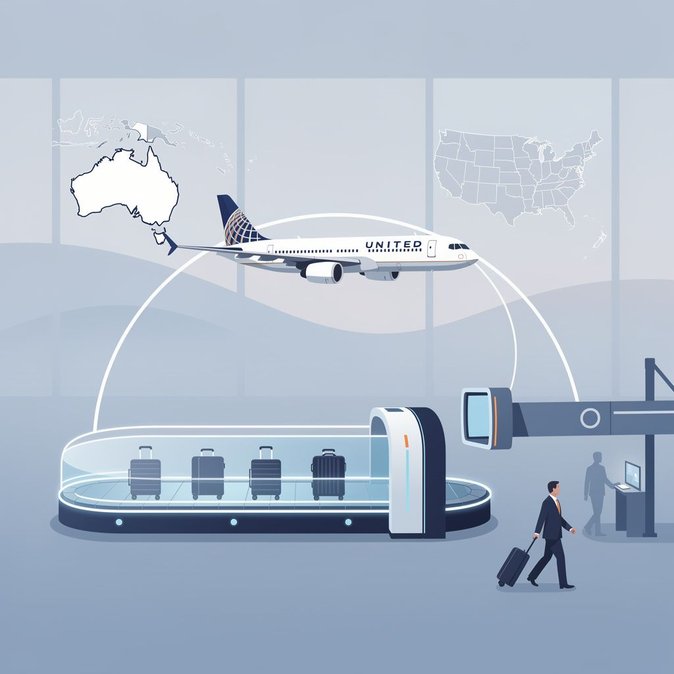
United Airlines says it is working with U.S. Customs and Border Protection (CBP) to roll out International Remote Baggage Screening (IRBS) on additional long-haul services—building on the pilot already operating on its daily Sydney–San Francisco flight. Under IRBS, checked luggage is X-rayed at the origin airport, the imagery is linked to the passenger record and transmitted inflight to CBP officers, who clear bags before landing. Passengers connecting onward in the United States skip the traditional reclaim-and-re-check carousel. The program was first trialled by American Airlines on Sydney–Los Angeles in 2024 and now covers select Seoul Incheon–Atlanta routes on Delta and Korean Air. United’s participation makes San Francisco only the second U.S. gateway to offer the time-saving measure for Australia-originating passengers. A spokesperson confirmed to Air Traveler Club on 26 June that the carrier “intends to broaden IRBS to more international services,” though routes and launch dates remain undisclosed. Sydney Airport’s existing CT scanners and data links meet CBP’s technical standards; most foreign airports do not yet have that capability. For Australian corporates routing staff through the United States, the benefit is tangible: skipping baggage reclaim can shave 45–60 minutes off tight connections, reducing the risk of missed domestic legs and costly overnight stays. Travel managers should note IRBS does not remove the need to clear U.S. immigration or TSA passenger screening. Bags may still be pulled for physical inspection, and travellers are advised to allow at least 90 minutes for connections until the scheme matures. Nevertheless, the technology signals a broader trend toward “seamless transit” and could influence future Australian initiatives such as the long-mooted revival of outbound facial-token boarding. If CBP publishes a Federal Register notice expanding IRBS in coming months, carriers operating Melbourne or Brisbane services could be next. Businesses with heavy trans-Pacific traffic may wish to prioritise airlines and routings that adopt the program early, as it materially improves traveller experience and on-time performance metrics.
Source: Air Traveler Club