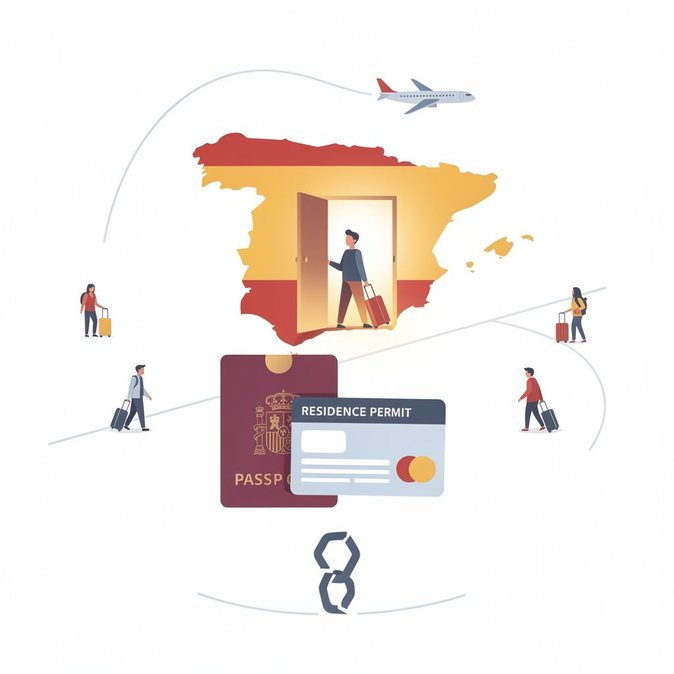
Spain’s ambitious one-off regularisation programme for undocumented migrants is turning out to be much larger than the government originally forecast. According to figures released on 28 June by the Ministry of Inclusion, Social Security and Migration, more than 900,000 people have lodged applications since the window opened on 16 April under Royal Decree 316/2026. Prime Minister Pedro Sánchez had spoken of around 500,000 applicants when the plan was unveiled in January, but NGOs and regional governments now warn that the final tally could exceed one million before the portal closes at 23:59 on 30 June. The decree offers a fast-track, one-year residence-and-work authorisation to third-country nationals who can prove they were already living in Spain before 1 January 2026 and who have remained in the country for at least five of the six months preceding their application. Successful applicants will later have to transfer to a standard immigration category, but the initial permit allows immediate labour-market access, health-care coverage and enrolment in social-security schemes. The government argues that the measure will reduce the shadow economy, close skills gaps in sectors ranging from agriculture to elder care, and generate up to €3 billion a year in extra tax and social-security revenue. Demand, however, has stretched Spain’s immigration infrastructure to breaking point. Foreigners’ Offices have been running extended hours and weekend shifts, while police stations that issue foreigners’ identity cards (TIE) report appointment slots fully booked weeks ahead. Regions with large migrant communities such as Catalonia and Madrid fear backlogs could lead to months-long waits for biometric card issuance, leaving newly regularised workers in limbo when they try to sign employment contracts or open bank accounts. Politically, the surge has sharpened divisions. Conservative opposition parties and several regional governments have filed court challenges, claiming the decree undermines border integrity and could distort future electoral censuses. Earlier this month the Supreme Court refused to suspend the process but will still rule on its legality in due course. For now, the Ministry insists the operation is proceeding “with full legal guarantees,” and has deployed extra staff from other departments to clear the final influx of files before the deadline. For employers, the immediate takeaway is opportunity: companies struggling to fill vacancies can legally recruit candidates who obtain the new permit, provided they register the contract with social security within 30 days. Mobility managers should prepare streamlined onboarding processes and be ready to assist employees in securing TIE appointments quickly. HR teams are also advised to track the July-to-September transition period, when tens of thousands of newly regularised workers will begin moving onto ordinary residence categories; missing that second step would mean falling back into irregular status.
Source: Telemadrid