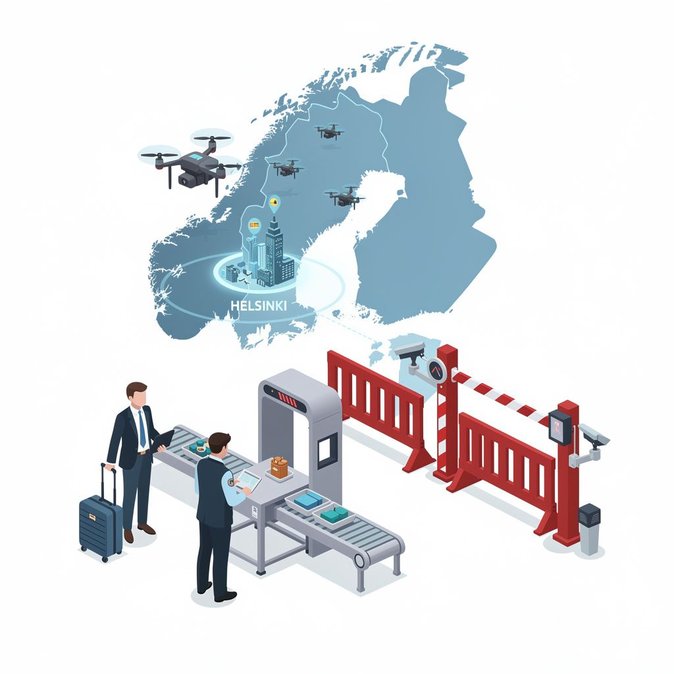
The United Kingdom’s Foreign, Commonwealth & Development Office (FCDO) has refreshed its advice for travellers heading to Finland, timestamped 28 June 2026. The notice adds a new warning about recent drone sightings around the Helsinki capital region and reminds visitors that traffic across Finland’s land frontier with Russia remains tightly restricted. In the updated ‘Safety and security’ section, British officials note that Finnish authorities have reported several cases of unidentified drones near critical infrastructure, including Helsinki Airport. Although no flights were disrupted over the weekend, the FCDO urges visitors to remain alert for police announcements and to comply immediately with any temporary air-space closures that might affect onward travel within Finland or connections to other Schengen destinations.
Whether you're organising a last-minute business visit or a family ski holiday, VisaHQ can streamline every step of the Finnish visa or travel authorisation process. Our online platform (https://www.visahq.com/finland/) walks you through current requirements, alerts you to any rule changes like the Russia–Finland land-border closure, and can even arrange courier pickup of supporting documents—saving you time if extra security reviews slow things down at Helsinki-Vantaa.
Business-travel planners are advised to build extra time into itineraries passing through Helsinki-Vantaa in case security checks are stepped up at short notice. The ‘Entry requirements’ page reiterates that all eight land-border crossing points between Finland and Russia have been closed to passenger traffic since December 2023. Applications for international protection can only be lodged at designated reception centres inside Finland. The advice stresses that tourists should not attempt to enter or exit via the eastern land border, and that carriers may refuse boarding to anyone whose itinerary involves an overland segment through Russia. For companies managing Nordic supply chains, the reminder confirms that freight remains subject to enhanced screening, potentially lengthening lead times for just-in-time deliveries that transit Karelia and the Arctic corridor. Mobility managers should advise employees to use commercial flights or authorised sea routes instead. The FCDO recommends signing up for email alerts so travellers receive real-time updates if the security picture changes. In practice, this means expatriate staff and corporate visitors can evidence compliance with duty-of-care requirements by demonstrating that they monitored official guidance before departure.
Whether you're organising a last-minute business visit or a family ski holiday, VisaHQ can streamline every step of the Finnish visa or travel authorisation process. Our online platform (https://www.visahq.com/finland/) walks you through current requirements, alerts you to any rule changes like the Russia–Finland land-border closure, and can even arrange courier pickup of supporting documents—saving you time if extra security reviews slow things down at Helsinki-Vantaa.
Business-travel planners are advised to build extra time into itineraries passing through Helsinki-Vantaa in case security checks are stepped up at short notice. The ‘Entry requirements’ page reiterates that all eight land-border crossing points between Finland and Russia have been closed to passenger traffic since December 2023. Applications for international protection can only be lodged at designated reception centres inside Finland. The advice stresses that tourists should not attempt to enter or exit via the eastern land border, and that carriers may refuse boarding to anyone whose itinerary involves an overland segment through Russia. For companies managing Nordic supply chains, the reminder confirms that freight remains subject to enhanced screening, potentially lengthening lead times for just-in-time deliveries that transit Karelia and the Arctic corridor. Mobility managers should advise employees to use commercial flights or authorised sea routes instead. The FCDO recommends signing up for email alerts so travellers receive real-time updates if the security picture changes. In practice, this means expatriate staff and corporate visitors can evidence compliance with duty-of-care requirements by demonstrating that they monitored official guidance before departure.