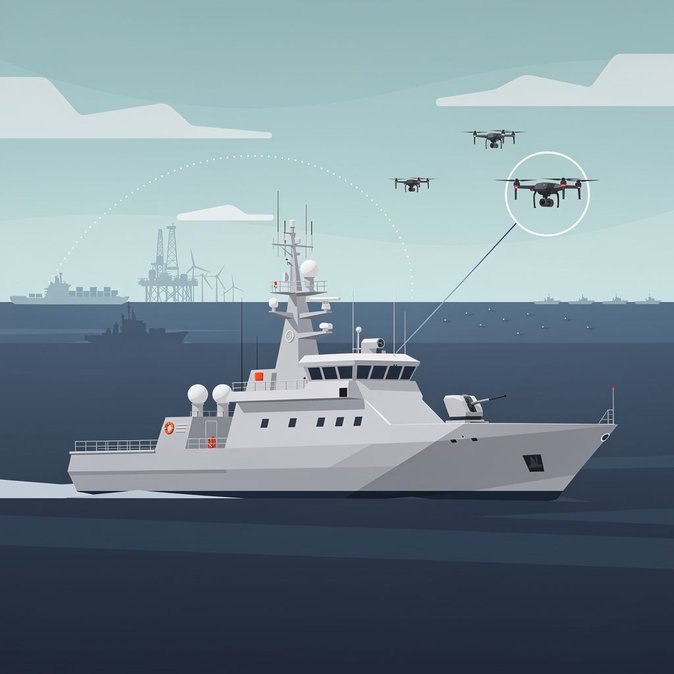
Finland’s Border Guard has confirmed that it will bring two new 98-metre offshore patrol vessels into service in late 2026 and early 2027, dramatically boosting maritime surveillance and search-and-rescue capacity in the Gulf of Finland and the Baltic Sea. The first ship, named Karhu, is scheduled to sail from its Turku shipyard for sea trials this autumn before taking up duties from its home port in Hanko. According to a statement released on 27 June 2026, both vessels are equipped with advanced radar and electro-optical suites that can detect, track and, if necessary, neutralise hostile or unauthorised drones. A dedicated counter-UAS system—integrated with shipboard command software supplied by Finnish defence-tech firms—allows crews to jam or kinetically engage airborne threats that might endanger critical sea lanes, border stations or LNG terminals along Finland’s 1 200 km coastline. The expansion comes on the heels of a €44 million supplementary budget allocation earmarked specifically for drone defence, part of a wider €50 million package that also funds complementary upgrades to the older patrol ship Turva. Together, the three large cutters will form a rotating barrier along Finland’s maritime frontier with Russia, reinforcing Schengen external-border obligations and supporting NATO maritime exercises. Each new vessel can evacuate up to 600 passengers in an emergency and features a flight deck rated for medium-lift helicopters, a capability prized by oil-and-gas operators and cruise-line safety managers alike. For multinationals that move personnel or equipment by sea, the investment promises faster response times to search-and-rescue incidents and more predictable enforcement of shipping regulations in Finnish waters. Logistics teams should also note that the Border Guard will pilot digital pre-arrival notifications through the ships’ connectivity suites, reducing paperwork for commercial skippers arriving at HaminaKotka or Helsinki. Industry observers view the order as another signal that Finland is hardening its borders against hybrid threats. The integration of counter-drone technology aboard state assets is expected to spill over into civilian ports, where similar sensors may be deployed to protect passenger terminals and warehousing zones, potentially affecting future security-screening protocols for international crews.
How VisaHQ can help
VisaHQ simplifies the visa application process for individuals and businesses. Check current travel requirements, prepare the required documents and manage your application online through the VisaHQ Finland portal.More From Finland
View all
UK issues updated Finland travel advice highlighting drone incidents and Russian border-crossing rules

Finnish Border Guard to Deploy Two Drone-Defense Patrol Vessels, Strengthening Maritime Border Security