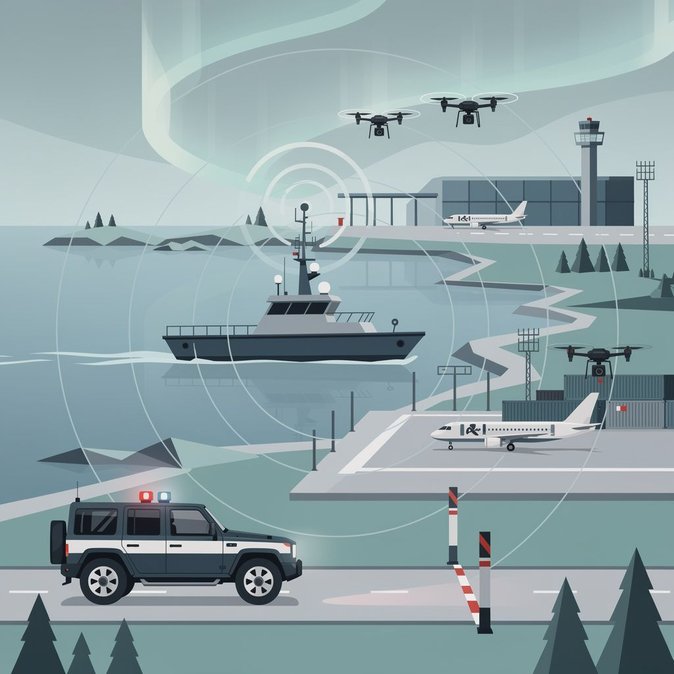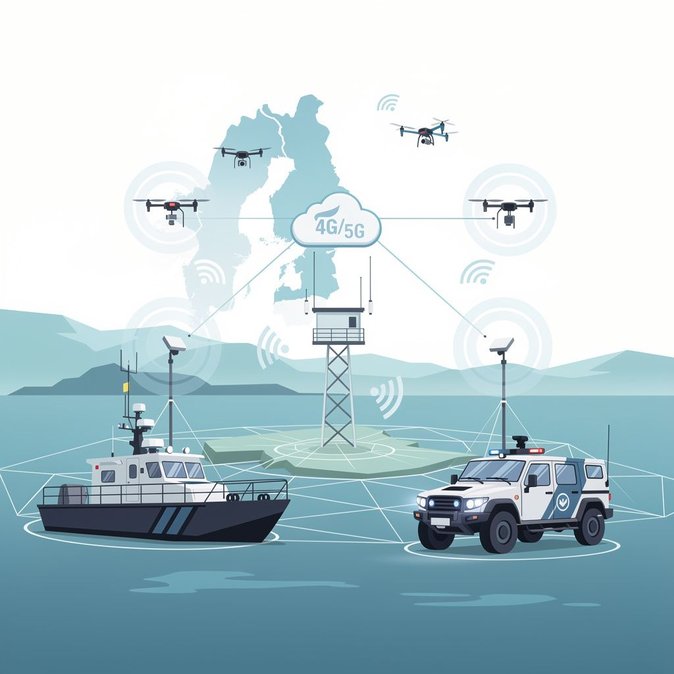
Espoo-based Nokia announced on 25 June that its new Defence business unit will supply secure 4G/5G and edge-cloud networking to a Finnish-Nordic consortium led by the Finnish Border Guard. The project will connect sensors, patrol vehicles and boats to a common command-and-control platform, giving officers a real-time picture of unmanned-aircraft threats along Finland’s 1 300-kilometre land border and its extensive coastline. Finland has watched the sharp rise in low-cost commercial drones with growing concern. In the past 18 months the Border Guard has recorded several unauthorised flights over critical infrastructure, while neighbouring Estonia and Latvia have reported drone-borne smuggling attempts. By fusing radar feeds, electro-optical cameras and radio-frequency detection into an encrypted mobile network, the consortium aims to shorten the time between detection and response from “minutes to seconds”, according to Nokia Defence chair Mikko Hautala. Under the three-year programme Nokia will deliver ruggedised base-stations, private 5G cores and edge analytics that can be mounted on vehicles or deployed as rapid-set-up kits in the field. The Border Guard will test the system in Lapland and the Gulf of Finland during winter 2027 before rolling it out nationwide. Procurement documents seen by MarketScreener indicate a budget of €37 million, funded by Finland’s Supplementary Border Security Package and the EU’s Border Management and Visa Instrument. For business travellers and logistics companies the stakes are high. Helsinki Airport handled 1.9 million passengers in May, and freight traffic through the ports of Kotka–Hamina and Turku has rebounded to pre-pandemic levels. A coordinated counter-UAS network reduces the risk of drone disruptions that have forced airport closures elsewhere in Europe and reassures insurers that Finland remains a low-risk hub. Companies operating critical infrastructure—from energy plants to data centres—will also be able to hook into the secure network for situational alerts. From a policy perspective, the project signals that Finland is willing to combine NATO-compatible defence technologies with civilian 5G infrastructure, a model Brussels hopes other Schengen members will follow. It also creates new export opportunities for Nokia in the fast-growing counter-drone market, estimated by Frost & Sullivan to reach €6 billion globally by 2030.
How VisaHQ can help
VisaHQ simplifies the visa application process for individuals and businesses. Check current travel requirements, prepare the required documents and manage your application online through the VisaHQ Finland portal.More From Finland
View all
Fintraffic and Indra to open world’s first multi-airport remote-tower centre in Vantaa
Eastern Flank summit vows tighter counter-hybrid measures, cites “instrumentalised” migrant flows at Finnish border