Italy has moved quickly to avoid an identity-document bottleneck this summer. Decree-Law 108/2026—published in the Official Gazette on 26 June and already in force—pushes back the long-planned retirement of the paper identity card (CIC) and creates a brand-new provisional document that will be accepted for travel inside the Schengen Area and, theoretically, beyond. Article 11 of the decree answers a practical problem: demand for the biometric Carta d’Identità Elettronica (CIE) is running far ahead of municipal capacity to issue it, producing appointment waits of six to ten weeks in Rome, Milan and Florence.
Under the new rules, any paper card used to sign a contract before 3 August 2026 will remain valid for that relationship until its natural expiry. More importantly for cross-border mobility, an unexpired paper card can still be used for all dealings with public authorities—including airport police—until at least 31 January 2027.
Whether you are a resident rushing to secure a provisional card or an employer coordinating travel for assignees, VisaHQ can simplify the process. Our dedicated Italy page (https://www.visahq.com/italy/) offers real-time advice on document validity, booking assistance for CIE appointments, and visa support for destinations that may not yet recognise the new provisional ID—helping travellers stay compliant and on schedule.
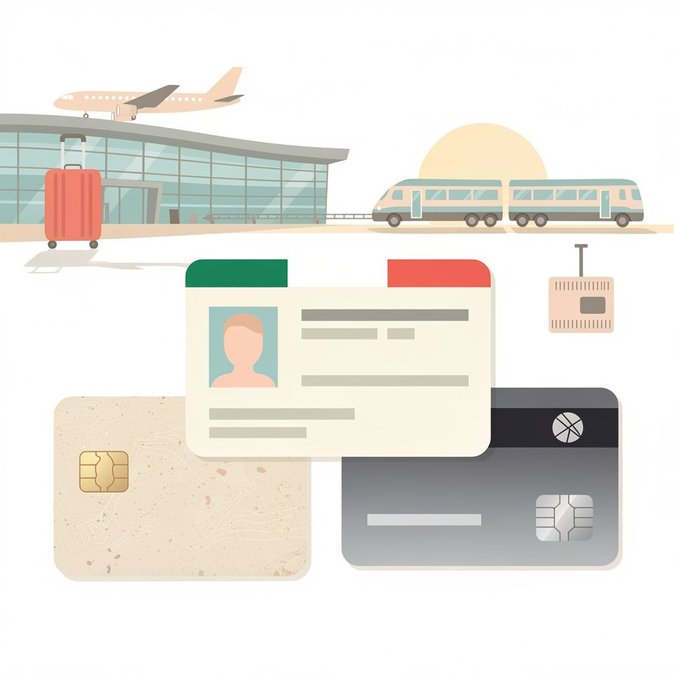
For travellers facing an urgent departure date, mayors have been authorised to issue a “documento d’identità provvisorio” printed on secure paper with a maximum validity of six months. The provisional card is classed as a ‘carta valori’ and, under article 3 of the Consolidated Public-Security Act, qualifies as a passport-equivalent for exit and re-entry into Italy. Municipal clerks must, however, warn citizens that some non-EU states may refuse it at the border and that it must be surrendered when the permanent CIE is collected.
Back-office processes are also being modernised. The decree allows the State Mint and Printing Works to outsource the payment interface for the CIE fee, promising faster issuance once production capacity catches up. In parallel, the Interior Ministry is working with airlines to update document readers so that the provisional card’s QR code can be scanned automatically at boarding.
Business impact: multinational employers with transferees arriving in the next six months should update pre-arrival checklists. HR teams can advise staff holding paper cards that they remain acceptable ID, and can direct urgent travellers to request the provisional document—important for work-permit renewals and banking. Global mobility providers should also flag the 31 January 2027 sunset date, after which the paper cards lose their privileged status in dealings with the public sector.

Under the new rules, any paper card used to sign a contract before 3 August 2026 will remain valid for that relationship until its natural expiry. More importantly for cross-border mobility, an unexpired paper card can still be used for all dealings with public authorities—including airport police—until at least 31 January 2027.
Whether you are a resident rushing to secure a provisional card or an employer coordinating travel for assignees, VisaHQ can simplify the process. Our dedicated Italy page (https://www.visahq.com/italy/) offers real-time advice on document validity, booking assistance for CIE appointments, and visa support for destinations that may not yet recognise the new provisional ID—helping travellers stay compliant and on schedule.
For travellers facing an urgent departure date, mayors have been authorised to issue a “documento d’identità provvisorio” printed on secure paper with a maximum validity of six months. The provisional card is classed as a ‘carta valori’ and, under article 3 of the Consolidated Public-Security Act, qualifies as a passport-equivalent for exit and re-entry into Italy. Municipal clerks must, however, warn citizens that some non-EU states may refuse it at the border and that it must be surrendered when the permanent CIE is collected.
Back-office processes are also being modernised. The decree allows the State Mint and Printing Works to outsource the payment interface for the CIE fee, promising faster issuance once production capacity catches up. In parallel, the Interior Ministry is working with airlines to update document readers so that the provisional card’s QR code can be scanned automatically at boarding.
Business impact: multinational employers with transferees arriving in the next six months should update pre-arrival checklists. HR teams can advise staff holding paper cards that they remain acceptable ID, and can direct urgent travellers to request the provisional document—important for work-permit renewals and banking. Global mobility providers should also flag the 31 January 2027 sunset date, after which the paper cards lose their privileged status in dealings with the public sector.