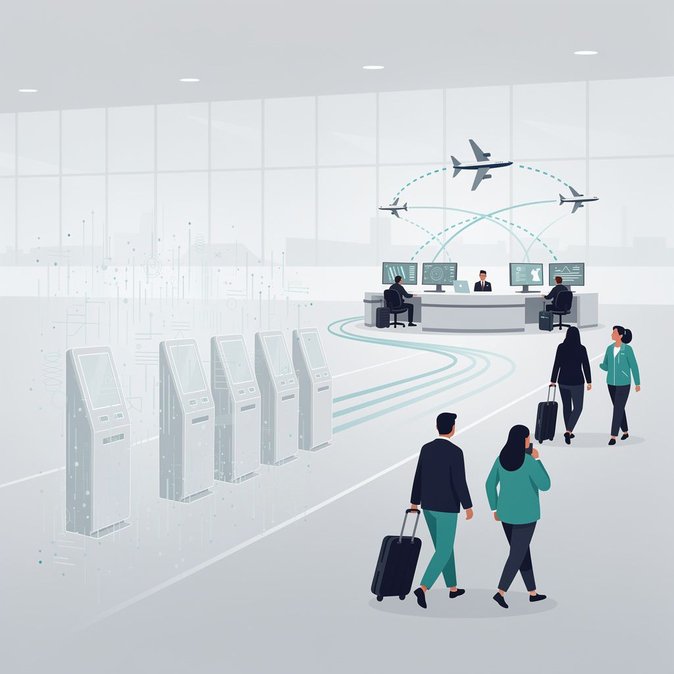
The Canada Border Services Agency (CBSA) has gone live with an over-haul of its International-to-International (ITI) Transit program, eliminating the need for most air passengers who are merely connecting through Canada to stop at a primary inspection kiosk or speak with a border officer. Under the new “Free-Flow ITI” model, airlines transmit Advance Passenger Information (API) and Passenger Name Record (PNR) data to the CBSA before the aircraft lands. CBSA’s targeting centre vets the information in real time; travellers whose data raise no flags can disembark, remain in the secure air-side zone and proceed directly to their onward gate. Those who require further inspection are intercepted at the connection point. The agency says the change—now live in Toronto-Pearson (Terminal 1), Vancouver International and Montréal-Trudeau—cuts as much as 30 minutes from average connection times and should ease peak-season congestion ahead of the FIFA World Cup 2026 and the summer travel surge. Airports that want to adopt the process must meet specific infrastructure and data-exchange standards; Calgary and Halifax are already in discussions to join later this year. For corporate travel managers, the update reduces the mis-connect risk on itineraries that route staff through Canada en-route to Europe, Asia or Latin America. It also gives carriers more scheduling flexibility because wide-body flights from Asia that previously arrived too close to Europe-bound departures can now be sold as legal connections. Travellers remain responsible for normal entry requirements—valid passport, confirmed onward ticket within 24 hours, and any visas or eTAs that apply to transiting Canada. Those who decide to leave the sterile zone will still have to clear Canadian immigration and customs in the regular way.
Source: PAX Global Media