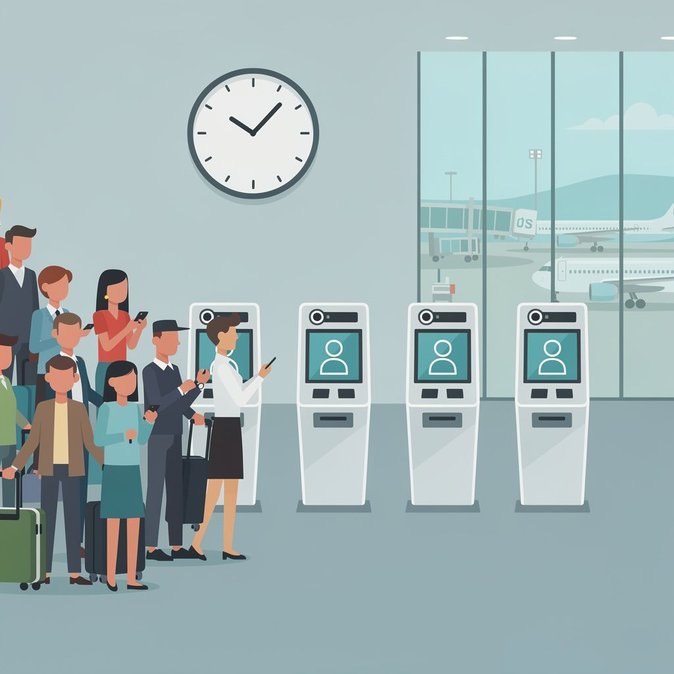
Crowdsourced and official sensor data published by Qsensor on 28 June 2026 put Frankfurt Airport’s average passport-control wait at 14 minutes but warn of peaks reaching two hours for non-EU nationals. The figures are the first comprehensive snapshot since the EU Entry/Exit System (EES) became fully operational in Germany on 10 April 2026. Under the EES, third-country travellers must register facial images and fingerprints at self-service kiosks before proceeding to a border-guard desk. While regular queues on quieter weekdays hover below 20 minutes, Qsensor’s heat-map shows Sunday evening ‘wave-bank’ arrivals driving waits of 90-120 minutes in Terminal 1’s Z-concourse. Corporate mobility managers are already adapting. Several global consulting firms have amended booking tools to flag one-hour layovers at FRA as “high-risk” for missed connections, recommending a three-hour buffer for itineraries that involve entering the Schengen Area. Premium-class tickets do not bypass the biometric step, and EasyPASS e-gates remain restricted mainly to EU/EEA citizens and registered frequent travellers. Frankfurt Airport says it will add 30 more kiosks by September and launch a dedicated fast-track lane for travellers who pre-register via the EU’s new “Travel to Europe” mobile app, but the Federal Police caution that pre-registration “does not guarantee” expedited clearance in Germany. Until throughput improves, businesses planning time-sensitive meetings in Frankfurt should consider overnight stays or routing via hubs with lighter EES volumes such as Zurich or Vienna. Travel-risk teams are advised to update arrival briefings, reminding employees that biometric capture may require removal of headgear and that children older than six must also provide fingerprints.
Source: Qsensor
How VisaHQ can help
VisaHQ simplifies the visa application process for individuals and businesses. Check current travel requirements, prepare the required documents and manage your application online through the VisaHQ Germany portal.More From Germany
View all
German Police Dismantle Alleged Human-Smuggling Network in NRW, Arrest Syrian Ringleader
One-Year Review Shows Germany’s Family-Reunification Freeze Disproportionately Hurts Syrians and Afghans