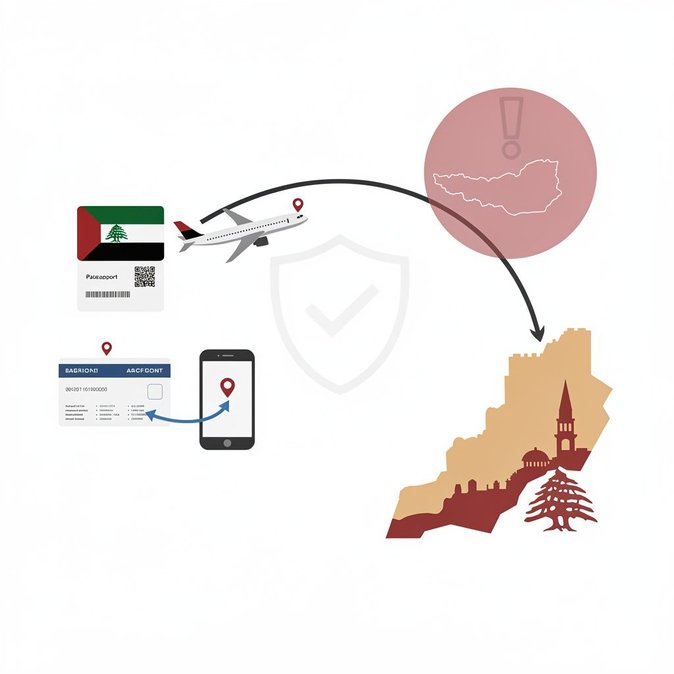
The UAE Ministry of Foreign Affairs (MoFA) has officially revoked the April-30 travel ban that barred Emirati citizens from visiting Lebanon. Effective 29 June 2026, nationals may once again fly to Beirut or transit via Lebanese land borders, provided they complete mandatory registration on MoFA’s Twajudi consular platform before departure.
For travellers seeking additional assistance with visa requirements, document authentication, or real-time advisory information, third-party specialists such as VisaHQ can streamline the process. The firm’s UAE portal (https://www.visahq.com/united-arab-emirates/) offers guidance on current entry rules for Lebanon and other destinations and can coordinate courier submission of passports and supporting paperwork, reducing the administrative burden for both individual and corporate travellers.
The prohibition was introduced two months ago amid escalating regional hostilities and concerns over Iranian influence. Although a fragile US-Iran cease-fire was signed on 17 June, security analysts say MoFA waited to see sustained de-escalation before reopening the route. The ministry has, however, kept its travel warning for Iran in force, underscoring that the broader Middle-East security situation remains volatile. Business travellers and multinationals with Lebanese operations welcome the move. Lebanese banks reopened 30 June with a 20 per cent jump in inbound USD deposits, while Emirates and Etihad have already announced the reinstatement of daily A-320 and B-787 services to Beirut Rafic Hariri International Airport from 3 July. Companies should update their travel risk assessments, ensure staff are registered on Twajudi, and brief employees on Lebanon’s dual-currency cash economy and continuing power-rationing challenges. Practical implications include renewed access for UAE consultants working on Banque du Liban’s IMF-backed restructuring project and for contractors servicing Gulf-funded reconstruction sites in Tripoli’s port district. HR teams should remind staff that corporate travel insurance normally excludes travel to embargoed destinations; policies must therefore be updated to reflect Lebanon’s removal from the banned list. Looking ahead, Dubai-based tour operators expect a 40 per cent uptick in summer bookings to Lebanon’s mountain resorts, while Abu Dhabi’s sovereign funds are reportedly revisiting pipeline investments in Beirut Digital District once political risks stabilise.
For travellers seeking additional assistance with visa requirements, document authentication, or real-time advisory information, third-party specialists such as VisaHQ can streamline the process. The firm’s UAE portal (https://www.visahq.com/united-arab-emirates/) offers guidance on current entry rules for Lebanon and other destinations and can coordinate courier submission of passports and supporting paperwork, reducing the administrative burden for both individual and corporate travellers.
The prohibition was introduced two months ago amid escalating regional hostilities and concerns over Iranian influence. Although a fragile US-Iran cease-fire was signed on 17 June, security analysts say MoFA waited to see sustained de-escalation before reopening the route. The ministry has, however, kept its travel warning for Iran in force, underscoring that the broader Middle-East security situation remains volatile. Business travellers and multinationals with Lebanese operations welcome the move. Lebanese banks reopened 30 June with a 20 per cent jump in inbound USD deposits, while Emirates and Etihad have already announced the reinstatement of daily A-320 and B-787 services to Beirut Rafic Hariri International Airport from 3 July. Companies should update their travel risk assessments, ensure staff are registered on Twajudi, and brief employees on Lebanon’s dual-currency cash economy and continuing power-rationing challenges. Practical implications include renewed access for UAE consultants working on Banque du Liban’s IMF-backed restructuring project and for contractors servicing Gulf-funded reconstruction sites in Tripoli’s port district. HR teams should remind staff that corporate travel insurance normally excludes travel to embargoed destinations; policies must therefore be updated to reflect Lebanon’s removal from the banned list. Looking ahead, Dubai-based tour operators expect a 40 per cent uptick in summer bookings to Lebanon’s mountain resorts, while Abu Dhabi’s sovereign funds are reportedly revisiting pipeline investments in Beirut Digital District once political risks stabilise.