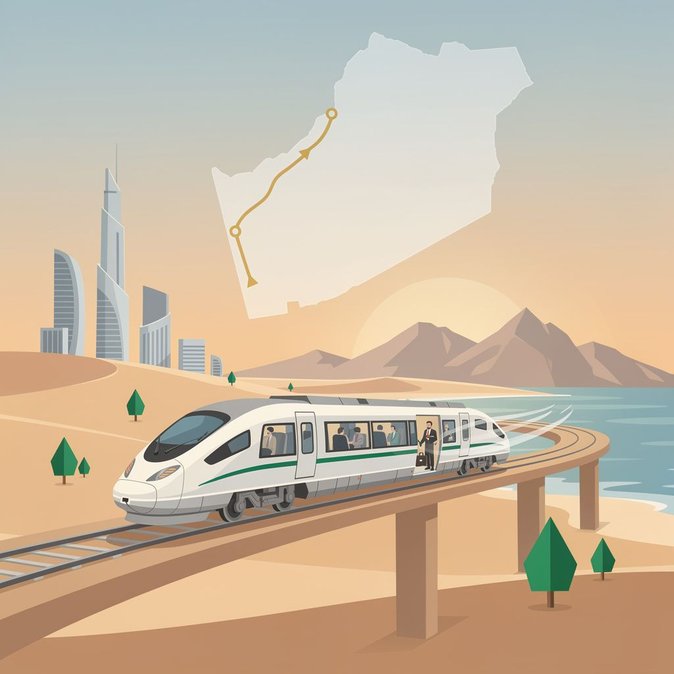
Etihad Rail marked a historic milestone on 30 June 2026 when its inaugural passenger service departed Fujairah at dawn and glided into the new Mohamed bin Zayed Station in Abu Dhabi exactly one hour and 45 minutes later. The launch ushers the United Arab Emirates into the league of countries with cross-country rail mobility—an achievement planners say will eventually link all seven emirates and, in later phases, extend to Oman and Saudi Arabia. The introductory timetable offers three round-trips every Tuesday, Friday and Sunday while crews ramp up operations and certify staff. Trains feature business-class and economy coaches, free Wi-Fi and sizeable luggage racks aimed squarely at business travellers who until now faced a 270-kilometre highway drive or short-haul flight. Fares start at AED 90 one-way, with dynamic pricing to follow once the booking engine gathers demand data.
International visitors eager to hop aboard this new rail corridor should ensure their paperwork is in order before arrival. VisaHQ simplifies the UAE visa process with an intuitive online platform that tracks requirements for more than 200 nationalities, provides document checklists and submits applications directly to the appropriate authorities. Get started at https://www.visahq.com/united-arab-emirates/ and secure your entry clearance well ahead of your travel dates.
Tickets for the first day sold out in just two hours after going on sale via the Etihad Rail app, highlighting pent-up demand for an alternative to the often congested E-11 motorway. For corporate mobility managers the implications are immediate: rail opens a reliable, weather-resilient corridor that allows same-day return trips between Abu Dhabi’s government quarter and Fujairah’s free-zone ports. Early-morning trains reach the capital before 8 a.m., enabling executives to skip overnight hotel stays, while weekend services are expected to stimulate domestic tourism among expatriate families. The passenger rollout complements the freight network, operational since 2025, which already carries sulphur, aggregate and containerised goods between Ruwais, Jebel Ali and the Saudi border. According to the Transport Ministry, modal shift from road to rail could slash CO₂ emissions by 70-80 percent per tonne-kilometre once fully scaled, aligning with the UAE’s net-zero 2050 pledge. Looking ahead, Etihad Rail’s Keolis joint-venture operator is preparing to introduce phase-two destinations—Dubai Investment Park, Sharjah and Ras Al Khaimah—by late-2027. Feasibility studies for cross-border services to Muscat are already under way, a move that would position the UAE as the heart of a future GCC rail network and dramatically expand options for regional business travel.

International visitors eager to hop aboard this new rail corridor should ensure their paperwork is in order before arrival. VisaHQ simplifies the UAE visa process with an intuitive online platform that tracks requirements for more than 200 nationalities, provides document checklists and submits applications directly to the appropriate authorities. Get started at https://www.visahq.com/united-arab-emirates/ and secure your entry clearance well ahead of your travel dates.
Tickets for the first day sold out in just two hours after going on sale via the Etihad Rail app, highlighting pent-up demand for an alternative to the often congested E-11 motorway. For corporate mobility managers the implications are immediate: rail opens a reliable, weather-resilient corridor that allows same-day return trips between Abu Dhabi’s government quarter and Fujairah’s free-zone ports. Early-morning trains reach the capital before 8 a.m., enabling executives to skip overnight hotel stays, while weekend services are expected to stimulate domestic tourism among expatriate families. The passenger rollout complements the freight network, operational since 2025, which already carries sulphur, aggregate and containerised goods between Ruwais, Jebel Ali and the Saudi border. According to the Transport Ministry, modal shift from road to rail could slash CO₂ emissions by 70-80 percent per tonne-kilometre once fully scaled, aligning with the UAE’s net-zero 2050 pledge. Looking ahead, Etihad Rail’s Keolis joint-venture operator is preparing to introduce phase-two destinations—Dubai Investment Park, Sharjah and Ras Al Khaimah—by late-2027. Feasibility studies for cross-border services to Muscat are already under way, a move that would position the UAE as the heart of a future GCC rail network and dramatically expand options for regional business travel.