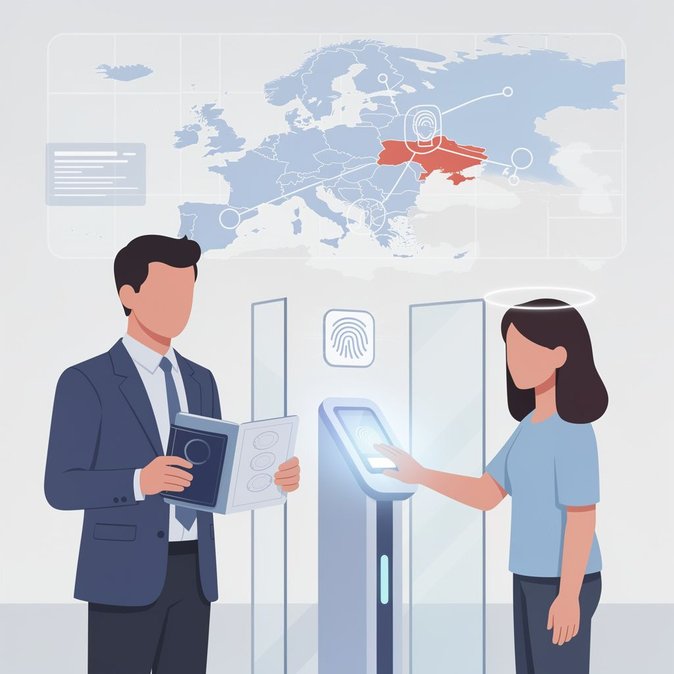
Austria has officially joined 28 other Schengen and associated states in retiring the traditional ink passport stamp. Travel and Tour World reported on 29 June that Austria, together with Belgium, Croatia and others, is now feeding real-time entry and exit records into the EU’s common database as part of the Entry/Exit System (EES). The change means that at Vienna-Schwechat, Salzburg and the country’s four other international airports, third-country nationals have their fingerprints and a facial photo taken on first arrival; subsequent trips are verified automatically. The move caps a four-year modernisation programme led by the Ministry of the Interior and technology supplier Secunet, which installed self-service kiosks and upgraded police workstations. Officials say the digital ledger closes loopholes exploited by overstayers and document forgers, and will eventually feed data into ETIAS—the electronic travel authorisation that the EU now says will launch in Q4 2026. Under the new rules, overstaying the 90/180-day limit will trigger automatic alerts shared with all Schengen members, tightening compliance for consultants and short-term assignees. For businesses the implications are significant. Global mobility teams must track cumulative days spent in Schengen more diligently, because a single excess day can now be detected on departure. Employers posting staff under the Austrian Rot-Weiß-Rot scheme should remind holders of D-visas and residence permits that they remain exempt from EES, while family members on short-stay visas are not. Travel policies should be updated to include EES enrolment time and data-privacy FAQs. Airports report that the new kiosks have cut average processing for repeat visitors to 20-30 seconds, once a traveller’s biometric file exists. However, first-time users still need manual assistance, prompting Vienna Airport to deploy multilingual “EES ambassadors” during busy periods. The police say they have already intercepted 37 impostors in three months by matching live photos against stored templates—evidence, they argue, that the system strengthens security without sacrificing mobility. Looking ahead, Austria will integrate EES with its digital ID-Austria wallet so that residents can store proof of legal stay on their phones. If the timetable holds, by 2027 business travellers will be able to cross e-gates just by looking into a camera, bringing frictionless travel a step closer.
Source: Travel and Tour World