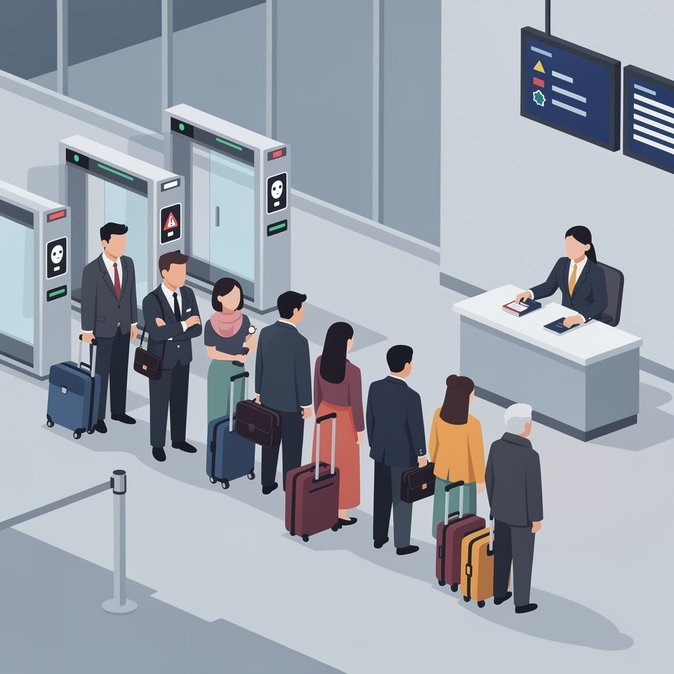
Spain’s key tourist gateways experienced fresh congestion on 30 June after intermittent outages hit the EU’s new Entry/Exit System (EES). According to airport IT staff quoted by tech outlet Golem.de, biometric kiosks at Madrid-Barajas and Barcelona-El Prat intermittently failed to synchronise with the central database between 08:00 and 11:30, forcing police to switch to manual stamping for non-EU arrivals. Travellers reported queues exceeding 90 minutes at Barajas Terminal 4.
For travellers who want to minimise surprises at the border, VisaHQ offers step-by-step guidance on Spain’s evolving entry rules and the EES roll-out. Its Spain portal (https://www.visahq.com/spain/) lets business and leisure visitors verify documentation requirements, complete visa applications online where needed, and sign up for real-time alerts on system disruptions—tools that can help shave valuable minutes off airport waits.
Airlines warned that tight connection times are “no longer realistic” while the system beds in, echoing complaints they raised in May when Ryanair asked Member States to suspend rollout until September. Spain’s interior ministry said the glitches stemmed from a software patch applied overnight by eu-LISA, the EU agency in charge of the project, and that a rollback had restored stability by midday. Nevertheless, contingency plans remain in place for the first ‘Operación Salida’ weekend, with extra police rosters and 60 mobile passport booths ready to be deployed. Business travellers without EU passports should factor in an extra 30–45 minutes for border clearance this week. Companies scheduling tight, same-day meetings are advised to route employees through regional airports such as Valencia or Bilbao, where EES traffic is lighter. The incident underscores ongoing concerns that technical readiness lags behind the summer peak, a risk that could reverberate across Schengen if fixes are not delivered swiftly.
For travellers who want to minimise surprises at the border, VisaHQ offers step-by-step guidance on Spain’s evolving entry rules and the EES roll-out. Its Spain portal (https://www.visahq.com/spain/) lets business and leisure visitors verify documentation requirements, complete visa applications online where needed, and sign up for real-time alerts on system disruptions—tools that can help shave valuable minutes off airport waits.
Airlines warned that tight connection times are “no longer realistic” while the system beds in, echoing complaints they raised in May when Ryanair asked Member States to suspend rollout until September. Spain’s interior ministry said the glitches stemmed from a software patch applied overnight by eu-LISA, the EU agency in charge of the project, and that a rollback had restored stability by midday. Nevertheless, contingency plans remain in place for the first ‘Operación Salida’ weekend, with extra police rosters and 60 mobile passport booths ready to be deployed. Business travellers without EU passports should factor in an extra 30–45 minutes for border clearance this week. Companies scheduling tight, same-day meetings are advised to route employees through regional airports such as Valencia or Bilbao, where EES traffic is lighter. The incident underscores ongoing concerns that technical readiness lags behind the summer peak, a risk that could reverberate across Schengen if fixes are not delivered swiftly.