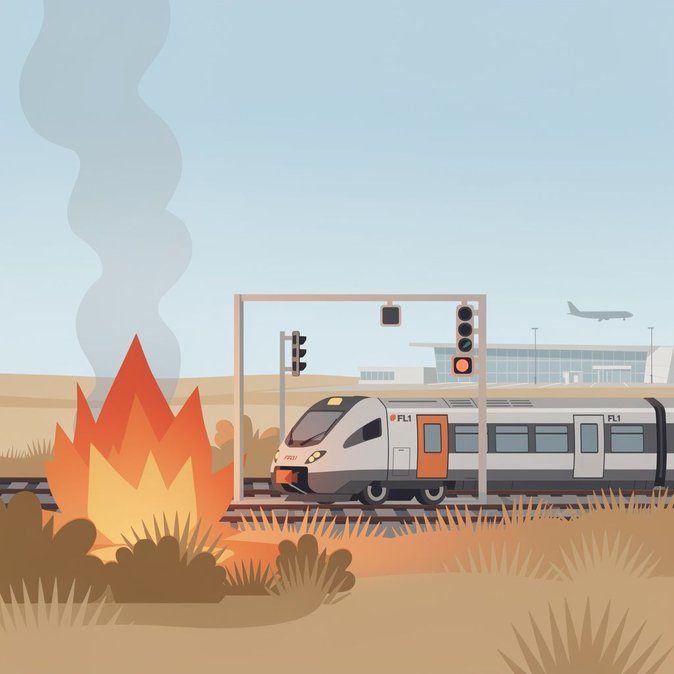
Business and leisure passengers heading to Rome’s Leonardo da Vinci–Fiumicino Airport on 30 June faced an unwelcome surprise when a brush-fire broke out beside the tracks near the Fidene-Nuovo Salario section of the FL1 commuter line. Rail infrastructure manager RFI suspended traffic between Roma Tiburtina and Monterotondo at 13:20 local time as firefighters tackled the blaze and thick smoke reduced visibility on the line. The interruption paralysed the backbone rail connection linking the capital’s main business districts with its principal international hub. Trenitalia set up replacement bus services, but passengers still experienced cancellations, diversions and residual delays of up to 60 minutes—enough to jeopardise tight flight connections at Europe’s sixth-busiest airport. Services began to recover gradually from 19:00 and were fully normalised by 19:30, according to RFI’s real-time bulletins. In total, more than 40 regional trains were cancelled or cut short, while several Intercity services on the north-south axis were held outside Rome. Airlines reported scattered check-in delays as late-arriving travellers filtered through security. The incident underscores the vulnerability of Italy’s multimodal airport access in high-summer, when soaring temperatures make trackside vegetation fires a recurrent hazard. Mobility planners note that the parallel Leonardo Express—a dedicated non-stop service from Roma Termini—is unconnected to the FL1 and therefore remained unaffected, offering a valuable fallback for premium travellers. Companies with tight same-day itineraries should remind staff to build extra buffer time into airport transfers until the current heatwave subsides. In the medium term, RFI says it will accelerate plans to widen the vegetation-free strip along critical sections of the FL1 and install additional thermal-imaging sensors that can trigger automatic slow-downs before smoke reaches the catenary. Until then, travel managers may want to flag the FL1 as a potential single point of failure in risk assessments for Rome-bound trips.
Source: Rete Ferroviaria Italiana (RFI)