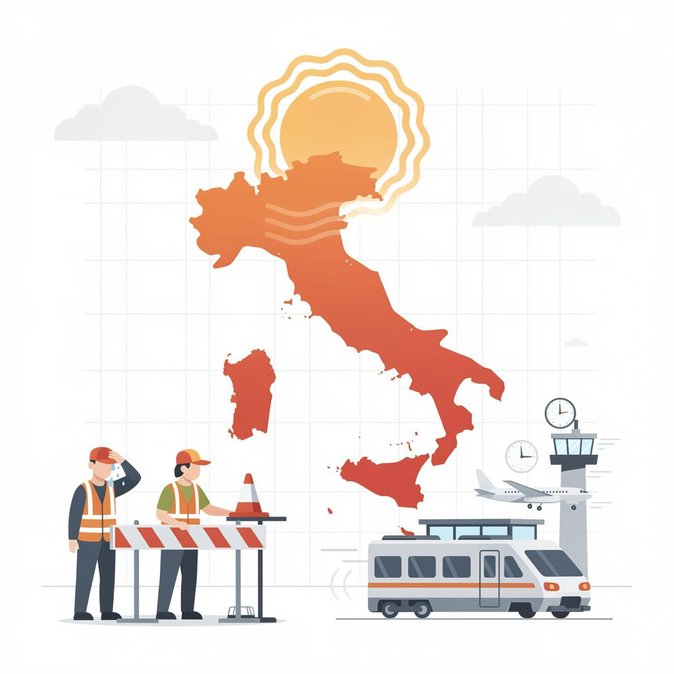
Italy’s health ministry on 30 June placed 25 of the country’s 27 largest urban areas under level-three (‘red’) heat alert as temperatures pushed past 40 °C for the fifth consecutive day. Cities newly added to the highest warning tier include Cagliari, Catania and Trieste, joining Rome, Milan, Florence and others already on the list. Red alerts imply heat conditions dangerous to the entire population, not just vulnerable groups, and allow local authorities to reduce outdoor construction work, suspend afternoon refuse collection and limit heavy-goods vehicle circulation. Milan’s Linate airport reported minor runway softening that required aircraft to back-track instead of using rapid-exit taxiways, adding a few minutes to turnaround times. Some regional railway operators imposed 80 km/h speed restrictions on older rolling stock to avert track buckling. For employers the alerts activate obligations under Italian occupational-safety law (Testo Unico 81/2008) to reassess thermal-stress risk and provide additional breaks, hydration points and, where possible, schedule shifts in cooler hours. Mobility managers should remind travellers to carry heat-stroke insurance coverage and anticipate midday taxi shortages as drivers rotate more frequently for rest. The World Health Organization’s Europe office reported five heat-related deaths in Italy in the 24-hour period to noon 30 June, underscoring the severity of conditions. Meteorologists forecast thunderstorms later in the week, which could bring both relief and localised flooding—another factor companies may need to address in contingency plans.
Source: ANSA English Service