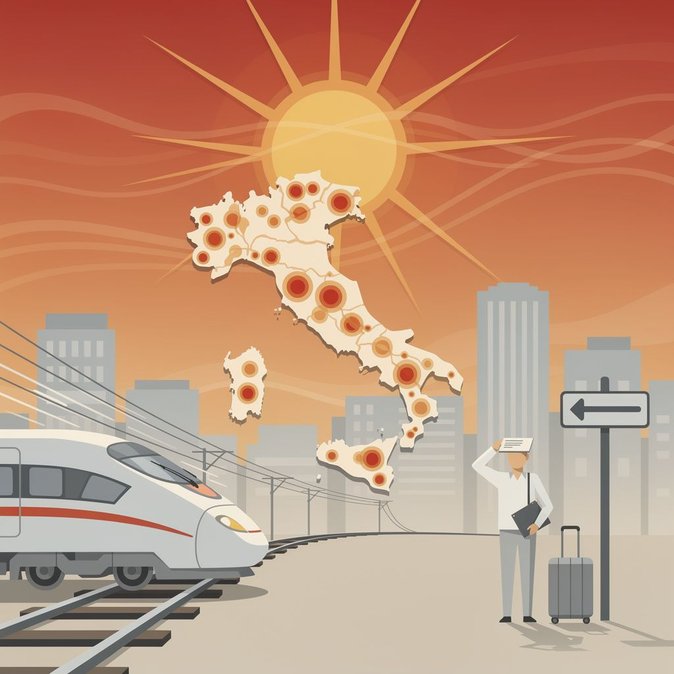
Italy’s health ministry has placed 25 of the nation’s 27 largest cities under level-three ‘red alert’ status as the current heatwave pushes daytime temperatures past 40 °C from Milan to Palermo. The alert—issued on 30 June—triggers mandatory municipal measures such as round-the-clock cooling centres, restrictions on construction work during peak hours and advice to limit non-essential travel. While the order is aimed primarily at protecting vulnerable residents, it carries operational implications for mobile workforces. Many municipal police forces now have authority to close tourist queues at outdoor monuments and to redirect traffic around overheated urban cores. Rail infrastructure operators are already monitoring track temperatures; speed restrictions could lengthen high-speed journeys on the Milan–Rome–Naples corridor if rails exceed prescribed thresholds. The travel-risk dimension became tragically clear when a 55-year-old Moroccan farm worker collapsed and died near Mantua, adding to several heat-related fatalities reported in Genoa the previous day. Employers sending staff to field sites—particularly in agriculture, logistics and construction—must revisit duty-of-care protocols, ensure hydration breaks and verify that local partners are following the labour ministry’s updated guidelines on outdoor work. For visitors, the biggest disruptor could be sudden, heat-fuelled thunderstorms forecast for the coming days. These often cause flash flooding of underpasses and flight diversions at regional airports with limited storm-resilience infrastructure. Travel managers should monitor Civil Protection bulletins and remind travellers that EU-261 compensation for weather-driven air delays is limited. Climate scientists warn that such extreme heat events are becoming the ‘new normal’, intensifying calls within the EU to fold climate-adaptation criteria into Schengen border and transport policy. Companies with significant Italian footprints may therefore want to integrate heat-stress metrics into long-range mobility planning alongside more traditional security indicators.
Source: ANSA