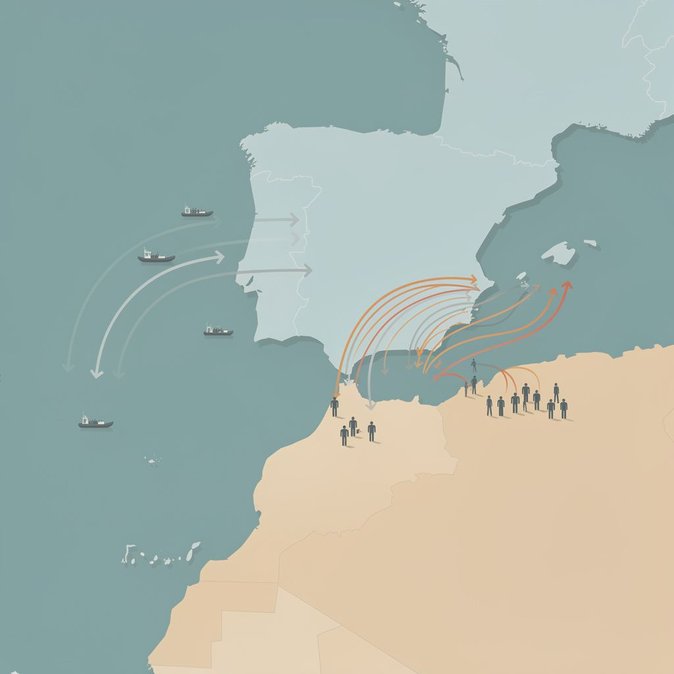
The latest Interior-Ministry dashboard, released on 1 July, shows that 12,138 people entered Spain irregularly between 1 January and 30 June 2026 – a marked 32.5 % drop versus the same period in 2025. The sharpest decline occurred on the perilous Atlantic route to the Canary Islands, where arrivals plunged 67 %.
For travelers and companies that need to navigate Spain’s shifting entry rules—whether for business trips, project assignments, or humanitarian travel—VisaHQ can simplify the process by offering up-to-date information, step-by-step application support, and real-time status alerts through its Spain portal: https://www.visahq.com/spain/ Using the service can reduce administrative delays that often accompany sudden changes in migration flows and border enforcement.
Maritime interceptions off Andalusia and the Balearic Islands also fell, although by smaller margins. The data suggest that joint patrols with Senegal and Mauritania, plus Spain’s increased use of aerial surveillance drones supplied by Frontex, are deterring departures from West Africa. At the same time, land entries into Ceuta jumped 164 % as would-be migrants tested the fortified border fences or swam short distances from Moroccan beaches. Interior officials argue that overall numbers remain “manageable”, amounting to roughly 6 % of all foreign entries to Spain so far this year. For relocation managers the figures translate into fewer high-profile rescue operations – and therefore fewer last-minute ferry or flight disruptions along Atlantic approaches. However, the increase in Ceuta raises questions about security screening times at the Tarajal crossing, which business travellers occasionally use en route to Tangier free-trade zones. Immigration lawyers also warn that lower arrival numbers do not lessen the backlog of pending asylum and humanitarian cases. Companies employing workers from refugee-producing countries should continue to monitor case-processing times, which still average nine months for initial interviews despite the headline decline in boat arrivals.
For travelers and companies that need to navigate Spain’s shifting entry rules—whether for business trips, project assignments, or humanitarian travel—VisaHQ can simplify the process by offering up-to-date information, step-by-step application support, and real-time status alerts through its Spain portal: https://www.visahq.com/spain/ Using the service can reduce administrative delays that often accompany sudden changes in migration flows and border enforcement.
Maritime interceptions off Andalusia and the Balearic Islands also fell, although by smaller margins. The data suggest that joint patrols with Senegal and Mauritania, plus Spain’s increased use of aerial surveillance drones supplied by Frontex, are deterring departures from West Africa. At the same time, land entries into Ceuta jumped 164 % as would-be migrants tested the fortified border fences or swam short distances from Moroccan beaches. Interior officials argue that overall numbers remain “manageable”, amounting to roughly 6 % of all foreign entries to Spain so far this year. For relocation managers the figures translate into fewer high-profile rescue operations – and therefore fewer last-minute ferry or flight disruptions along Atlantic approaches. However, the increase in Ceuta raises questions about security screening times at the Tarajal crossing, which business travellers occasionally use en route to Tangier free-trade zones. Immigration lawyers also warn that lower arrival numbers do not lessen the backlog of pending asylum and humanitarian cases. Companies employing workers from refugee-producing countries should continue to monitor case-processing times, which still average nine months for initial interviews despite the headline decline in boat arrivals.