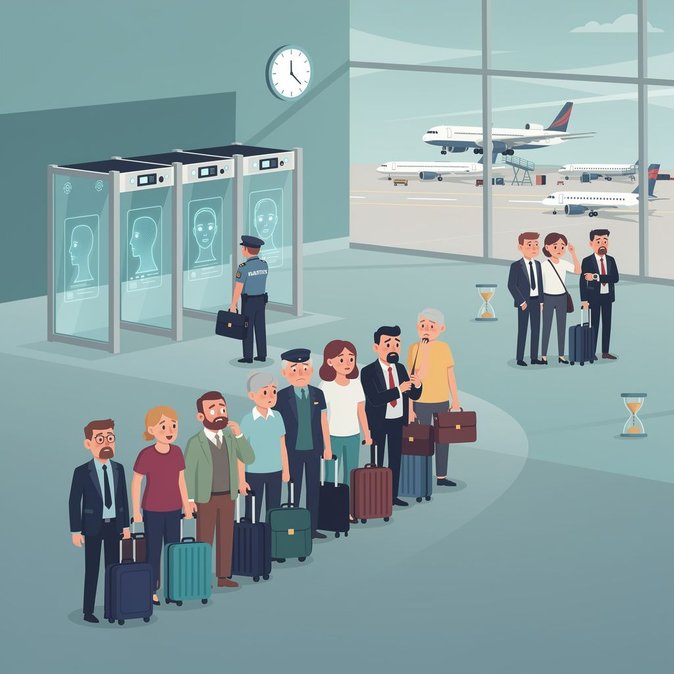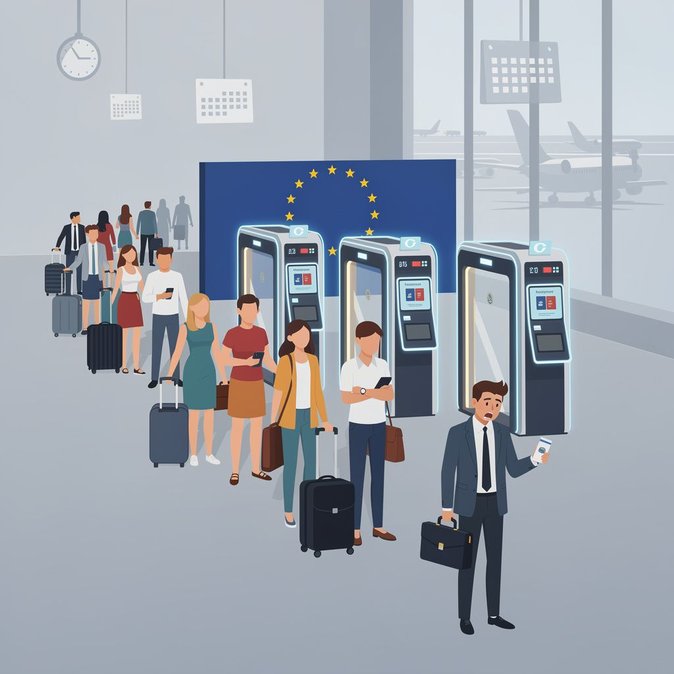
European aviation trade bodies Airlines for Europe (A4E), Airports Council International Europe (ACI EUROPE) and the International Air Transport Association (IATA) have sent an open letter to European Commission president Ursula von der Leyen warning that the new Schengen Entry/Exit System (EES) is already creating long queues and operational bottlenecks only days after going live. Under the EES, all non-EU travellers must have fingerprints and facial images captured the first time they cross an external Schengen border; subsequent trips require biometric verification rather than a passport stamp.
For travellers and corporates looking to stay ahead of these fast-moving entry rules, VisaHQ’s Czech Republic portal (https://www.visahq.com/czech-republic/) offers up-to-date guidance on biometric requirements, visa options and supporting documentation, and can manage end-to-end applications on your behalf—saving valuable time when every minute in the queue counts.
Prague’s Václav Havel Airport, which began phased implementation in the spring, reported wait-times of up to 45 minutes for some long-haul arrivals this week, and ground-handling staff have had to be redeployed from air-side duties to crowd-management. Similar scenes were reported at Spanish, Italian and Polish airports. Industry groups say the problem is twofold: many border posts still rely on legacy booths retro-fitted with fingerprint scanners that slow the process to 60-90 seconds per passenger, and the system provides no rapid-switch procedure to revert to manual stamping when the queue threshold is exceeded. They are asking Brussels to allow member states (including Czechia) to suspend mandatory biometrics during the July–August peak and to deploy mobile enrolment teams so that first-time registration can be completed away from the border. The Commission has called an emergency meeting for next Tuesday to consider short-term measures. Czech business-travel associations are pressing the Interior Ministry to publish clear contingency plans, warning that missed connections in Prague could ripple across corporate itineraries and supply-chain visits. Practically, companies sending non-EU staff to Czech clients this summer are advised to build a minimum three-hour buffer for flight connections in Prague or other Schengen hubs, pre-load passport details in carriers’ apps where possible, and brief travellers on the extra fingerprint step. Czech-based multinationals should also review duty-of-care policies in case overnight accommodation is needed due to missed onward flights.
For travellers and corporates looking to stay ahead of these fast-moving entry rules, VisaHQ’s Czech Republic portal (https://www.visahq.com/czech-republic/) offers up-to-date guidance on biometric requirements, visa options and supporting documentation, and can manage end-to-end applications on your behalf—saving valuable time when every minute in the queue counts.
Prague’s Václav Havel Airport, which began phased implementation in the spring, reported wait-times of up to 45 minutes for some long-haul arrivals this week, and ground-handling staff have had to be redeployed from air-side duties to crowd-management. Similar scenes were reported at Spanish, Italian and Polish airports. Industry groups say the problem is twofold: many border posts still rely on legacy booths retro-fitted with fingerprint scanners that slow the process to 60-90 seconds per passenger, and the system provides no rapid-switch procedure to revert to manual stamping when the queue threshold is exceeded. They are asking Brussels to allow member states (including Czechia) to suspend mandatory biometrics during the July–August peak and to deploy mobile enrolment teams so that first-time registration can be completed away from the border. The Commission has called an emergency meeting for next Tuesday to consider short-term measures. Czech business-travel associations are pressing the Interior Ministry to publish clear contingency plans, warning that missed connections in Prague could ripple across corporate itineraries and supply-chain visits. Practically, companies sending non-EU staff to Czech clients this summer are advised to build a minimum three-hour buffer for flight connections in Prague or other Schengen hubs, pre-load passport details in carriers’ apps where possible, and brief travellers on the extra fingerprint step. Czech-based multinationals should also review duty-of-care policies in case overnight accommodation is needed due to missed onward flights.