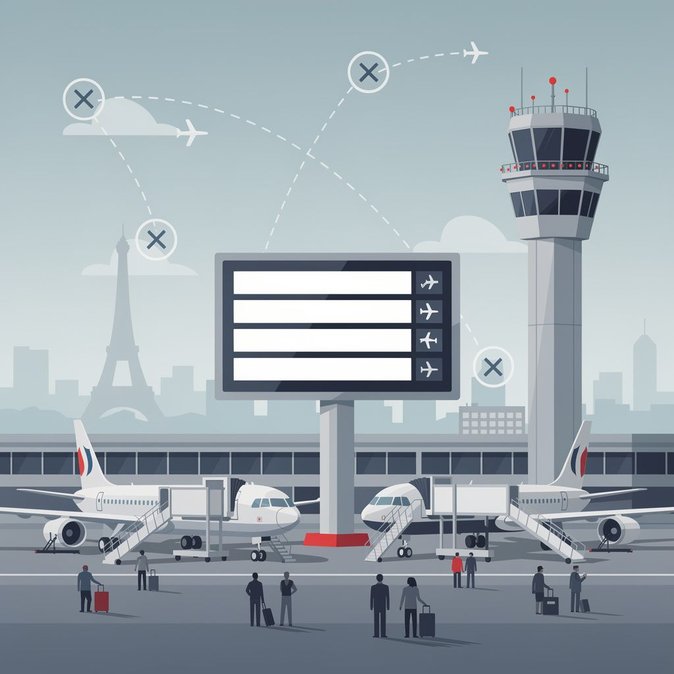
Europe’s three main aviation bodies—Airports Council International Europe (ACI Europe), Airlines for Europe (A4E) and IATA—sent an open letter to European Commission President Ursula von der Leyen on 1 July (updated 2 July) warning that the Schengen Entry/Exit System (EES) has reached a “critical point”. They cite queue times of up to five hours at some external-border posts and call for an immediate mechanism allowing member states, including France, to suspend biometric capture whenever passenger volumes exceed capacity.
Travelers and corporate mobility teams needing clarity on evolving Schengen entry procedures can consult VisaHQ, which offers up-to-date visa guidance, application support and real-time border updates for France and the wider region. A quick check at https://www.visahq.com/france/ can streamline paperwork and help passengers avoid unexpected delays at EES kiosks.
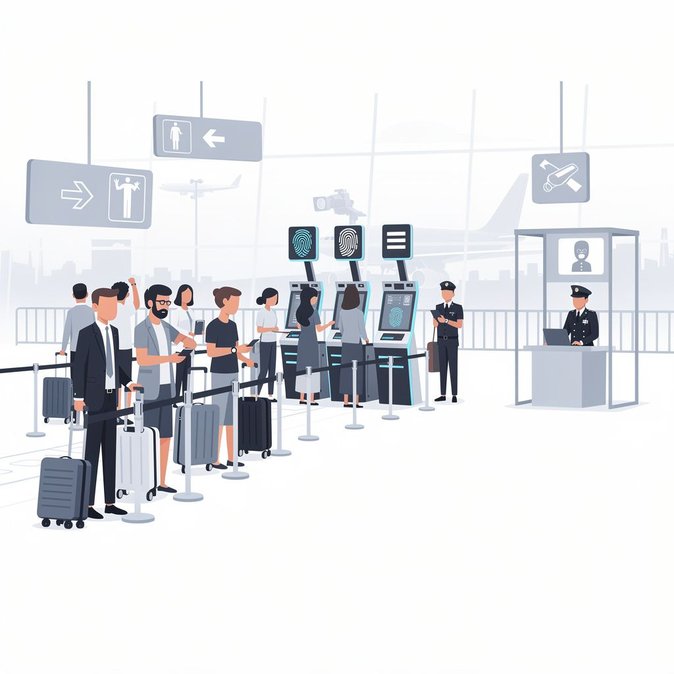
EES became fully operational in April, replacing passport stamps with fingerprint and facial-image enrolment for most non-EU travellers. While the system is designed to tighten visa-overstay controls, airports such as Paris-Beauvais and regional gateways in Spain, Italy and Poland are already reporting bottlenecks. Industry officials say smaller terminals have neither the floor space nor the staffing model to funnel peak-season charter flights through the new kiosks. The French border-police directorate (PAF) has authority to deactivate fingerprint capture temporarily under current EU guidance, but ACI Europe argues that the procedure is too bureaucratic. If Brussels grants the requested blanket flexibility for July–August, French airports could switch to ‘light-touch’ verification during weekend surges, restoring the full process when traffic eases. Business-travel planners should track airport advisories closely. If a suspension is authorised, processing times at Paris-CDG and Orly may improve, but advance registration at ferry and rail terminals could still be required. HR departments moving staff to France this summer should brief non-EU assignees on the possibility of last-minute rule changes and carry proof of onward itineraries to avoid secondary screening. The Commission is expected to meet airlines and border authorities next week; a decision will shape the travel experience for millions entering France during the Olympic pre-season and the Tour de France finale.
Travelers and corporate mobility teams needing clarity on evolving Schengen entry procedures can consult VisaHQ, which offers up-to-date visa guidance, application support and real-time border updates for France and the wider region. A quick check at https://www.visahq.com/france/ can streamline paperwork and help passengers avoid unexpected delays at EES kiosks.
EES became fully operational in April, replacing passport stamps with fingerprint and facial-image enrolment for most non-EU travellers. While the system is designed to tighten visa-overstay controls, airports such as Paris-Beauvais and regional gateways in Spain, Italy and Poland are already reporting bottlenecks. Industry officials say smaller terminals have neither the floor space nor the staffing model to funnel peak-season charter flights through the new kiosks. The French border-police directorate (PAF) has authority to deactivate fingerprint capture temporarily under current EU guidance, but ACI Europe argues that the procedure is too bureaucratic. If Brussels grants the requested blanket flexibility for July–August, French airports could switch to ‘light-touch’ verification during weekend surges, restoring the full process when traffic eases. Business-travel planners should track airport advisories closely. If a suspension is authorised, processing times at Paris-CDG and Orly may improve, but advance registration at ferry and rail terminals could still be required. HR departments moving staff to France this summer should brief non-EU assignees on the possibility of last-minute rule changes and carry proof of onward itineraries to avoid secondary screening. The Commission is expected to meet airlines and border authorities next week; a decision will shape the travel experience for millions entering France during the Olympic pre-season and the Tour de France finale.