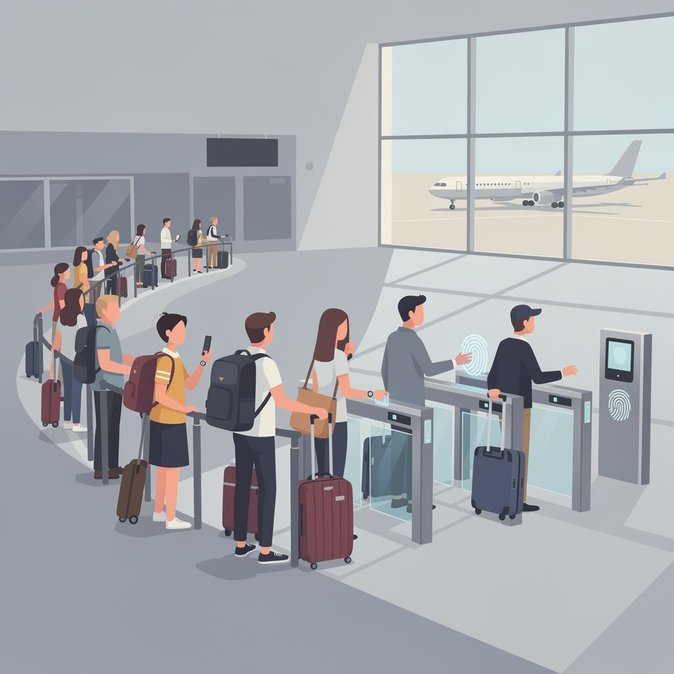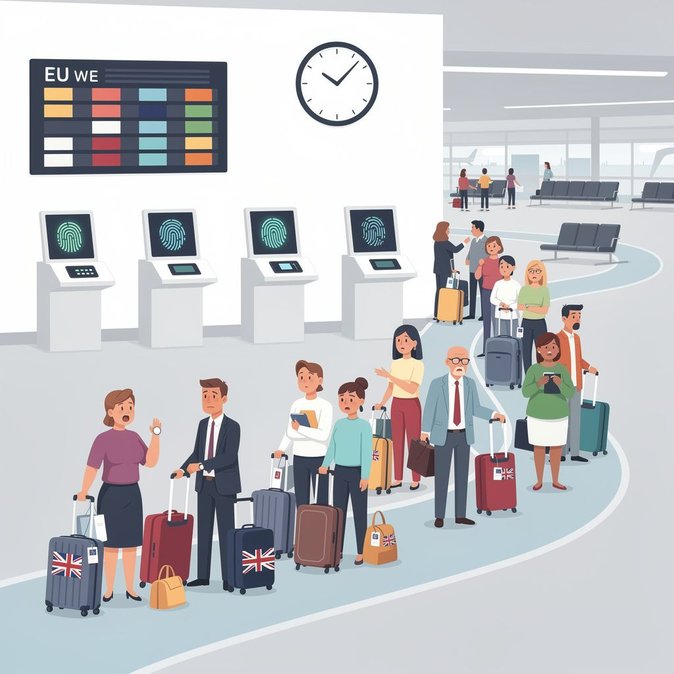
Ryanair and other European carriers have issued a stark warning that holiday-makers could face “queue chaos” at continental airports this summer as the EU’s new Entry/Exit System (EES)—which requires non-EU travellers to provide fingerprints and facial images—ramps up during the peak season. In a letter to European Commission president Ursula von der Leyen, Airlines for Europe and Airports Council International called for an urgent suspension of mandatory biometric checks throughout July and August. The carriers say infrastructure at key leisure hubs—including Tenerife South, Palma de Mallorca, Alicante, Málaga, Milan Bergamo, Kraków and Paris Beauvais—is not ready for passenger volumes.
Travellers looking to navigate these evolving requirements can streamline preparations by using VisaHQ’s online platform, which offers up-to-date guidance on Schengen entry rules, biometric enrolment procedures and the documentation needed for transit through European airports. Their UK portal (https://www.visahq.com/united-kingdom/) allows holiday-makers and corporate travellers alike to check visa regulations, receive alerts on policy changes and obtain expert support—helping to minimise unpleasant surprises at the border.
British families have already reported waits of up to five hours, missed connections and aircraft departing half-empty because travellers were trapped in queues. Under EES, first-time entrants from the UK and other “third countries” must complete a one-off biometric enrolment that takes around 70 seconds per person—manageable off-peak but potentially crippling when entire flights arrive simultaneously. Although member states may suspend checks temporarily if lines build, industry leaders say a formal summer derogation is needed to avoid reputational damage and economic losses for Europe’s tourist industry. For UK-based businesses the risk is twofold: corporate travellers could miss onward rail or regional flights, and firms may need to budget extra time for employees transiting Schengen airports. Travel managers are advising staff to allow at least three hours between flights that require passing through external Schengen border control and to pre-enrol at quieter airports where possible. Failure to clear immigration in time could invalidate some travel-insurance policies. The Commission has convened an emergency meeting with airlines and airports next Tuesday to consider mitigation. However, officials insist average processing times remain under two minutes and that “most airports are not experiencing major issues”. If Brussels declines to pause the roll-out, carriers believe full implementation may slip to summer 2027—extending uncertainty for global mobility teams planning future assignments.
Travellers looking to navigate these evolving requirements can streamline preparations by using VisaHQ’s online platform, which offers up-to-date guidance on Schengen entry rules, biometric enrolment procedures and the documentation needed for transit through European airports. Their UK portal (https://www.visahq.com/united-kingdom/) allows holiday-makers and corporate travellers alike to check visa regulations, receive alerts on policy changes and obtain expert support—helping to minimise unpleasant surprises at the border.
British families have already reported waits of up to five hours, missed connections and aircraft departing half-empty because travellers were trapped in queues. Under EES, first-time entrants from the UK and other “third countries” must complete a one-off biometric enrolment that takes around 70 seconds per person—manageable off-peak but potentially crippling when entire flights arrive simultaneously. Although member states may suspend checks temporarily if lines build, industry leaders say a formal summer derogation is needed to avoid reputational damage and economic losses for Europe’s tourist industry. For UK-based businesses the risk is twofold: corporate travellers could miss onward rail or regional flights, and firms may need to budget extra time for employees transiting Schengen airports. Travel managers are advising staff to allow at least three hours between flights that require passing through external Schengen border control and to pre-enrol at quieter airports where possible. Failure to clear immigration in time could invalidate some travel-insurance policies. The Commission has convened an emergency meeting with airlines and airports next Tuesday to consider mitigation. However, officials insist average processing times remain under two minutes and that “most airports are not experiencing major issues”. If Brussels declines to pause the roll-out, carriers believe full implementation may slip to summer 2027—extending uncertainty for global mobility teams planning future assignments.