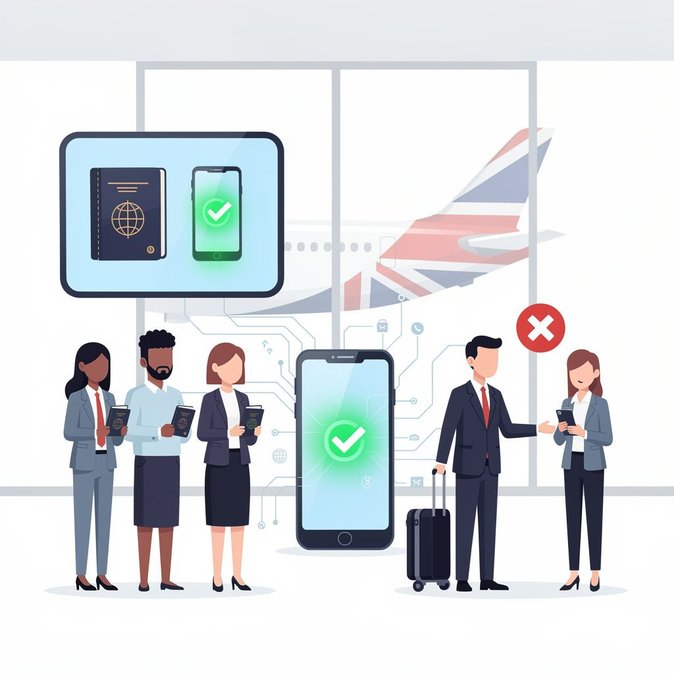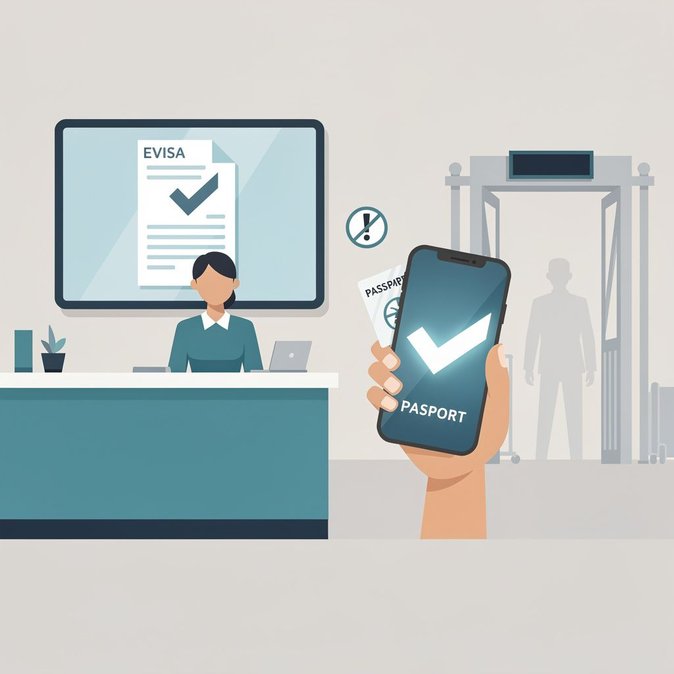
UK Visas & Immigration has revised its long-standing “Document checks and charges for carriers” handbook, effective 1 July 2026, to align airline and ferry-operator duties with the full switch to digital eVisas. Section 2.3 now recognises the new “Form for Accompanying an eVisa” (FAV), a single-use sheet issued only in limited scenarios—primarily to passengers travelling on emergency or diplomatic documents—that links to an electronic permission held in the UKVI system.
Whether your travellers require a fresh eVisa, need to secure an Electronic Travel Authorisation, or are unsure which documents apply to their complex itineraries, VisaHQ can fast-track the process with expert guidance and online applications. Our platform (https://www.visahq.com/united-kingdom/) consolidates UK entry requirements in one place, helping corporate travel managers and individual passengers avoid costly carrier charges and last-minute airport surprises.
Carriers must treat the FAV in exactly the same way as a traditional visa vignette, verifying the document number against the Advance Passenger Information (API) response and ensuring the passenger travels on the passport referenced in the eVisa record. Failure to do so attracts the standard carrier charge of £2,000 per improperly documented passenger. The guidance also reinforces that, since 12 May 2026, carrier check-in systems must confirm passengers from visa-exempt countries possess a valid Electronic Travel Authorisation. Airlines without a direct Carrier Check API connection are advised to use the stand-alone web portal until integration is complete. For corporate travel managers the message is clear: staff—and any accompanying dependants—must hold either an eVisa, an ETA or British/Irish citizenship evidence before arriving at the airport. Dual nationals who habitually travel on a non-UK passport must carry their British or Irish passport or risk being off-loaded. Industry bodies welcomed the clarification but urged the Home Office to accelerate performance of the real-time status feed after several brief outages in June left check-in agents unable to validate eVisas. UKVI says resilience measures, including a cached “fallback-OK” response, will be deployed before the August bank-holiday peak.
Whether your travellers require a fresh eVisa, need to secure an Electronic Travel Authorisation, or are unsure which documents apply to their complex itineraries, VisaHQ can fast-track the process with expert guidance and online applications. Our platform (https://www.visahq.com/united-kingdom/) consolidates UK entry requirements in one place, helping corporate travel managers and individual passengers avoid costly carrier charges and last-minute airport surprises.
Carriers must treat the FAV in exactly the same way as a traditional visa vignette, verifying the document number against the Advance Passenger Information (API) response and ensuring the passenger travels on the passport referenced in the eVisa record. Failure to do so attracts the standard carrier charge of £2,000 per improperly documented passenger. The guidance also reinforces that, since 12 May 2026, carrier check-in systems must confirm passengers from visa-exempt countries possess a valid Electronic Travel Authorisation. Airlines without a direct Carrier Check API connection are advised to use the stand-alone web portal until integration is complete. For corporate travel managers the message is clear: staff—and any accompanying dependants—must hold either an eVisa, an ETA or British/Irish citizenship evidence before arriving at the airport. Dual nationals who habitually travel on a non-UK passport must carry their British or Irish passport or risk being off-loaded. Industry bodies welcomed the clarification but urged the Home Office to accelerate performance of the real-time status feed after several brief outages in June left check-in agents unable to validate eVisas. UKVI says resilience measures, including a cached “fallback-OK” response, will be deployed before the August bank-holiday peak.