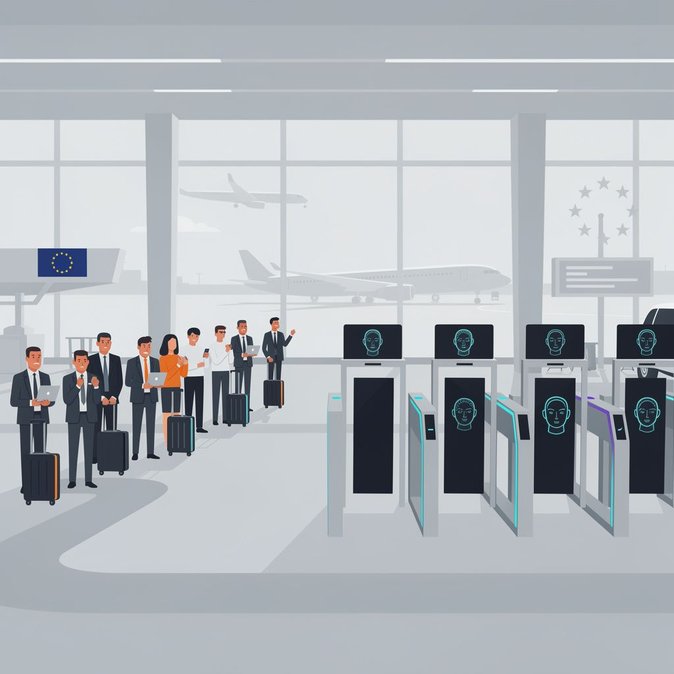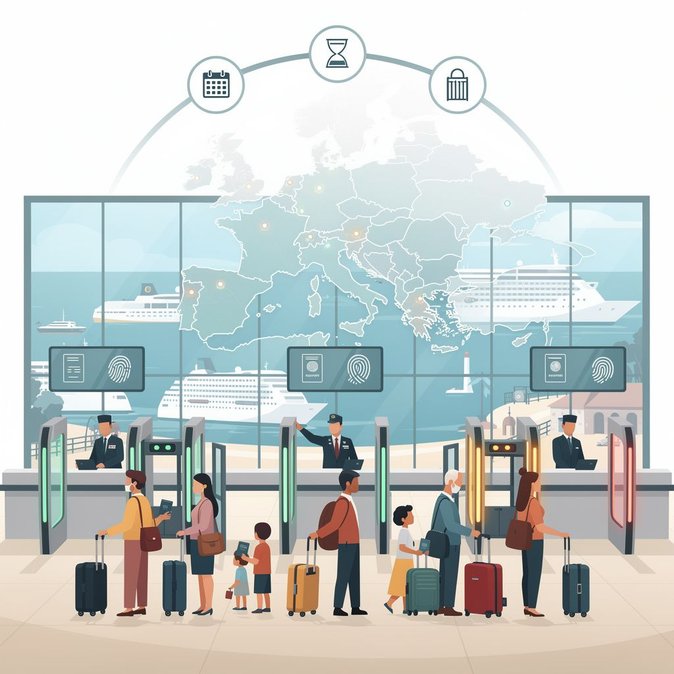
Euronews has published a long-form explainer that dissects the technical and political reasons the Entry/Exit System is creating “nightmare” queues just as Europeans head off on holiday. The piece, written by Italian correspondent Vincenzo Genovese, notes that the EES became fully operational on 10 April 2026 and is now compulsory at all external borders, including Italian airports and ferry ports. The article clarifies that the system targets non-EU short-stay visitors, capturing fingerprints and facial images and automatically calculating the 90/180-day rule. While the aim is to tighten security and curb overstays, the rollout has exposed gaps in staff training, kiosk reliability and passenger information.
For travellers eager to eliminate at least one layer of uncertainty before confronting the new EES kiosks, VisaHQ can help by streamlining every other document requirement for entry into Italy and the wider Schengen Zone. Its dedicated portal (https://www.visahq.com/italy/) provides real-time visa guidance, digital application tools and courier options, ensuring passports and permits are squared away well in advance—leaving passengers free to focus on navigating biometric queues.
The Commission says more than 40 000 travellers have already been refused entry since April, yet airlines argue that technology glitches cause far more legitimate passengers to miss connections. Specific Italian pain points include ports such as Genoa, where cruise check-in space is limited, and border crossings with Switzerland, where summer commuters from Ticino are queueing alongside tourists. The report also highlights the risk that long turnaround times at Milan-Malpensa could compromise the airport’s slot-performance ratio and trigger fines from ENAC. Euronews quotes sources suggesting that the real crunch will come on 10 September, when the grace period allowing Member States to skip biometric capture expires. Unless Italy hires at least 1 000 additional border officers or deploys more e-gates, the article concludes, “the queues we see today could look modest”. For companies the takeaway is to brief non-EU staff and clients thoroughly: pre-enrolment is impossible, so first-time users should expect 60-90 seconds per person, multiplied by family group size. Premium-lane add-ons may be worth the cost for executive travellers.
For travellers eager to eliminate at least one layer of uncertainty before confronting the new EES kiosks, VisaHQ can help by streamlining every other document requirement for entry into Italy and the wider Schengen Zone. Its dedicated portal (https://www.visahq.com/italy/) provides real-time visa guidance, digital application tools and courier options, ensuring passports and permits are squared away well in advance—leaving passengers free to focus on navigating biometric queues.
The Commission says more than 40 000 travellers have already been refused entry since April, yet airlines argue that technology glitches cause far more legitimate passengers to miss connections. Specific Italian pain points include ports such as Genoa, where cruise check-in space is limited, and border crossings with Switzerland, where summer commuters from Ticino are queueing alongside tourists. The report also highlights the risk that long turnaround times at Milan-Malpensa could compromise the airport’s slot-performance ratio and trigger fines from ENAC. Euronews quotes sources suggesting that the real crunch will come on 10 September, when the grace period allowing Member States to skip biometric capture expires. Unless Italy hires at least 1 000 additional border officers or deploys more e-gates, the article concludes, “the queues we see today could look modest”. For companies the takeaway is to brief non-EU staff and clients thoroughly: pre-enrolment is impossible, so first-time users should expect 60-90 seconds per person, multiplied by family group size. Premium-lane add-ons may be worth the cost for executive travellers.