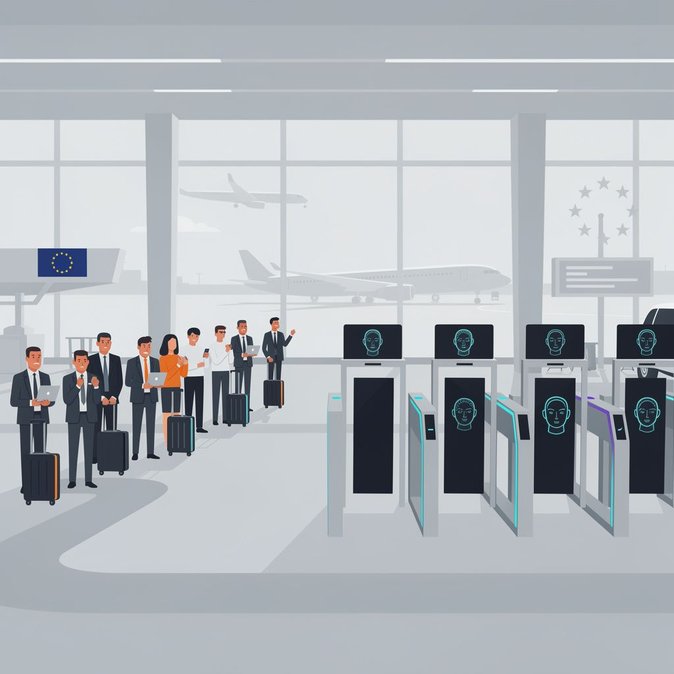
Italy’s fast-growing Milan Bergamo airport has been singled out by Europe’s aviation sector as one of seven Schengen gateways most at risk of grinding to a halt this summer because of the new European Entry-Exit System (EES). The digital border regime, fully rolled-out in April 2026, replaces passport stamping for non-EU travellers with mandatory fingerprint and facial-image capture on first entry and biometric verification on every subsequent crossing. In an open letter published on 2 July, Airlines for Europe (A4E), Airports Council International Europe (ACI-EUROPE) and the International Air Transport Association (IATA) urged the European Commission to let member states suspend the system during the July–August peak. Ryanair, whose traffic through Bergamo exceeds 13 million passengers a year, warned of “five-hour queues” if nothing is done. Bergamo has just 20 automated kiosks for first-time biometric enrolment—well below the 40 the airport operator says it needs. Staffing is also an issue: border-police rosters were set last winter, before final EES specifications were known. Similar shortfalls have been identified at Rome-Ciampino and several regional airports, raising the prospect of missed connections, tarmac delays and flight diversions across Italy’s densely scheduled domestic network. From a business-mobility perspective the timing could scarcely be worse. Milan is hosting Design Week in mid-July, while Lombardy factories restart production at the end of August; both events generate a spike in international arrivals with tight onward itineraries. Human-resources teams are already advising executives to book longer connection windows, carry printed proof of biometric enrolment and prepare contingency work-from-Italy plans in case meetings are lost to border delays. The Commission says the €1.3 billion system is essential for security and migration management, but has hinted it could allow “targeted flexibility” if choke-points materialise. For now companies should brief travellers on the 90/180-day Schengen clock—EES automates overstay detection—and encourage them to complete pre-registration wherever offered by airlines or airports. Expect final guidance from Brussels before 15 July, when passenger volumes traditionally surge.
Source: The Guardian / Euronews