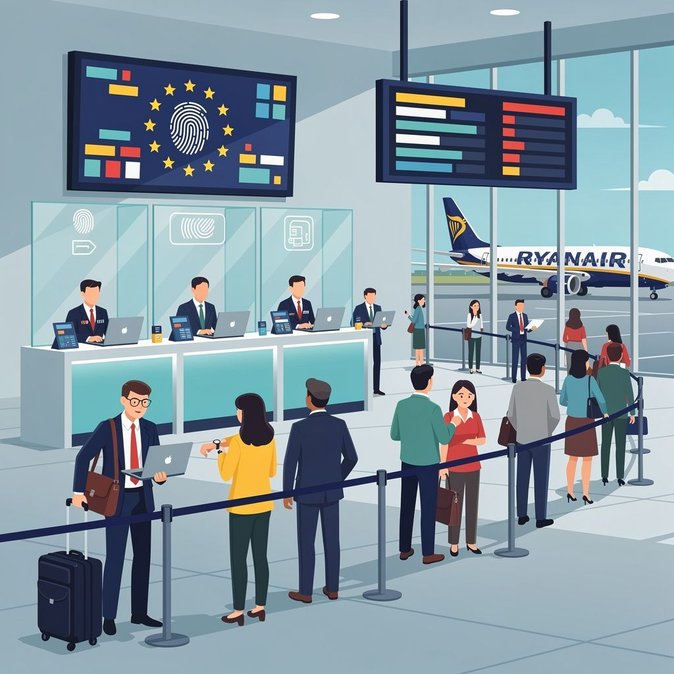
Irish carrier Ryanair has joined a growing industry chorus criticising the European Union’s biometric Entry-Exit System (EES), set to become fully mandatory for third-country travellers later this year. In comments reported by Sky News on 3 July 2026, Chief Operations Officer Neal McMahon said passengers should not be “guinea pigs for a half-baked passport-control system that risks creating long queues, missed flights and unnecessary stress”. The airline cited delays of up to two hours at airports from Palma to Paris Beauvais during current pilot roll-outs. While Ireland is outside the Schengen Area, large numbers of Ryanair passengers connect onward through Schengen hubs, and the carrier fears knock-on punctuality penalties under EU261 rules. The criticism follows a joint letter from airports and airline associations to Commission President von der Leyen warning of “severe operational consequences”. For mobility managers, the warning is timely: from late October, non-EU assignees flying into Schengen for meetings will need to allocate extra time for initial registration (photo and fingerprints) and ensure passports have sufficient blank pages for the EES entry stamp that replaces manual stamping. Repeat travellers should still plan for facial-recognition kiosks that remain untested at peak loads. Irish authorities, which maintain the Common Travel Area with the UK, have yet to decide whether to align Dublin Airport’s US Pre-clearance and other non-Schengen flights with EES data-sharing. Companies routing staff via European hubs are advised to monitor contingency planning by handling agents and to brief travellers on likely wait times.
Source: Sky News Money Blog