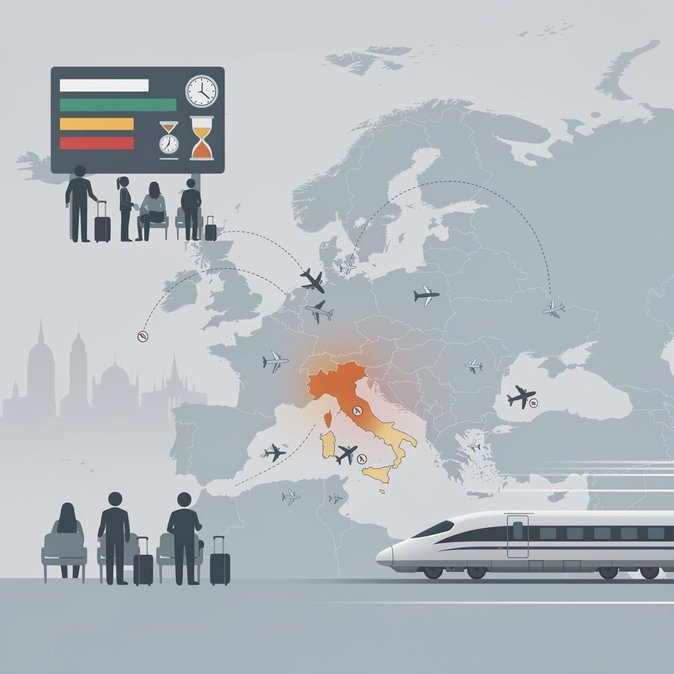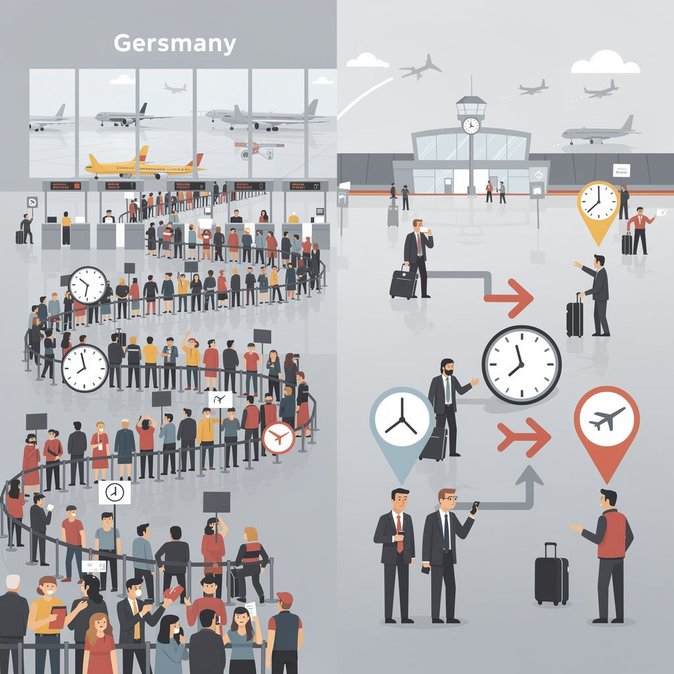
A dawn dispatch from Boerse-Global on 5 July reveals that Germany’s national arbitration board logged a 50 % year-on-year jump in travel grievances in H1 2026—its worst tally on record. Although the headline centres on Frankfurt and Munich, the ripple effects are already being felt in Vienna, one of Lufthansa Group’s six core hubs. The surge is linked to long biometric queues under EES, compounded by sporadic pilot strikes at Lufthansa and its regional arm CityLine. With short-haul fleet cuts announced for 2027, the carrier plans to funnel more Europe-bound traffic via Vienna and Zurich. Industry analysts warn that without urgent capacity upgrades, Schwechat could inherit the disruption currently plaguing German airports. Austrian corporates relying on same-day connections through Germany face rising costs: duty-of-care platforms report a 22 % increase in re-accommodation spend since April. Mobility managers are advised to negotiate “irregular-operations” clauses that cover biometric delays, which are not classed as extraordinary circumstances under EU261. Meanwhile, the German rail sector struck a new wage deal that grants conductors shorter workweeks and higher Sunday premiums from 2028, a development applauded by Austrian event organisers who bus guests across the border. Overall, the data underscore how operational turmoil in neighbouring markets can quickly overflow into Austria’s travel ecosystem, amplifying the call for an EU-wide fix to the EES backlog.
Source: boerse-global.de / ad-hoc-news