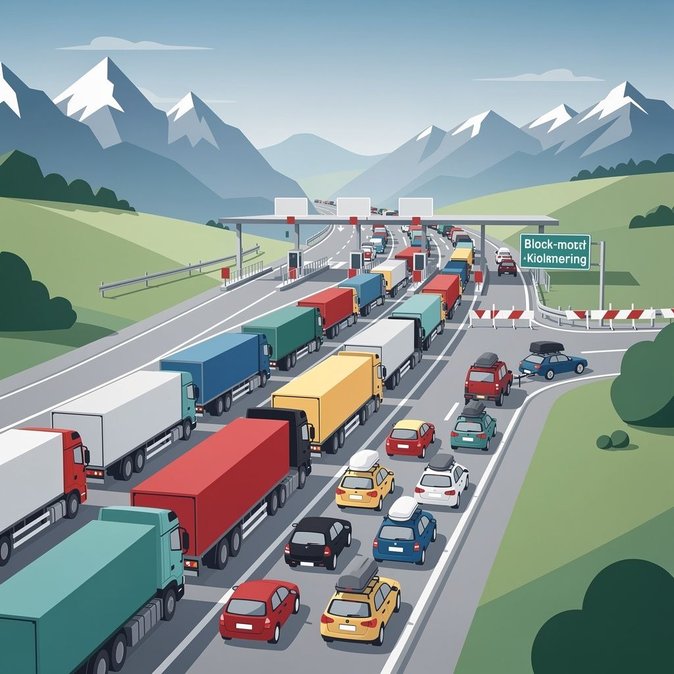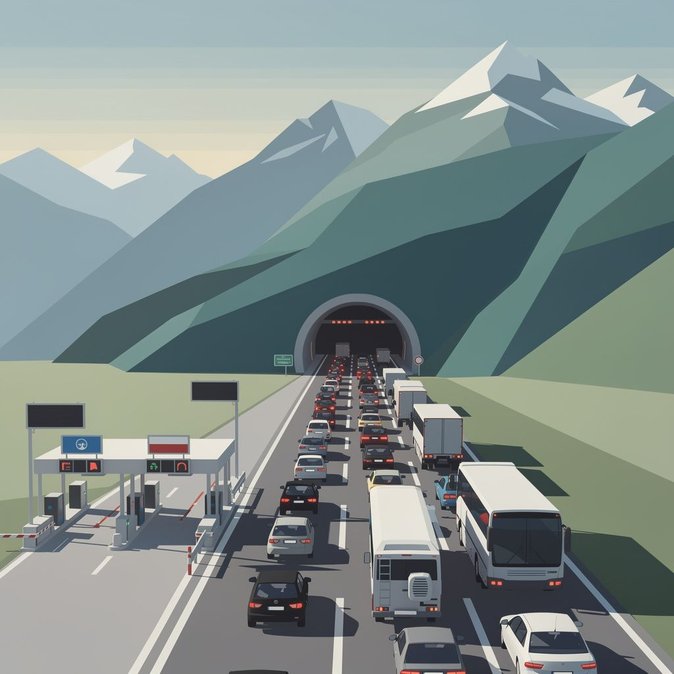
The Karawankentunnel on Austria’s A11 once again lived up to its reputation as the Alps’ worst bottleneck. By 04:00 on Sunday, 5 July 2026, queues on both sides already stretched three kilometres, according to live traffic trackers quoted by travel portal Reisereporter. The single-tube, eight-kilometre tunnel connects Villach with Slovenia’s Gorenjska region and funnels holidaymakers heading to Croatia’s Adriatic coast. Although a second tube is slated to open later this year, the old bore still carries bi-directional traffic and is subject to block-release procedures whenever volumes spike. Add temporary border checks and you have a textbook recipe for tailbacks.
While no digital service can clear a mountain tunnel faster, sorting out the necessary travel paperwork in advance can at least remove one worry from the journey. VisaHQ’s online platform lets motorists, coach passengers and logistics teams organise Austrian, Slovenian or wider Schengen visas in just a few clicks, track the application in real time and receive professional guidance on supporting documents. With that administrative hurdle out of the way, travellers can focus on timing their drive through the Karawanken corridor rather than queuing at consulate windows.
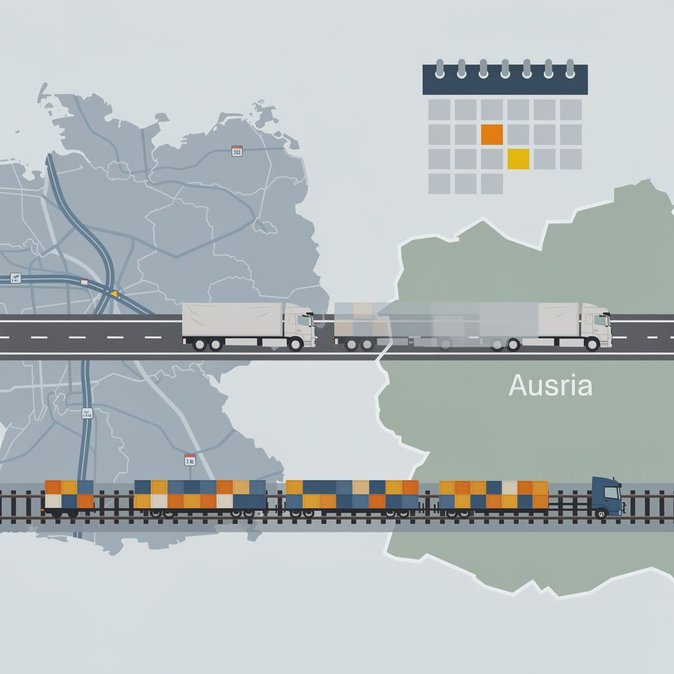
For Austrian businesses the choke-point is more than a nuisance: freight forwarders moving just-in-time components between Graz and Southeast Europe report transit times up by two hours. Coach operators have adjusted timetables, warning passengers that toilet breaks may be impossible in stationary traffic. ÖBB has added seating capacity on its Villach–Ljubljana–Zagreb Railjet to lure travellers off the road. Authorities suggest three detours—Loiblpass, Wurzenpass and the longer route via Tarvisio and Trieste—but each comes with altitude limits, gradient challenges or extra Italian tolls. Until the twin-tube upgrade is complete and Schengen checks eased, mobility experts predict recurring gridlock on peak summer weekends. Companies with field staff driving through the corridor are advised to schedule departures before 05:00 or after 20:00 and to factor the €8.80 single-journey tunnel toll as well as mandatory Austrian/Slovenian vignettes into travel budgets.
While no digital service can clear a mountain tunnel faster, sorting out the necessary travel paperwork in advance can at least remove one worry from the journey. VisaHQ’s online platform lets motorists, coach passengers and logistics teams organise Austrian, Slovenian or wider Schengen visas in just a few clicks, track the application in real time and receive professional guidance on supporting documents. With that administrative hurdle out of the way, travellers can focus on timing their drive through the Karawanken corridor rather than queuing at consulate windows.
For Austrian businesses the choke-point is more than a nuisance: freight forwarders moving just-in-time components between Graz and Southeast Europe report transit times up by two hours. Coach operators have adjusted timetables, warning passengers that toilet breaks may be impossible in stationary traffic. ÖBB has added seating capacity on its Villach–Ljubljana–Zagreb Railjet to lure travellers off the road. Authorities suggest three detours—Loiblpass, Wurzenpass and the longer route via Tarvisio and Trieste—but each comes with altitude limits, gradient challenges or extra Italian tolls. Until the twin-tube upgrade is complete and Schengen checks eased, mobility experts predict recurring gridlock on peak summer weekends. Companies with field staff driving through the corridor are advised to schedule departures before 05:00 or after 20:00 and to factor the €8.80 single-journey tunnel toll as well as mandatory Austrian/Slovenian vignettes into travel budgets.