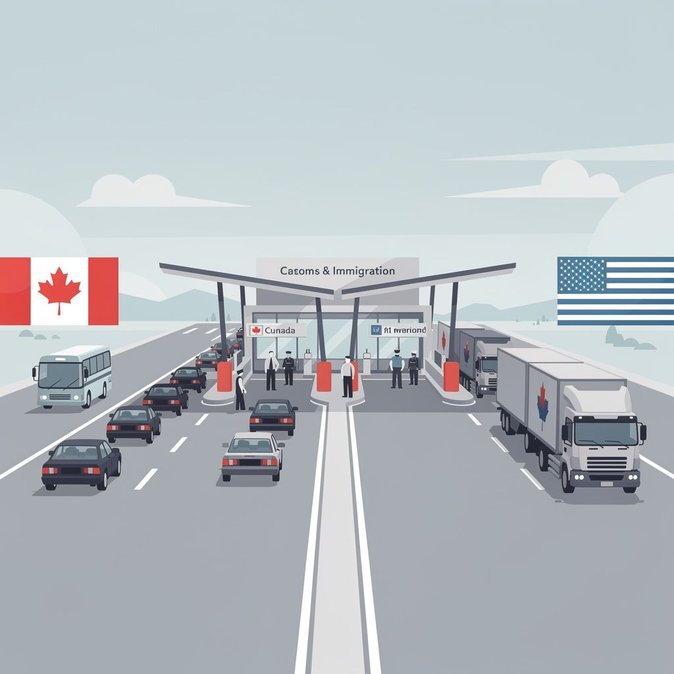
Business travellers who regularly drive between Canada and the United States will soon spend far less time in line. On 5 July 2026 the two governments confirmed that joint pre-clearance facilities will open on 1 September at four additional ports of entry: Coutts–Sweetgrass (Alberta–Montana), Derby Line–Stanstead (Vermont–Québec), Queenston–Lewiston (Ontario–New York) and St. Stephen–Calais (New Brunswick–Maine). The CAD 240-million expansion—financed equally by Ottawa and Washington—will allow Canada Border Services Agency (CBSA) and U.S. Customs and Border Protection (CBP) officers to inspect travellers for both countries in a single inspection zone before they cross the frontier. The model mirrors the airport pre-clearance systems already operating in Toronto, Montréal and five other Canadian airports, where U.S. inspections are completed before passengers board. Transport Canada says pilot testing at the Peace Bridge in 2023 cut average wait times by 40 percent during peak summer periods; officials project similar gains on the four new routes, which together handle roughly 2.4 million vehicles a year. For Canadian companies, quicker crossings mean leaner supply-chain schedules and reduced driver overtime costs. Truckers will have dedicated FAST lanes, while passenger vehicles will use RFID readers tied to the ArriveCAN/CBP ROAM apps that went fully interoperable in April. Logistics firms operating just-in-time deliveries to Calgary, Montréal and Atlantic Canada told the Canadian International Freight Forwarders Association they expect to trim up to a day from round-trip schedules once 24-hour operations begin. The pre-clearance deal also deepens bilateral data-sharing. CBSA says joint risk-assessment algorithms cut duplicate inspections by 35 percent last year, and both countries will pilot biometric kiosks at Coutts and Queenston by mid-2027. Privacy safeguards written into Canada’s Pre-clearance Act require that any information collected by U.S. officers be stored on Canadian servers and be subject to Access to Information requests. Practical tips: motorists should complete the new Pre-clearance Mobile Declaration at least 24 hours before travel, keep passports and vehicle registration ready, and avoid weekend peaks between 11:00 and 15:00. Commercial drivers have until 15 August to link their FAST cards to the app or risk being redirected to secondary inspection.
Source: Atlas Guide Travel News