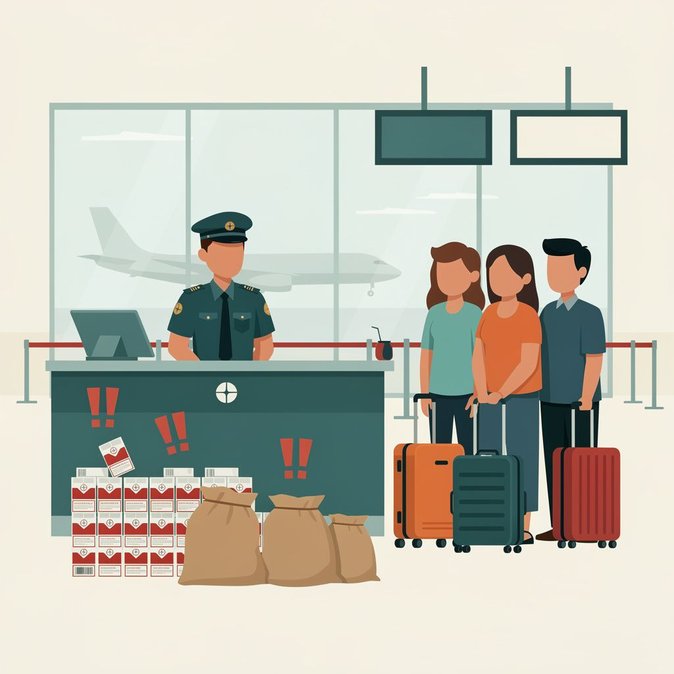
Cyprus’ Customs & Excise Department has intensified airport inspections as summer travel peaks, and the latest operation at Paphos International Airport demonstrates why. Acting on a tip-off, officers stopped four outbound passengers—two Britons and two Danes—who were preparing to board a flight to London on 4 July. A search of their checked luggage uncovered 201 cartons of cigarettes, 168 loose packs and nearly 12 kg of rolling tobacco lacking mandatory Greek and Turkish health warnings and excise stamps. Under Cyprus’ Excise Duties Law, tobacco products without security markings are presumed unpaid and therefore contraband. The travellers were arrested on the spot and released only after paying administrative settlements totalling €14,400. All tobacco was confiscated for destruction.
For travellers needing clarity on entry requirements, visa categories or allowable duty-free limits before arriving or departing Cyprus, VisaHQ offers up-to-date guidance and application support. The dedicated Cyprus portal (https://www.visahq.com/cyprus/) equips passengers with country-specific customs information in addition to visa and e-visa processing, helping avoid costly mistakes like undeclared goods at the border.
The offence carries a maximum penalty of three years’ imprisonment, but customs officials say they favour rapid out-of-court fines to keep airport operations flowing during the high season. The bust follows a similar seizure at Larnaca in late June and underscores Cyprus’ role as both a destination and transit point for illicit tobacco routed from third countries into the EU. The government estimates that smuggling costs the state more than €35 million in lost excise revenue annually—funds earmarked for healthcare and border-security upgrades. For business travellers and expatriates, the case is a reminder that Cyprus maintains strict quantitative limits: travellers may carry at most 200 cigarettes or 250 g of loose tobacco purchased duty-paid. Exceeding those allowances without declaring goods at the red channel exposes passengers to hefty fines, criminal records and potential entry bans. Customs officials say random checks will continue at both international airports and at sea ports throughout July–August, when passenger numbers can exceed 70,000 per day. Travellers are urged to retain receipts and ensure all duty-free items are in sealed, tax-paid packaging.
For travellers needing clarity on entry requirements, visa categories or allowable duty-free limits before arriving or departing Cyprus, VisaHQ offers up-to-date guidance and application support. The dedicated Cyprus portal (https://www.visahq.com/cyprus/) equips passengers with country-specific customs information in addition to visa and e-visa processing, helping avoid costly mistakes like undeclared goods at the border.
The offence carries a maximum penalty of three years’ imprisonment, but customs officials say they favour rapid out-of-court fines to keep airport operations flowing during the high season. The bust follows a similar seizure at Larnaca in late June and underscores Cyprus’ role as both a destination and transit point for illicit tobacco routed from third countries into the EU. The government estimates that smuggling costs the state more than €35 million in lost excise revenue annually—funds earmarked for healthcare and border-security upgrades. For business travellers and expatriates, the case is a reminder that Cyprus maintains strict quantitative limits: travellers may carry at most 200 cigarettes or 250 g of loose tobacco purchased duty-paid. Exceeding those allowances without declaring goods at the red channel exposes passengers to hefty fines, criminal records and potential entry bans. Customs officials say random checks will continue at both international airports and at sea ports throughout July–August, when passenger numbers can exceed 70,000 per day. Travellers are urged to retain receipts and ensure all duty-free items are in sealed, tax-paid packaging.