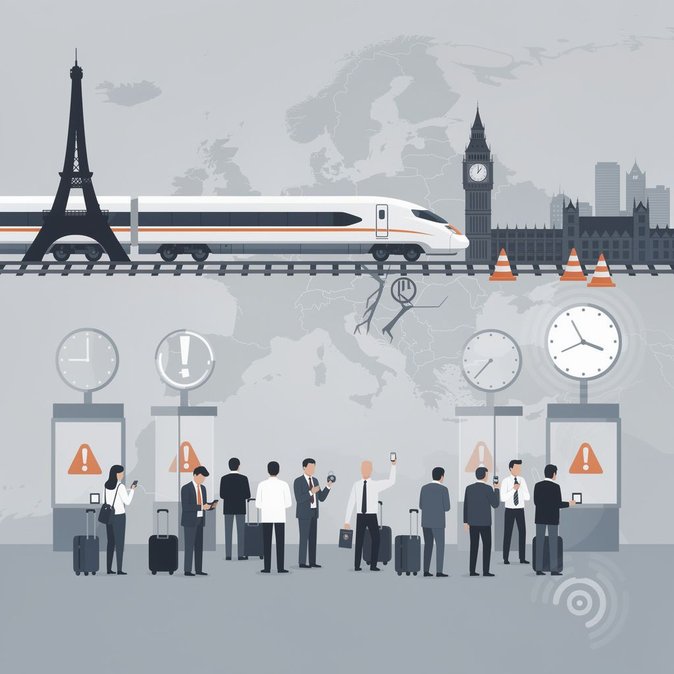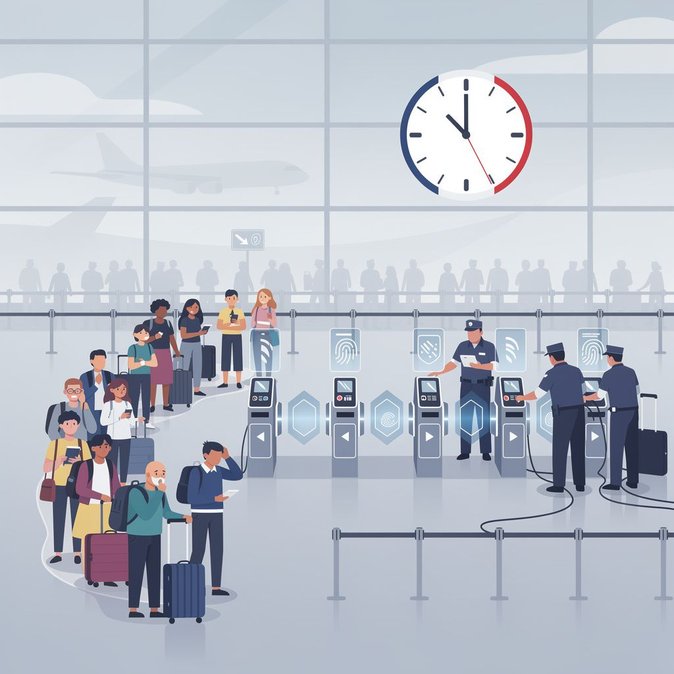
Travellers arriving at Paris-Charles-de-Gaulle, Orly and Lyon-Saint-Exupéry on Sunday, 5 July, encountered queues of up to five hours as border officers struggled with the European Union’s new Entry-Exit System (EES), according to technology news site Journal du Geek. Fully operational since April but stress-tested for the first time by peak summer volumes, EES requires non-EU visitors and Britons to provide fingerprint and facial biometrics and to sign a digital declaration on overstaying penalties. Border Police unions say kiosks supplied by multiple vendors are failing intermittently, forcing officers to revert to manual data entry that takes three times longer than a passport stamp. Airlines are alarmed: Air France reported 17 missed connections within its CDG hub on Sunday morning alone, while easyJet warned of knock-on delays across its European network. Ground-handling company Alyzia said overtime costs have doubled since June. Industry groups ACI Europe and Airlines for Europe (A4E) renewed their call for the European Commission to allow temporary suspension of biometric capture when waiting times exceed 60 minutes. For businesses, the delays threaten tightly choreographed itineraries built around Paris’s role as a short-haul hub. Mobility teams are advised to add at least two hours of buffer time to inbound schedules and to pre-register frequent travellers’ data in carriers’ biometric apps where possible. Companies running events in France this summer should brief attendees on potential arrival delays and consider charter buses with flexible departure windows. The Ministry of the Interior has promised to redeploy 300 additional border police officers to CDG and Orly over the next week and to install 120 extra kiosks before the mid-July holiday peak. However, officials admit that staffing remains a bottleneck and that the learning curve for passengers will last “several weeks”.
Source: Journal du Geek