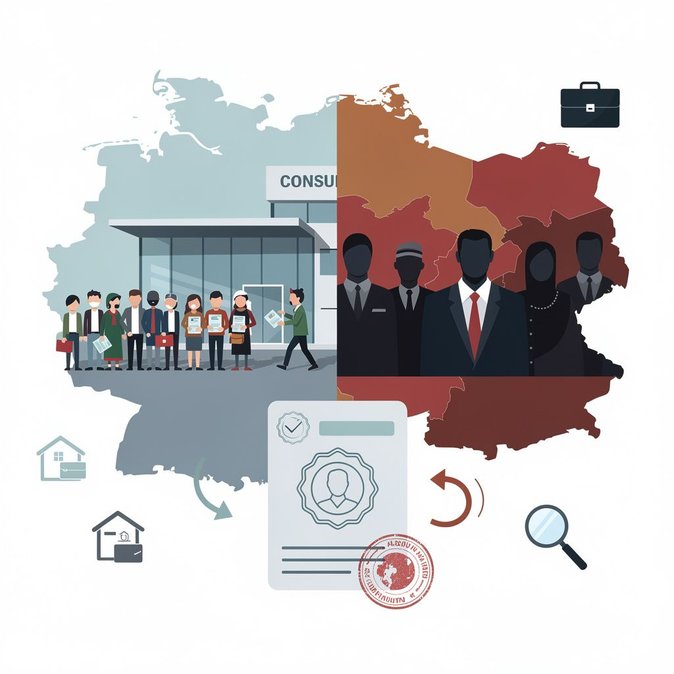
In a highly controversial move, the German federal government has agreed to accredit four diplomats nominated by Afghanistan’s de-facto Taliban authorities so that they can issue substitute travel documents for Afghans who are slated for removal from Germany. The decision, first reported on 5 July 2026, comes even though Berlin has not recognised the Taliban regime.
If you or your organisation need guidance on visa regulations, travel documentation, or changing immigration rules in Germany, VisaHQ’s local portal offers up-to-date information and hands-on support. Their specialists can help navigate everything from work-permit extensions to emergency travel documents, ensuring compliance amid rapidly shifting policies like the one described here.
The Interior Ministry argues that deportations cannot be enforced if the country of destination refuses to accept its own nationals. By allowing a minimal Taliban diplomatic presence in Bonn and Berlin, Germany hopes to resume charter flights carrying convicted criminals and rejected asylum seekers. Interior Minister Alexander Dobrindt (CSU) wants up to three charter rotations per month in addition to individual removals on commercial airlines. Politically, the step has drawn fierce criticism. Human-rights NGOs, women’s-rights activists and opposition Green and Left Party MPs accuse the government of legitimising a regime that systematically violates basic freedoms, especially those of women and girls. Hannah Neumann, a German MEP, warned that “every visa and every official meeting” strengthens Taliban claims to international recognition. For corporate mobility teams, the development signals that the deportation moratorium for Afghanistan—which had been in effect since August 2021—has effectively ended. Companies employing Afghan nationals on tolerated status (“Duldung”) should prepare for renewed residence-permit scrutiny and advise affected staff to seek legal counsel. Refugee-support organisations expect an uptick in urgent applications for Ausbildung or Beschäftigungs tolerances that can block removal if certain integration criteria are met. Germany’s move may also influence other EU states struggling with stalled removals. If the pilot succeeds, Brussels could revisit common-position rules that currently prohibit official dealings with the Taliban, potentially altering the wider deportation landscape across the Schengen area.
If you or your organisation need guidance on visa regulations, travel documentation, or changing immigration rules in Germany, VisaHQ’s local portal offers up-to-date information and hands-on support. Their specialists can help navigate everything from work-permit extensions to emergency travel documents, ensuring compliance amid rapidly shifting policies like the one described here.
The Interior Ministry argues that deportations cannot be enforced if the country of destination refuses to accept its own nationals. By allowing a minimal Taliban diplomatic presence in Bonn and Berlin, Germany hopes to resume charter flights carrying convicted criminals and rejected asylum seekers. Interior Minister Alexander Dobrindt (CSU) wants up to three charter rotations per month in addition to individual removals on commercial airlines. Politically, the step has drawn fierce criticism. Human-rights NGOs, women’s-rights activists and opposition Green and Left Party MPs accuse the government of legitimising a regime that systematically violates basic freedoms, especially those of women and girls. Hannah Neumann, a German MEP, warned that “every visa and every official meeting” strengthens Taliban claims to international recognition. For corporate mobility teams, the development signals that the deportation moratorium for Afghanistan—which had been in effect since August 2021—has effectively ended. Companies employing Afghan nationals on tolerated status (“Duldung”) should prepare for renewed residence-permit scrutiny and advise affected staff to seek legal counsel. Refugee-support organisations expect an uptick in urgent applications for Ausbildung or Beschäftigungs tolerances that can block removal if certain integration criteria are met. Germany’s move may also influence other EU states struggling with stalled removals. If the pilot succeeds, Brussels could revisit common-position rules that currently prohibit official dealings with the Taliban, potentially altering the wider deportation landscape across the Schengen area.