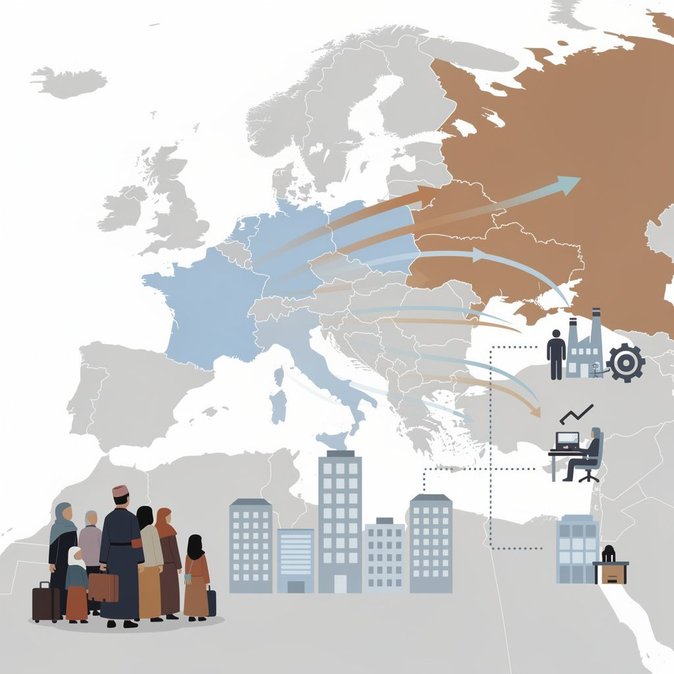
A confidential report by the EU Asylum Agency, leaked on 5 July 2026, shows that asylum requests in Germany fell from about 70,000 in the first half of 2025 to 51,147 in the same period this year—a decline of 27 percent. Yet Afghan nationals still account for 37 percent of all applications, cementing their position as the single largest cohort. The data illustrate diverging migration trends: while overall irregular arrivals are down, push factors within Afghanistan continue to drive asylum flight. Analysts link the persistence of Afghan applications to the Taliban’s escalating restrictions on women’s education, employment and mobility. Turkey and Syria each represented nine percent of new German asylum claims, with migrants from Venezuela and Bangladesh dominating EU-wide figures. For German municipalities, the numbers translate into continued pressure on integration courses, housing stock and social-service budgets in regions with sizeable Afghan communities such as North Rhine-Westphalia and Bavaria. Employers, by contrast, may view the talent pool as an opportunity: roughly 40 percent of Afghan asylum applicants in Europe choose Germany specifically, many with vocational experience matching shortage occupations. Policy-wise, the Federal Office for Migration and Refugees (BAMF) is revising country-of-origin guidance that could speed up positive decisions for Afghan women and at-risk minorities, while accelerating rejections for young single men deemed safe to return if removal flights resume. Mobility advisers should monitor those shifts, as asylum applicants granted protection cannot simultaneously pursue skilled-worker visas but may later transition to work permits under section 19d AufenthG once recognised. The report also underscores the interconnectedness of EU asylum systems: spikes in applications in France and Italy often spill over into Germany via secondary movement. Planned reforms to the Common European Asylum System (CEAS) will therefore remain a key compliance topic for HR in multinational firms moving staff across multiple EU bases.
Source: AtlasPress News Agency