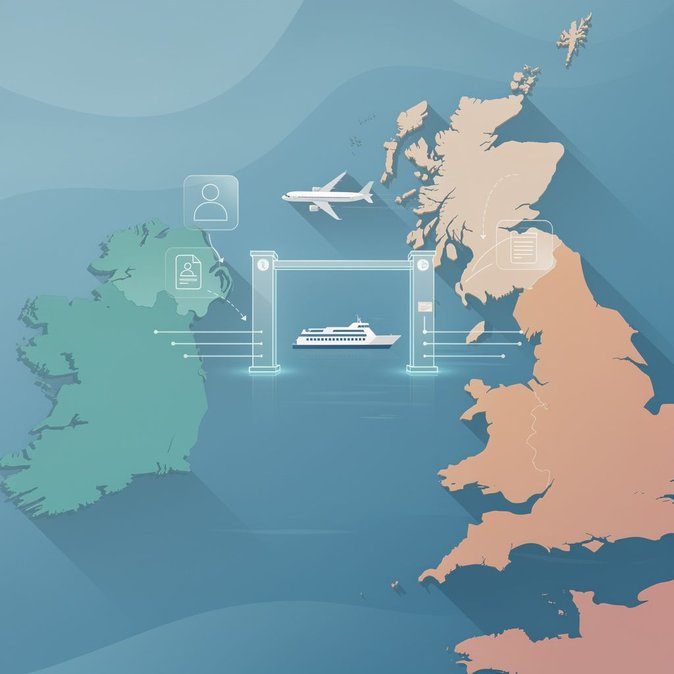
Writing in The Irish Times on 6 July, legal correspondent Mark Hennessy reports that scholars fear rising migration flows and political pressure in Britain could upset the historic Common Travel Area (CTA) arrangement that allows free movement between Ireland, the United Kingdom, the Channel Islands and the Isle of Man. The CTA, in place since 1923, is not underpinned by a single statute and has weathered several suspensions, most recently during the Second World War. In the wake of last month’s Belfast unrest, some unionist MPs called for passport checks on travellers from the Republic, arguing that the CTA was never meant to facilitate irregular migration. Although London has shown little appetite for hardening the sea border, academics interviewed by The Irish Times say any tightening of UK immigration controls—such as the upcoming Electronic Travel Authorisation (ETA) requirement for non-visa nationals—will have knock-on effects for the island of Ireland. The article notes that almost 88 % of asylum applicants interviewed in Dublin last year arrived via Northern Ireland, according to the Irish Department of Justice. However, British officials privately dispute the figure, underlining the difficulty of tracking flows in the absence of routine controls. Data-adequacy concerns after Brexit continue to hamper real-time sharing of biometrics, although a provisional EU-UK agreement allows limited exchange until 2031. For businesses the debate matters because the CTA underpins friction-free relocation of Irish and British staff. If passport or ETA checks were introduced on Irish Sea routes, commuters, construction crews and supply-chain drivers could face new documentation hurdles. Mobility advisers should monitor UK legislative developments—including pilot electronic-border projects—and prepare to brief Irish employees on any future pre-travel registration requirements.
Source: The Irish Times