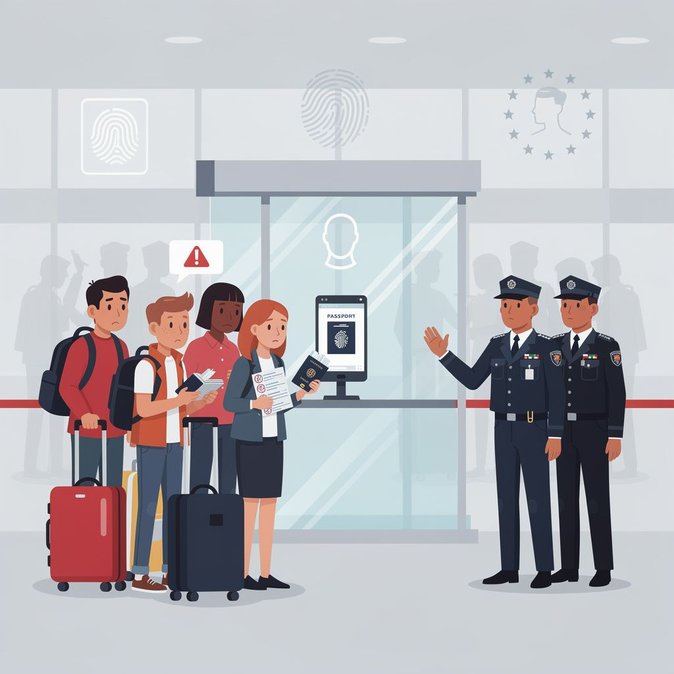
Warsaw Chopin Airport saw a busy first weekend of July for the wrong reasons. Border-guard officers stationed at the capital’s main international gateway refused entry to 18 travellers who did not meet Poland’s entry requirements. According to details released on 6 July by the Border Guard Headquarters, the passengers—citizens of Georgia, Colombia, Ukraine, Israel, South Korea, the United States and Belarus—were stopped during routine primary inspection at the non-Schengen arrivals hall. The most common problem was failure to prove the purpose and conditions of stay.
For travellers who want to avoid running into similar issues, VisaHQ offers an easy online way to verify Poland’s entry rules, calculate remaining Schengen days and obtain the correct visas or supporting documents before departure. Its dedicated Poland page (https://www.visahq.com/poland/) can be a one-stop resource for both tourists and corporate mobility teams, helping ensure that all paperwork is in order long before arrival at border control.
Five travellers (two Colombians and three Georgians) could not document hotel bookings, onward tickets or sufficient funds. Another seven passengers—from Ukraine, Israel, South Korea and four from the United States—had already exhausted the 90-day allowance granted under the visa-free 90/180-day rule for the Schengen area. Two Ukrainians were listed as persona non grata in the Schengen Information System, while the remaining individuals lacked visas or adequate financial means. All 18 people received formal decisions refusing entry; most were placed on the first available return flights. The incident comes as Poland maintains tight border and airport controls following the roll-out of the EU’s biometric Entry/Exit System (EES) in April and the extension of temporary checks on the German and Lithuanian land borders. Airlines serving Warsaw are advising passengers to arrive earlier and ensure documents—particularly invitation letters, proof of accommodation and travel insurance—are in order. For corporates rotating staff through Poland, the episode is another reminder that even visa-exempt nationals can be turned away if they cannot justify business or tourist travel or if internal mobility teams miscalculate Schengen days. Travel-management companies recommend that HR track employees’ cumulative days in the Schengen area and issue standard “purpose-of-trip” letters for every assignment, however short. The Border Guard has also stepped-up random secondary inspections at regional airports such as Kraków-Balice and Gdańsk, signalling a nationwide posture of ‘trust but verify’.
For travellers who want to avoid running into similar issues, VisaHQ offers an easy online way to verify Poland’s entry rules, calculate remaining Schengen days and obtain the correct visas or supporting documents before departure. Its dedicated Poland page (https://www.visahq.com/poland/) can be a one-stop resource for both tourists and corporate mobility teams, helping ensure that all paperwork is in order long before arrival at border control.
Five travellers (two Colombians and three Georgians) could not document hotel bookings, onward tickets or sufficient funds. Another seven passengers—from Ukraine, Israel, South Korea and four from the United States—had already exhausted the 90-day allowance granted under the visa-free 90/180-day rule for the Schengen area. Two Ukrainians were listed as persona non grata in the Schengen Information System, while the remaining individuals lacked visas or adequate financial means. All 18 people received formal decisions refusing entry; most were placed on the first available return flights. The incident comes as Poland maintains tight border and airport controls following the roll-out of the EU’s biometric Entry/Exit System (EES) in April and the extension of temporary checks on the German and Lithuanian land borders. Airlines serving Warsaw are advising passengers to arrive earlier and ensure documents—particularly invitation letters, proof of accommodation and travel insurance—are in order. For corporates rotating staff through Poland, the episode is another reminder that even visa-exempt nationals can be turned away if they cannot justify business or tourist travel or if internal mobility teams miscalculate Schengen days. Travel-management companies recommend that HR track employees’ cumulative days in the Schengen area and issue standard “purpose-of-trip” letters for every assignment, however short. The Border Guard has also stepped-up random secondary inspections at regional airports such as Kraków-Balice and Gdańsk, signalling a nationwide posture of ‘trust but verify’.