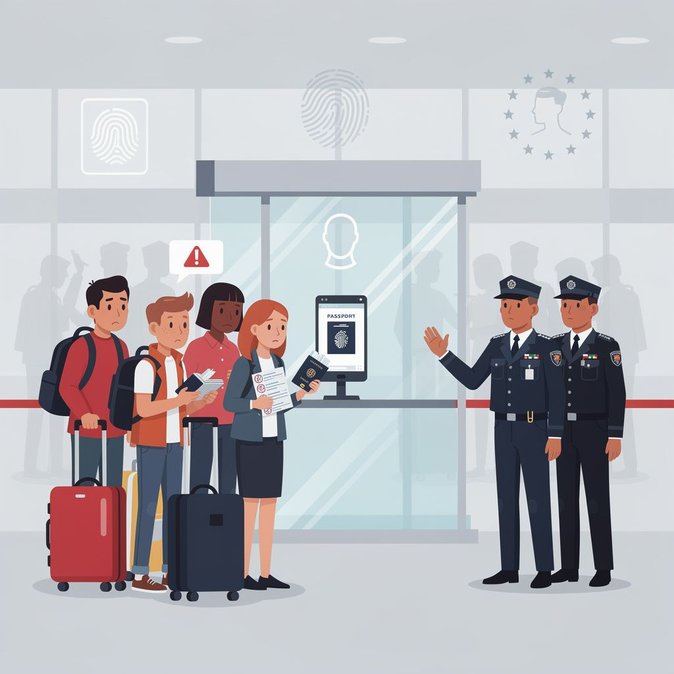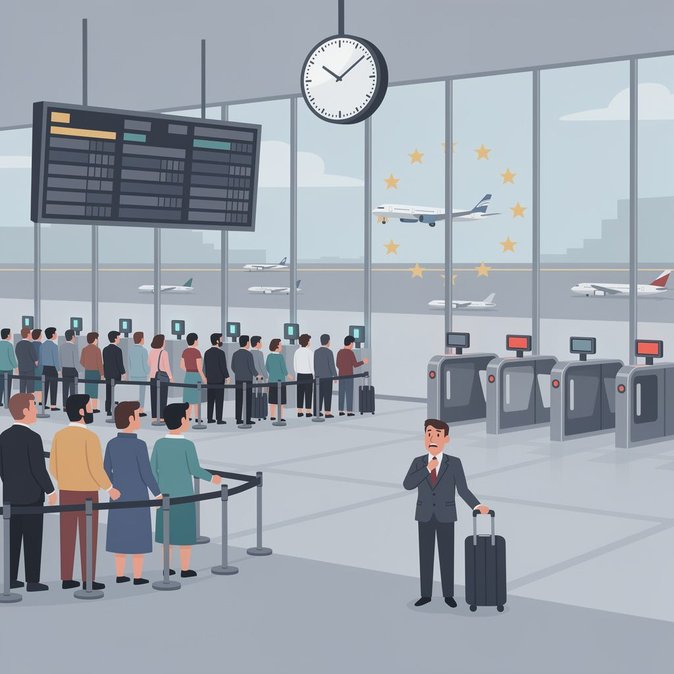
European airlines and airport operators have sounded a red-alert over the EU’s new Entry/Exit System (EES), warning that the biometric passport-control regime is already crippling peak-summer operations. In an open letter dated 6 July, carriers including Ryanair and industry body ACI Europe urged the European Commission to allow temporary suspension of EES when queues exceed processing capacity. The call follows reports of waits of up to two hours at Berlin Brandenburg and up to five hours at several Mediterranean holiday hubs. Rzeczpospolita confirms that Kraków-Balice, Poland’s second-busiest airport, is among those experiencing “terminal-spilling” lines for third-country nationals, with some passengers missing flights despite arriving three hours early. Implemented in April, EES replaces passport stamping with fingerprint and facial-image capture for non-EU travellers. While the system promises long-term security gains and automation, airlines argue that kiosks, staffing and signage remain patchy. They fear reputational damage just as Europe braces for 40 million additional leisure passengers in July–August. Polish corporate-travel managers are already feeling the pinch: executives connecting in Palma de Mallorca or Milan Bergamo report missed onward LOT and Ryanair flights to Warsaw. Mobility teams are therefore building in four-hour layovers and advising VIPs to use the Fast-Track lane where available. The Commission says it is “ready to provide extra support”, but has not confirmed whether derogations will be granted. Unless Brussels blinks, companies should expect extended door-to-door travel times, higher duty-of-care costs and potential knock-on delays for time-critical expatriate assignments. Firms may also need to budget for re-ticketing fees and accommodation when missed connections cascade through summer schedules.
Source: Rzeczpospolita