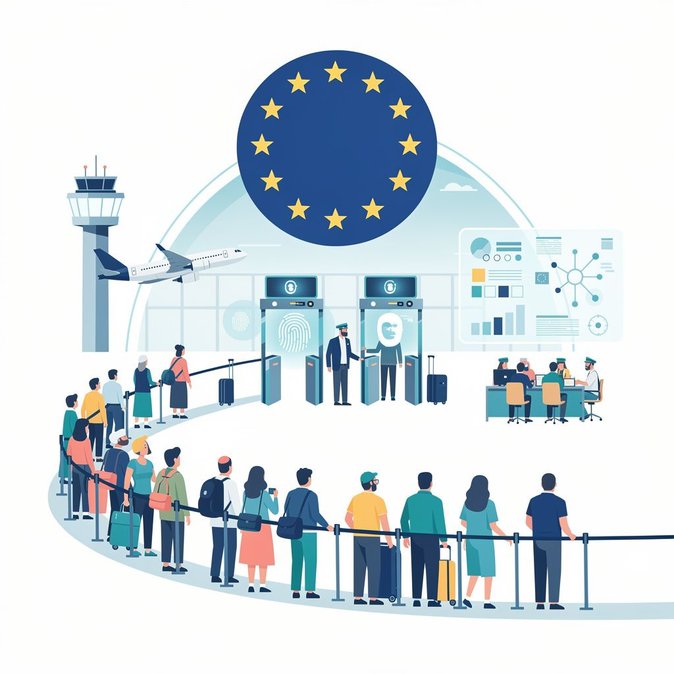
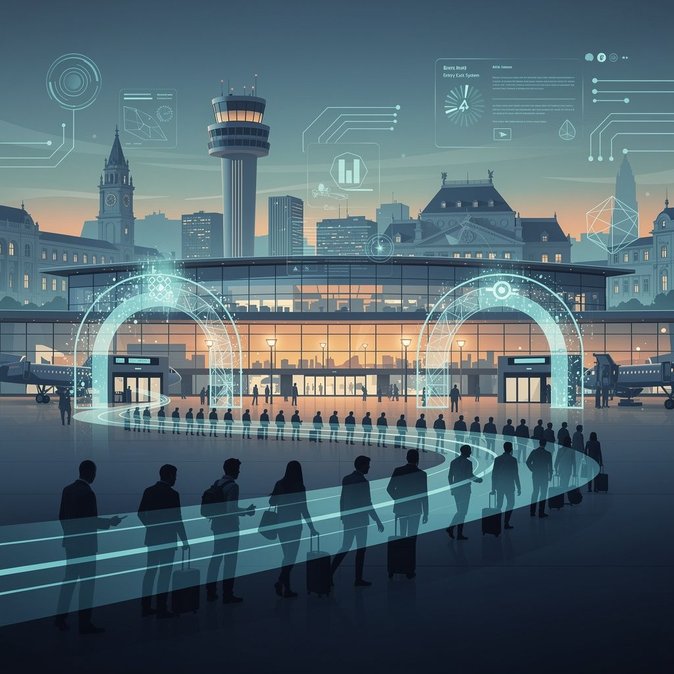
After a barrage of complaints from airports and carriers—including Austrian Airlines—about five-hour passport-control queues, EU migration chief Magnus Brunner on 6 July promised “additional, targeted support” for member states struggling with the new Entry/Exit System. In a letter obtained by industry outlet PAX News, Brunner said the Commission would deploy technical teams over the next two weeks and allow countries to suspend biometric capture temporarily during peak waves. The digital EES, fully live since April, replaces passport stamps for non-EU nationals with a fingerprint and facial-image scan. While the system is designed to stop overstays and speed up repeat visits, first-time enrolment still averages 70 seconds per traveller—multiplying bottlenecks at leisure-heavy hubs such as Vienna-Schwechat, where holiday traffic is already 12 % above 2019 levels. Austrian tour operators report missed charter departures to the Greek islands and Egypt, triggering compensation claims that are not covered by EU261 because the delays occur before security screening.
![Brussels moves to ease EES chaos after airlines warn of five-hour queues]()
For travellers keen to shave every possible minute off their airport experience, VisaHQ offers a practical assist: its Austria portal lets passengers double-check real-time entry rules, complete visa applications online and even arrange courier pick-up of passports, removing one more hurdle before they face the EES bottleneck.
Trade bodies ACI Europe and Airlines for Europe warned the Commission on 4 July that prolonged queues risk tarnishing “Brand Europe” and diverting tourists to non-Schengen destinations. The World Travel & Tourism Council estimates that if three-hour delays become the norm, the Schengen area could forfeit up to €45 billion in visitor spending this year—€1.8 billion of that in Austria alone. For Austrian businesses, the short-term fix means advising travellers to arrive at least three hours before departure and, where possible, to pre-enrol biometrics at Schengen kiosks outside peak hours. Corporate mobility managers should review connection times on itineraries that route staff through Frankfurt or Paris, both of which have reported the worst backlogs. Looking ahead, Brunner hinted that the forthcoming EU Travel App could allow smartphone pre-registration by early 2027, cutting first-time processing to under 30 seconds and restoring the seamless travel Schengen promises.
For travellers keen to shave every possible minute off their airport experience, VisaHQ offers a practical assist: its Austria portal lets passengers double-check real-time entry rules, complete visa applications online and even arrange courier pick-up of passports, removing one more hurdle before they face the EES bottleneck.
Trade bodies ACI Europe and Airlines for Europe warned the Commission on 4 July that prolonged queues risk tarnishing “Brand Europe” and diverting tourists to non-Schengen destinations. The World Travel & Tourism Council estimates that if three-hour delays become the norm, the Schengen area could forfeit up to €45 billion in visitor spending this year—€1.8 billion of that in Austria alone. For Austrian businesses, the short-term fix means advising travellers to arrive at least three hours before departure and, where possible, to pre-enrol biometrics at Schengen kiosks outside peak hours. Corporate mobility managers should review connection times on itineraries that route staff through Frankfurt or Paris, both of which have reported the worst backlogs. Looking ahead, Brunner hinted that the forthcoming EU Travel App could allow smartphone pre-registration by early 2027, cutting first-time processing to under 30 seconds and restoring the seamless travel Schengen promises.