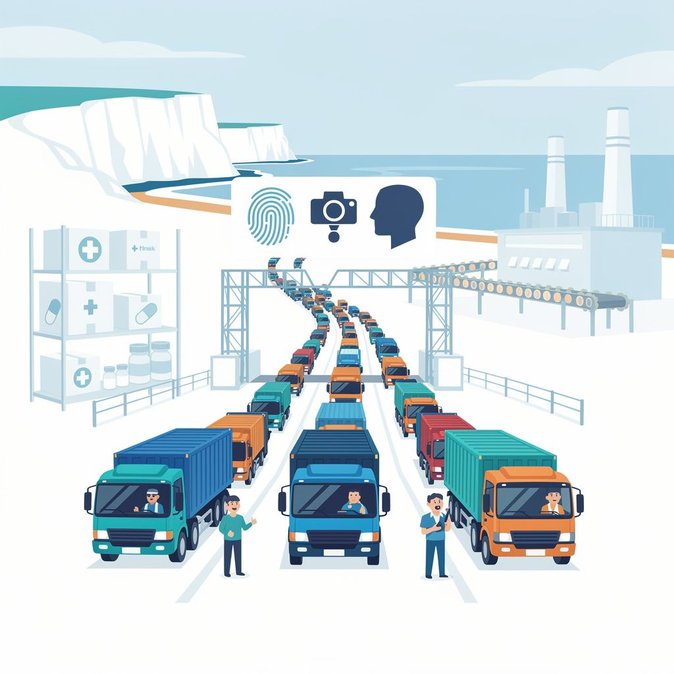
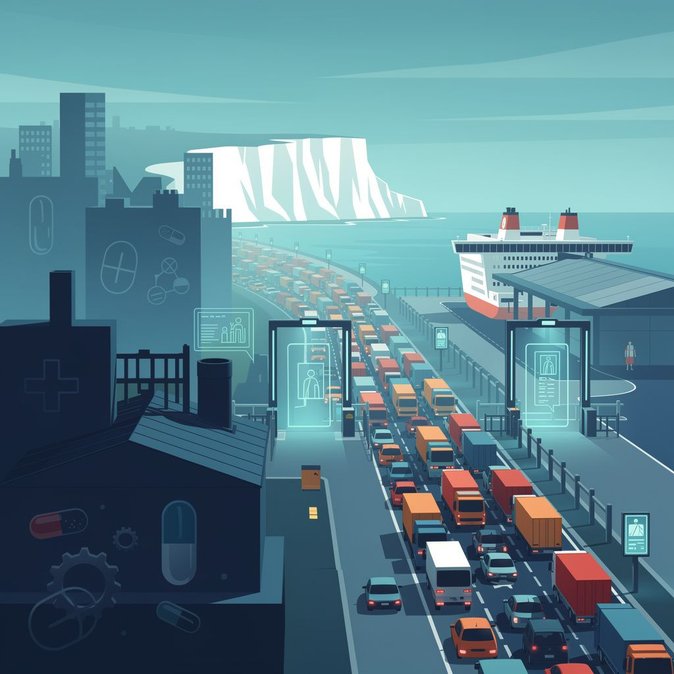
Trade portal Trans.info echoed Dover’s concerns on 6 July, noting that lorries carrying medicines, perishable food and car parts could be rooted to the spot if tourist cars fill the port’s approaches during the summer getaway. Although most HGV drivers hold EU passports and are exempt from biometric registration, their vehicles share the same limited road space into the ferry terminals.
![EES queues could ‘trap time-critical freight’, warns logistics press]()
For travellers and logistics professionals navigating these evolving border formalities, VisaHQ provides up-to-date guidance on entry requirements, EES registration and other travel documents. Its dedicated United Kingdom portal offers real-time alerts and application support, helping companies and individual drivers cut through red tape before they even reach the port.
The article points out that Dover’s western EES processing centre—with 84 kiosks—is still idle because of unresolved technical differences with French border police, forcing first-time enrolments to happen in the Eastern Docks’ constrained lanes. Modelling shows that once queues form, re-routing freight via other U.K.–EU crossings is seldom viable; it would take missing around 20 ferries before the alternative Channel Tunnel route becomes economical. Logistics firms are therefore urging clients to build two-day buffers into ‘just-in-time’ supply chains and to pre-position critical inventory in mainland Europe where possible. Some automotive suppliers are evaluating short-sea routes from Immingham to Rotterdam as an emergency option, despite the additional mileage and cost. The story adds pressure on ministers to broker a temporary stand-down of EES at Dover or risk economic fallout well beyond leisure travel.
For travellers and logistics professionals navigating these evolving border formalities, VisaHQ provides up-to-date guidance on entry requirements, EES registration and other travel documents. Its dedicated United Kingdom portal offers real-time alerts and application support, helping companies and individual drivers cut through red tape before they even reach the port.
The article points out that Dover’s western EES processing centre—with 84 kiosks—is still idle because of unresolved technical differences with French border police, forcing first-time enrolments to happen in the Eastern Docks’ constrained lanes. Modelling shows that once queues form, re-routing freight via other U.K.–EU crossings is seldom viable; it would take missing around 20 ferries before the alternative Channel Tunnel route becomes economical. Logistics firms are therefore urging clients to build two-day buffers into ‘just-in-time’ supply chains and to pre-position critical inventory in mainland Europe where possible. Some automotive suppliers are evaluating short-sea routes from Immingham to Rotterdam as an emergency option, despite the additional mileage and cost. The story adds pressure on ministers to broker a temporary stand-down of EES at Dover or risk economic fallout well beyond leisure travel.