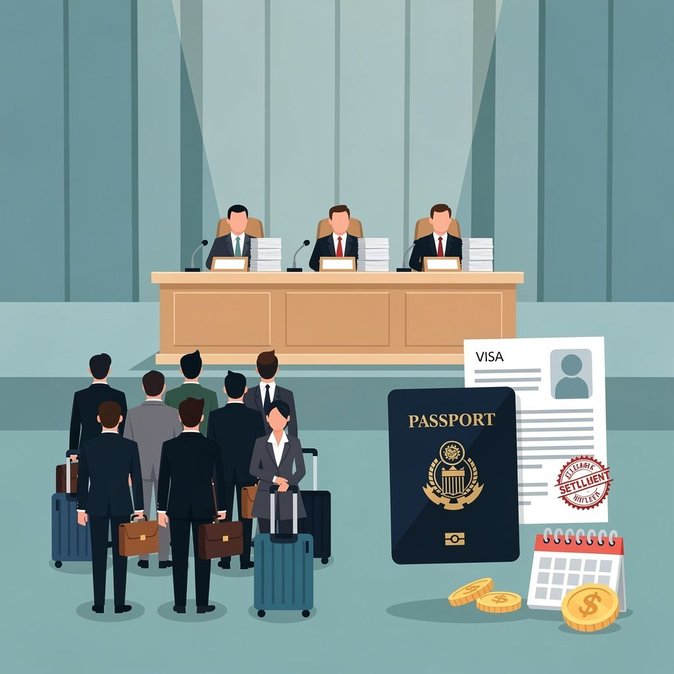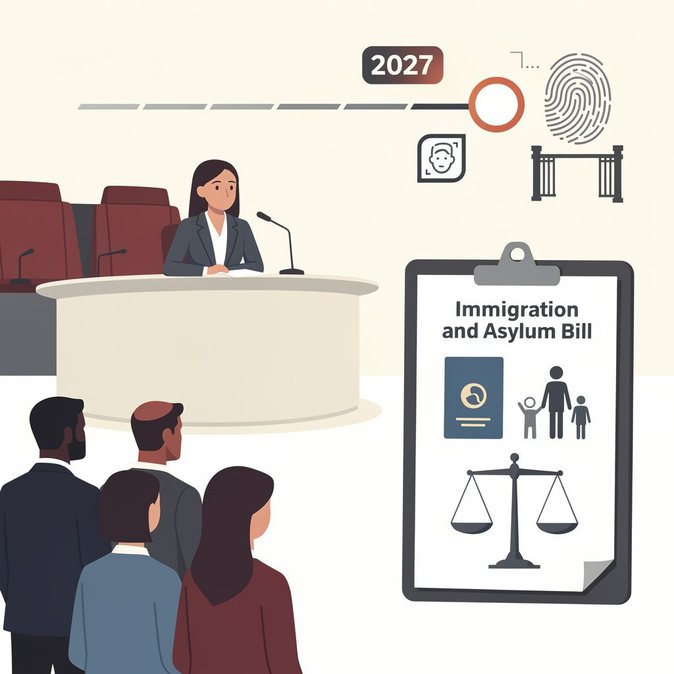
Peers on the House of Lords Justice and Home Affairs Committee spent more than two hours on 7 July grilling Home Secretary Shabana Mahmood about the government’s flagship Immigration and Asylum Bill, which was introduced to Parliament only a week earlier. In opening remarks Mahmood said the Bill would deliver “a fair, firm and managed system that rebuilds public confidence while keeping the doors open to the skills our economy needs.”
For employers and internationally mobile staff seeking practical assistance as these proposals take shape, VisaHQ offers an end-to-end platform for obtaining UK work permits, settlement documentation and short-term travel visas. Its compliance tools and real-time status tracking can help businesses adjust smoothly to higher salary thresholds, new biometric requirements and revised appeal routes. Learn more at
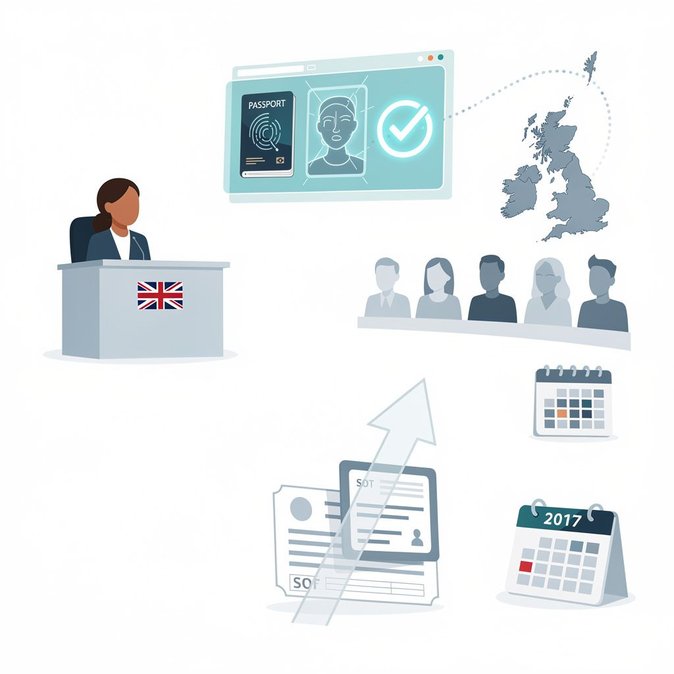
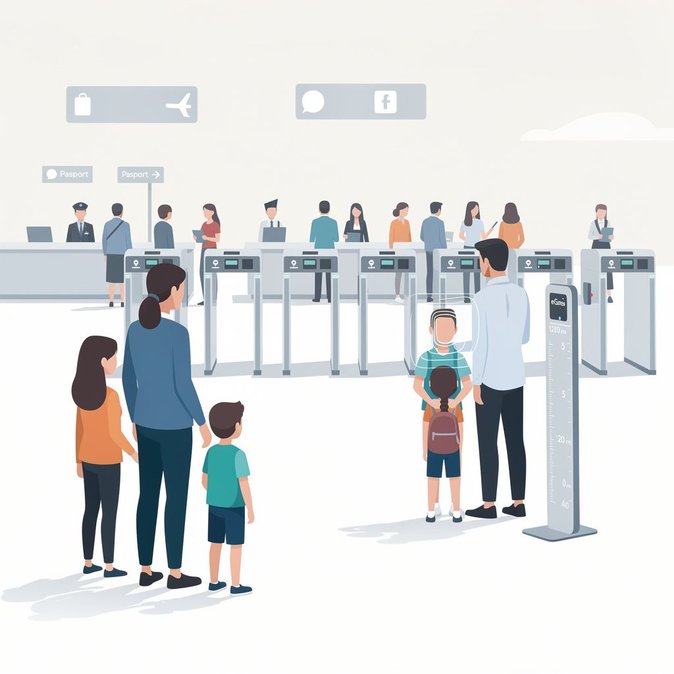
Committee members focused on four practical areas that matter to employers and internationally mobile staff. First, they questioned how the Bill’s proposed ‘Fairer Pathway to Settlement’—which will require most work-route migrants to spend seven years in the UK and meet higher salary thresholds—will interact with existing intra-company transfer routes and the Graduate visa. Mahmood confirmed transitional measures but warned sponsors to “budget for markedly higher pay floors from 2027.” Second, peers demanded clarity on the Entry/Exit System (EES) the UK plans to pilot at Dover and St Pancras from spring 2027, mirroring the EU’s biometric programme. The Home Secretary said the pilot would be “fully interoperable” with ePassport gates, with business travellers expected to complete a one-off facial-image capture in advance. Third, the committee drilled into the Bill’s controversial ‘one-stop’ appeals body that will replace the First-tier Tribunal and Upper Tribunal for immigration cases. Mahmood argued that a single expert appeals chamber would cut average decision times from 42 to 19 weeks, but barristers on the panel warned that fast-track processes must not erode procedural fairness. Finally, peers pressed Mahmood on the Common Travel Area with Ireland and whether new powers to bar individuals on public-security grounds could undermine friction-free business travel. She promised “close coordination” with Dublin and a joint electronic pre-clearance model. Employers should monitor secondary legislation in the autumn that will set the effective date for the new settlement rules and the appeals body, expected to be mid-2027.
For employers and internationally mobile staff seeking practical assistance as these proposals take shape, VisaHQ offers an end-to-end platform for obtaining UK work permits, settlement documentation and short-term travel visas. Its compliance tools and real-time status tracking can help businesses adjust smoothly to higher salary thresholds, new biometric requirements and revised appeal routes. Learn more at
Committee members focused on four practical areas that matter to employers and internationally mobile staff. First, they questioned how the Bill’s proposed ‘Fairer Pathway to Settlement’—which will require most work-route migrants to spend seven years in the UK and meet higher salary thresholds—will interact with existing intra-company transfer routes and the Graduate visa. Mahmood confirmed transitional measures but warned sponsors to “budget for markedly higher pay floors from 2027.” Second, peers demanded clarity on the Entry/Exit System (EES) the UK plans to pilot at Dover and St Pancras from spring 2027, mirroring the EU’s biometric programme. The Home Secretary said the pilot would be “fully interoperable” with ePassport gates, with business travellers expected to complete a one-off facial-image capture in advance. Third, the committee drilled into the Bill’s controversial ‘one-stop’ appeals body that will replace the First-tier Tribunal and Upper Tribunal for immigration cases. Mahmood argued that a single expert appeals chamber would cut average decision times from 42 to 19 weeks, but barristers on the panel warned that fast-track processes must not erode procedural fairness. Finally, peers pressed Mahmood on the Common Travel Area with Ireland and whether new powers to bar individuals on public-security grounds could undermine friction-free business travel. She promised “close coordination” with Dublin and a joint electronic pre-clearance model. Employers should monitor secondary legislation in the autumn that will set the effective date for the new settlement rules and the appeals body, expected to be mid-2027.