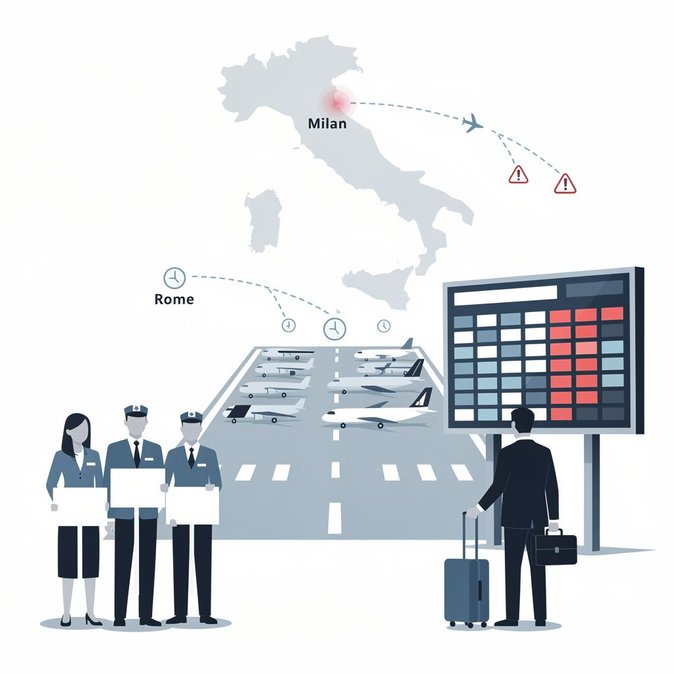
Business travellers faced a chaotic start to the week as Italian airport workers mounted a 24-hour nationwide strike from 00:01 on 6 July. Data compiled by Cub Trasporti and verified by airport operators show that more than 80 % of departures at Milan Malpensa were cancelled, with Milan Linate losing half its schedule and Rome Fiumicino posting average delays of 75 minutes. The walk-out was called by ground-staff and security unions demanding a 20 % pay rise and full back-payment of Sunday-work premiums dating back to 2025. EasyJet crews were among the most vocal: Uiltrasporti organised pickets in Milan, Rome and Naples to protest stalled contract negotiations. The airline pre-emptively axed 180 flights and offered free re-booking within 30 days, but corporate travel managers still scrambled to re-route passengers via Zurich, Munich and Bologna. Under Italian law so-called “fasce di garanzia” (protected windows) kept some morning and evening flights running, yet carriers reported load factors above 95 % as stranded passengers fought for seats. Unlike previous short stoppages, the strike coincided with the first school-holiday exodus, amplifying economic impact. Confcommercio’s tourism unit estimates lost revenue of €27 million for airlines and ancillary services. Freight forwarders also felt the pain: Malpensa Cargo processed 1,200 tonnes fewer perishables, forcing exporters to shift urgent consignments to Luxembourg. For global-mobility teams the lesson is clear: contingency planning needs to cover simultaneous labour disputes across airlines, handlers and air-traffic controllers. Companies with July assignee rotations should advise travellers to avoid tight connections within Italy this week and consider rail alternatives between Milan, Turin, Bologna and Rome. Negotiations resume on 10 July at the Ministry of Transport. If no deal is reached, unions warn they will coordinate with ENAV air-traffic controllers for a second strike during Italy’s traditional Ferragosto peak on 15 August—potentially the worst disruption since 2021.
Source: Agenzia DIRE