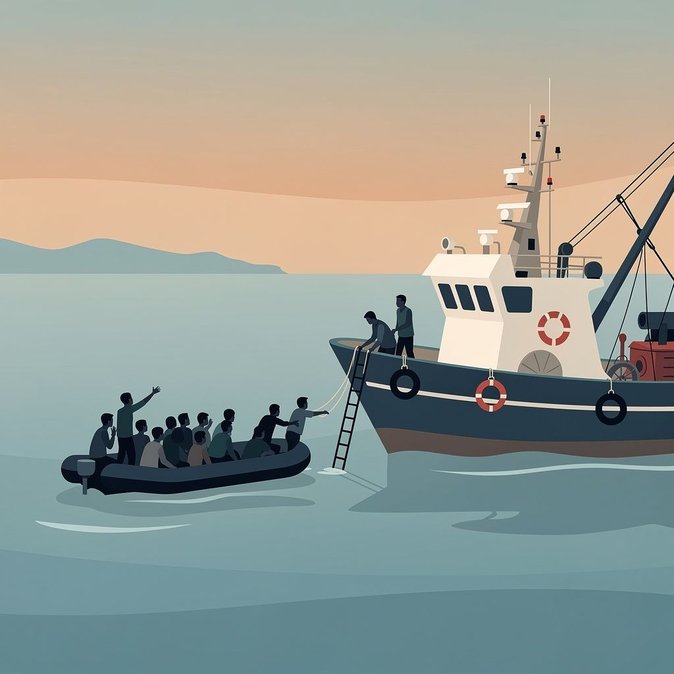
In a reminder that the Central Mediterranean remains Europe’s most perilous migration route, the Sicilian trawler “Mathias” rescued 16 unaccompanied minors from a drifting dinghy 40 nautical miles south-east of Malta on 5 July. The crew from Santa Maria La Scala (Catania) provided lifejackets, food and water, standing by for three hours until Italy’s Coast Guard and Maltese authorities assumed coordination and transferred the youngsters to a patrol vessel bound for Pozzallo.
For travelers and organizations navigating Italy’s evolving entry rules in the wake of such events, VisaHQ can simplify the process. The company’s portal offers real-time visa guidance for Italy, Malta, and more than 200 other destinations, with digital applications, document checks, and courier hand-offs all handled in one dashboard—see for details.
Italy’s Interior Ministry confirmed that 14,566 migrants have landed on Italian shores so far this year—19.3 % of them unaccompanied minors. While the rescue does not alter visa rules, it highlights the humanitarian dimension behind Italy’s strict border-control measures and influences public debate on the new Migration & Asylum Pact being transposed into national law. For companies operating CSR programmes or deploying staff to Sicily and Malta, the episode underscores potential maritime-security risks and the importance of vetting charter vessels’ search-and-rescue obligations. Insurance brokers note that crews engaged in rescues may face delays entering port and could incur additional provisioning costs that are not always covered by standard hull policies. The incident also adds pressure on reception facilities on Sicily’s east coast, where accommodation for corporate expatriates can sometimes overlap with government-contracted hotels. Mobility managers should confirm room blocks early and liaise with local partners about any sudden capacity reallocations. Italy and Malta continue to call for broader EU burden-sharing. The reforms now before the Italian Senate envisage faster asylum screenings at hotspots and expedited relocation—changes that, if implemented, could affect hiring timelines for firms sponsoring humanitarian-visa candidates or family-reunification cases.
For travelers and organizations navigating Italy’s evolving entry rules in the wake of such events, VisaHQ can simplify the process. The company’s portal offers real-time visa guidance for Italy, Malta, and more than 200 other destinations, with digital applications, document checks, and courier hand-offs all handled in one dashboard—see for details.
Italy’s Interior Ministry confirmed that 14,566 migrants have landed on Italian shores so far this year—19.3 % of them unaccompanied minors. While the rescue does not alter visa rules, it highlights the humanitarian dimension behind Italy’s strict border-control measures and influences public debate on the new Migration & Asylum Pact being transposed into national law. For companies operating CSR programmes or deploying staff to Sicily and Malta, the episode underscores potential maritime-security risks and the importance of vetting charter vessels’ search-and-rescue obligations. Insurance brokers note that crews engaged in rescues may face delays entering port and could incur additional provisioning costs that are not always covered by standard hull policies. The incident also adds pressure on reception facilities on Sicily’s east coast, where accommodation for corporate expatriates can sometimes overlap with government-contracted hotels. Mobility managers should confirm room blocks early and liaise with local partners about any sudden capacity reallocations. Italy and Malta continue to call for broader EU burden-sharing. The reforms now before the Italian Senate envisage faster asylum screenings at hotspots and expedited relocation—changes that, if implemented, could affect hiring timelines for firms sponsoring humanitarian-visa candidates or family-reunification cases.