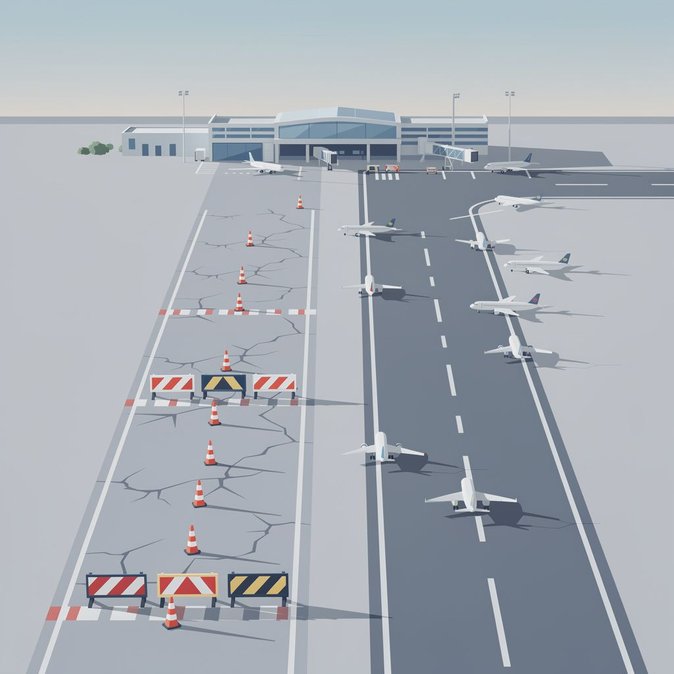
Warsaw’s Chopin Airport, the country’s main international gateway, was forced to shut one of its two runways on the afternoon of 7 July after maintenance crews discovered surface cracking during a routine inspection. According to airport operator Polish Airports State Enterprise (PPL), the decision was taken as a precaution: any unevenness on a runway can damage aircraft tyres and landing gear, so traffic was immediately switched to the parallel runway while engineers assessed the damage. Airport spokesperson Piotr Rudzki said that repair teams would work through the night, injecting sealant into the cracks and re-surfacing the affected section. If temperatures stay moderate, both runways should be back in service before Monday’s morning bank of departures. Until then, the airport is operating with reduced capacity, and passengers are being advised to arrive slightly earlier and to monitor airline notifications for possible schedule changes. Although the closure is temporary, the incident highlights the strain on Chopin Airport’s infrastructure. Passenger numbers hit a record 24 million in 2025—up 13 % year-on-year—and the summer 2026 schedule offers flights to 142 destinations. Airlines such as LOT, Lufthansa, Emirates and British Airways rely on the airport’s tight turnaround windows; any operational hiccup quickly cascades into delays across Europe’s already congested airspace. Business travellers booked on evening short-haul rotations to hubs like Frankfurt or London reported average delays of 25–40 minutes during the first hours of single-runway operations. Logistics managers say the episode is a reminder to build buffer time into itineraries during Poland’s peak travel season. “A half-hour slip at Chopin can mean missing the last train from Poznań or Gdańsk,” notes Marta Szafrańska, mobility lead at a US pharma group with 300 assignees in Poland. She recommends flexible tickets and cloud-based expense tools so travellers can re-book ground transport on the fly. Companies with freight on overnight cargo flights should also watch for knock-on effects at secondary airports such as Łódź and Katowice, which may absorb ad-hoc diversions while repairs are underway. Longer term, the incident will feed the policy debate over the planned Central Communication Port (CPK) megahub west of Warsaw. Supporters argue that Chopin’s aging runways and land-locked location leave little room for expansion, while critics question the cost of building a brand-new airport. For now, PPL insists the crack was minor and that safety procedures worked exactly as designed—an important reassurance for the thousands of international executives, diplomats and tourists who pass through Poland’s busiest airport each day.
Source: Rzeczpospolita