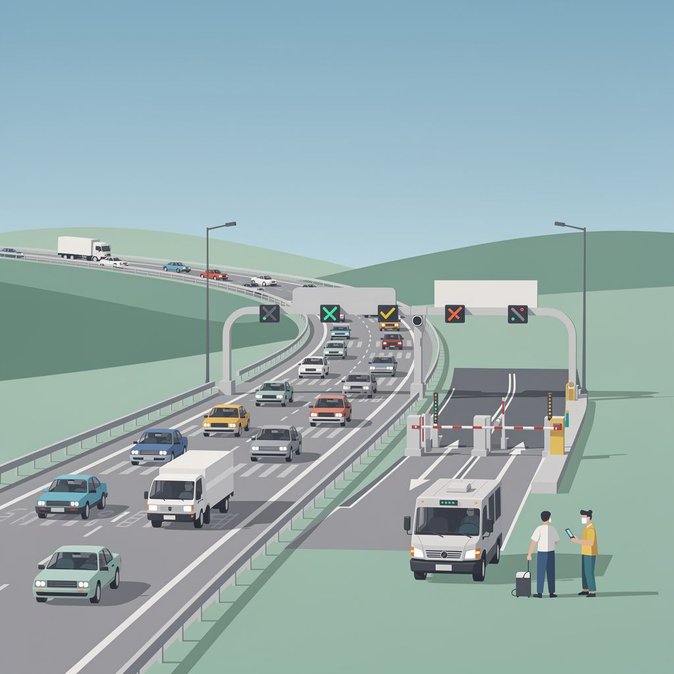
The concessionaire that operates Rodovia dos Tamoios – the main artery connecting São José dos Campos to Brazil’s booming North Coast tech-tourism belt – projects that 147,000 vehicles will use the highway between 8 and 13 July. To cope with the surge driven by the 9 July Revolution holiday, Tamoios has suspended all construction works and rolled out its new ‘papa-filas’ mobile toll collectors alongside a permanent free-flow gantry at km 13.5. The system allows drivers with RFID tags (Veloe, ConectCar, Move Mais, Taggy or Sem Parar) to maintain cruising speed, while those without tags can pay online within 15 days, mitigating queue formation at traditional booths. Early results from pilot weekends show a 28 % reduction in peak-hour wait times – a welcome development for executives who commute weekly between São Paulo and satellite offices in Caraguatatuba’s marine-research cluster. Peak southbound flow toward the coast is forecast for the afternoon of 8 July and the morning of 9 July; the northbound return wave should crest on Sunday 12 July from 10:00 onwards. Cargo hauliers are advised that lane reversals will be in force on the Serra Nova (uphill) and Serra Antiga (downhill) segments, with articulated lorries restricted to specific windows. Why it matters: Free-flow tolling is part of a broader federal push to digitise Brazil’s road-charging network, mirroring Chile’s and Portugal’s electronic corridors. If congestion metrics hold, the Ministry of Transport may accelerate similar upgrades on BR-101 and BR-040, routes heavily used in corporate relocations between Rio de Janeiro, Belo Horizonte and Brasília. Tamoios has published safety guidelines for its 5-km tunnel complex, reminding drivers to keep headlights on, remove sunglasses and observe variable speed signage – measures that could influence future ISO-based tunnel-safety certification sought by Brazilian PPP operators.
Source: Band Vale