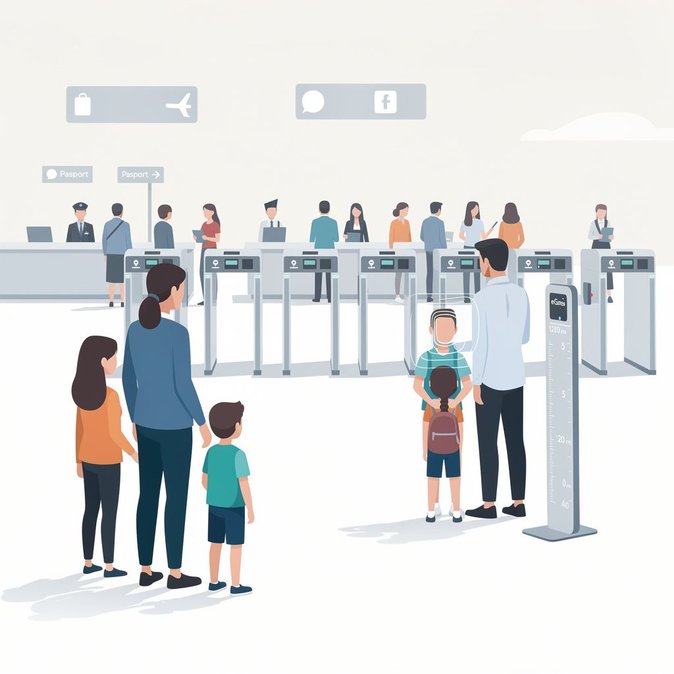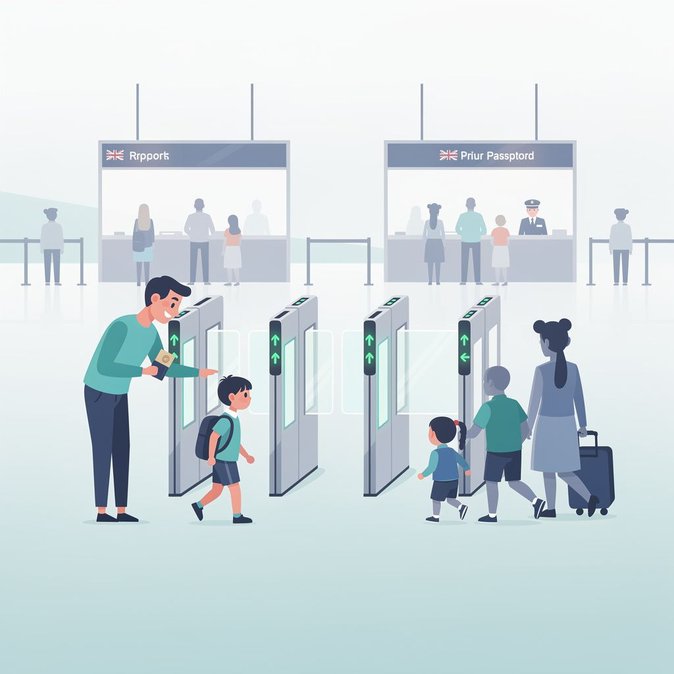
Families arriving in Britain for the summer holidays were greeted by shorter queues on 8 July after the Home Office lowered the minimum age for using automated passport e-Gates from 10 to 8. From today, accompanied children aged eight or nine who are at least 120 cm tall may use the 290 facial-recognition gates deployed at 13 UK airports and several juxtaposed border posts in France and Belgium. Ministers estimate the move will make 1.5 million additional young passengers eligible for the faster biometric channel over the next 12 months. The change is the latest step in a multi-year programme to create a “contact-free” border that relies on digital permission to travel (eVisas and forthcoming Electronic Travel Authorisations) and automated identity checks.
For passengers who want extra reassurance that they have the correct travel permissions in place before reaching the e-Gates, VisaHQ offers an easy online service that walks users through UK eVisas, forthcoming Electronic Travel Authorisations and a host of other global visa options. Their step-by-step platform, available at can save families and business travellers alike from last-minute surprises at the border.
e-Gates typically process travellers in 30–45 seconds, compared with several minutes at a staffed booth. By extending access to younger children, Border Force expects to relieve congestion at Heathrow, Gatwick and Manchester during school-holiday peaks, freeing officers to focus on higher-risk travellers. Border Security and Asylum Minister Alex Norris said the age reduction would “make journeys easier for families with small children and reduce hassle after a holiday,” while preserving security through height and accompaniment safeguards. Airlines and airports welcomed the change; Heathrow Airport described it as “a simple tweak that will make a noticeable dent in queuing times on our busiest days.” Business-travel managers also stand to benefit. Corporate travellers often travel with family members during blended “bleisure” trips; faster family processing reduces the risk of missed rail or domestic flight connections and improves duty-of-care scores. Carriers have been reminded to brief ground staff so that qualifying children are directed to the correct lanes and to continue checking that passengers who require an ETA or eVisa have obtained one before boarding. Looking ahead, the Home Office confirmed that trials of fully contactless border crossings—where a passenger’s face becomes their passport—will begin later this year. Travellers are also urged to familiarise themselves with the EU’s new Entry/Exit System before leisure and business trips to mainland Europe, as first-time registration may add time to return journeys.
For passengers who want extra reassurance that they have the correct travel permissions in place before reaching the e-Gates, VisaHQ offers an easy online service that walks users through UK eVisas, forthcoming Electronic Travel Authorisations and a host of other global visa options. Their step-by-step platform, available at can save families and business travellers alike from last-minute surprises at the border.
e-Gates typically process travellers in 30–45 seconds, compared with several minutes at a staffed booth. By extending access to younger children, Border Force expects to relieve congestion at Heathrow, Gatwick and Manchester during school-holiday peaks, freeing officers to focus on higher-risk travellers. Border Security and Asylum Minister Alex Norris said the age reduction would “make journeys easier for families with small children and reduce hassle after a holiday,” while preserving security through height and accompaniment safeguards. Airlines and airports welcomed the change; Heathrow Airport described it as “a simple tweak that will make a noticeable dent in queuing times on our busiest days.” Business-travel managers also stand to benefit. Corporate travellers often travel with family members during blended “bleisure” trips; faster family processing reduces the risk of missed rail or domestic flight connections and improves duty-of-care scores. Carriers have been reminded to brief ground staff so that qualifying children are directed to the correct lanes and to continue checking that passengers who require an ETA or eVisa have obtained one before boarding. Looking ahead, the Home Office confirmed that trials of fully contactless border crossings—where a passenger’s face becomes their passport—will begin later this year. Travellers are also urged to familiarise themselves with the EU’s new Entry/Exit System before leisure and business trips to mainland Europe, as first-time registration may add time to return journeys.