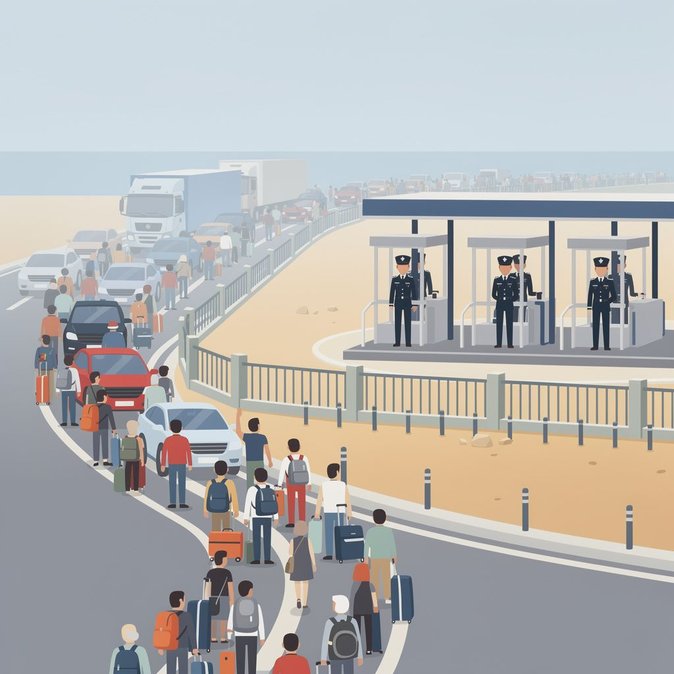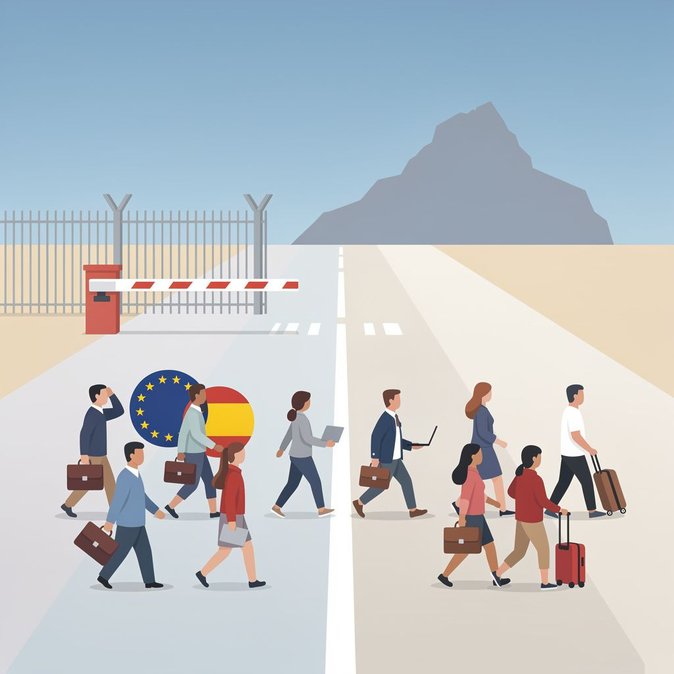
After five years of stop-start talks, Spain, the UK and the EU will sign the long-awaited Gibraltar mobility treaty in Brussels on 14 July, Chief Minister Fabian Picardo announced to the Rock’s parliament on 8 July. The agreement will abolish the physical fence (‘La Verja’) and routine passport checks at the land border, creating a mini-Schengen area covering Gibraltar and Spain’s neighbouring Campo de Gibraltar region. Spanish Prime Minister Pedro Sánchez and Foreign Minister José Manuel Albares plan to visit the current fenced crossing on 13 July to mark what Picardo called an “unprecedented moment” in local history. Once the treaty takes effect—midnight on 15 July—residents and cross-border workers will move freely using biometric lanes, while tourists from non-Schengen countries will be processed by Frontex officers stationed on Gibraltar soil. For the 15,000 Spanish workers who commute daily to Gibraltar’s finance and online-gaming industries, the removal of checks could save up to 40 minutes each way. Businesses on both sides anticipate easier supply-chain logistics: refrigerated lorries carrying pharmaceuticals or fresh produce will no longer queue on Winston Churchill Avenue, reducing spoilage and fuel costs. Real-estate agents also expect a spike in demand for ‘sun-commuter’ housing as professionals consider living in Spain and working tax-efficiently in Gibraltar. However, the treaty includes a concordat guaranteeing that any UK-related competencies require Gibraltar’s consent, and it allows the territory to withdraw via referendum—guard-rails designed to reassure local autonomy skeptics. Madrid will retain responsibility for Schengen compliance, while an EU-UK joint committee will monitor data protection and police cooperation. Companies should update assignment policies: UK nationals posted to Gibraltar will effectively enjoy Schengen access via Spain; conversely, EU staff based in La Línea will be able to attend meetings on the Rock without completing UK visa waivers. HR teams should brief employees on the transitional biometric enrolment and ensure vehicle insurance covers cross-border use as old ‘frontier’ clauses become obsolete.
Source: Cadena SER