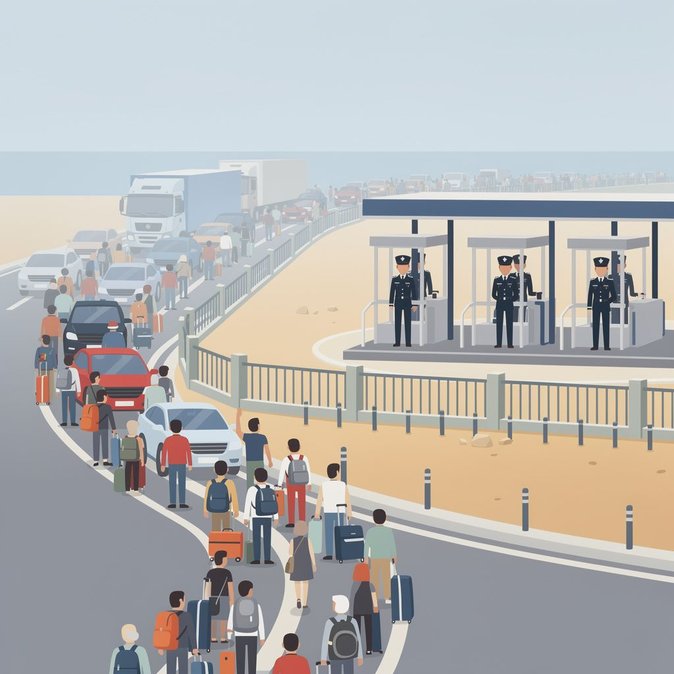
Spain’s summer Operación Paso del Estrecho (OPE) is approaching its busiest weekend, but the National Police contingent at the Tarajal land-border checkpoint in Ceuta will be almost 85 % smaller than planned. An extraordinary recruitment drive launched in May offered 20 temporary posts to bolster passport control during the July-September surge of returning Moroccan expatriates and EU holiday-makers. According to internal figures published by The Objective, only three officers volunteered, leaving one of the EU’s most complex external frontiers critically understaffed. Police unions blame the shortfall on a Ministry of the Interior decision to withdraw the usual travel allowances and accommodation per-diems for agents temporarily relocated from mainland Spain. Unlike their Civil Guard counterparts—who remain entitled to daily subsistence payments—National Police officers would have had to shoulder three months of rent in Ceuta’s inflated summer market. “No one can afford to pay €900 a month out of pocket to work overtime in 40-degree heat,” a UFP spokesperson told the newspaper. The deficit coincides with record OPE volumes: Ceuta expects 550,000 passengers and 128,000 vehicles to cross between 10 July and 20 August. Long queues already stretch several kilometres into Morocco each evening, raising safety risks on the N13 motorway and inside the frontier buffer zone. Business groups fear that inadequate staffing could trigger knock-on delays at Algeciras and Tarifa ferry terminals on the Spanish mainland, disrupting tourist traffic and commercial haulage alike. For corporates moving staff or goods across the Strait, the message is clear: build in extra border-crossing time, diversify entry points (Almería, Málaga, Tangier Med) and monitor live queue data issued by Ceuta’s regional government. Employers should also remind posted workers to carry hard copies of residence permits and vehicle documents, as ad-hoc document checks are likely to increase while rookie officers are trained on site. The episode has reopened the long-running debate over incentive parity between Spain’s two national police forces. Several MPs have urged Interior Minister Fernando Grande-Marlaska to restore allowances immediately or authorise Frontex deployment. Unless a last-minute fix emerges, the OPE bottleneck could become a political headache—-and a logistical one for any company whose mobility calendar relies on a fluid Tarajal crossing.
Source: The Objective