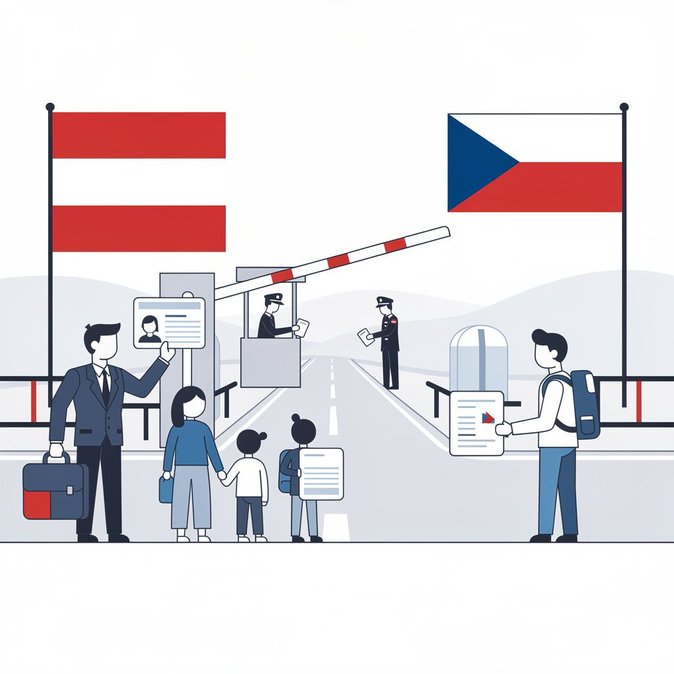
The Austrian Foreign Ministry has updated its travel advice for the Czech Republic, dating the notice 10 July 2026. While the overall security level remains at the lowest rating (Level 1), the advisory confirms that Austria will continue “punktuelle Grenzkontrollen” (targeted border checks) on the Czech frontier until at least 15 September 2026. The move forms part of Vienna’s broader internal-border strategy that also covers Slovakia, Hungary and Slovenia. Travellers—including EU nationals—are reminded that they must carry a valid Austrian passport or national ID card at all times; expired documents are not accepted, and hotels may refuse check-in without them. The ministry highlights the peculiar geography of the Haugsdorf/Hate crossing, where a small section of Czech territory lies between two Austrian control points, creating confusion for motorists who stop without proper documents. Families should note stricter rules for minors: children under 18 travelling without both legal guardians need a signed parental consent letter plus copies of the parents’ IDs and the child’s birth certificate. Austrian authorities report several recent cases of families being turned back for missing paperwork, underscoring the importance of preparation during the peak summer-holiday season. For corporate mobility teams the guidance carries practical implications. Staff shuttling between Vienna and client sites in Brno or Prague should bake extra time into their itineraries for random checks and ensure that third-country assignees hold residence permits that are physically presentable at the border. Employers arranging group travel should circulate the consent-letter template provided by the national motoring clubs ÖAMTC and ARBÖ. Although the spot checks are designed to target irregular migration, the ministry warns that queues may lengthen during weekend traffic surges and urges travellers to consult the live border-wait-time app launched earlier this year. No additional visa requirements have been introduced, but the ministry’s reiteration of the rules signals that internal Schengen controls will remain a fact of life for at least another tourism season.
Source: Austrian Federal Ministry for European and International Affairs – Travel Advice Czech Republic